
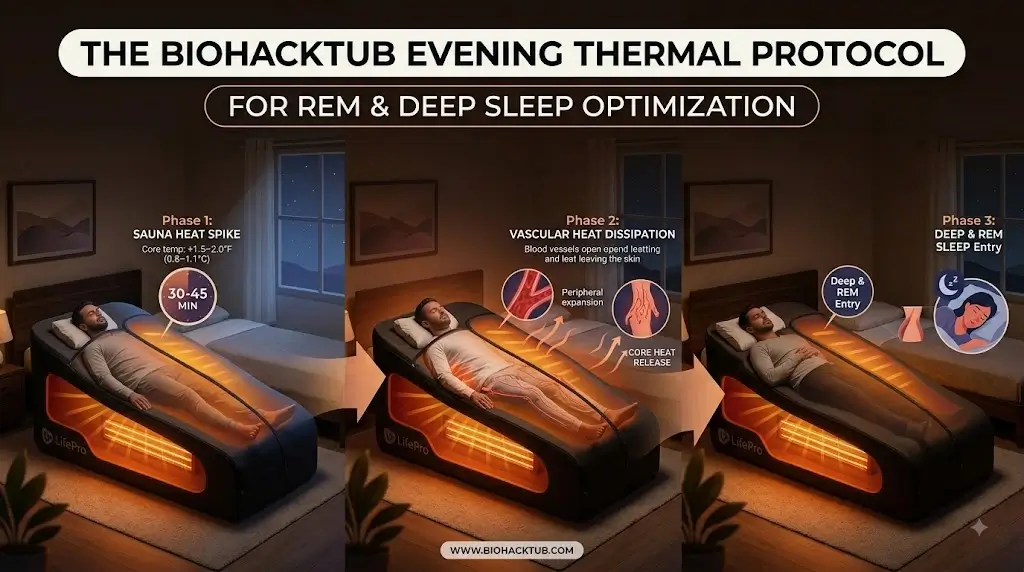
Sleep Architecture
Clinical Protocol
Infrared Sauna Blanket for Sleep: Evening Protocol, Timing & Temperature
•
Medical & Technical Review: Human Performance Research Group
•
Updated October 2026
Quick Reference Specification: Evening Thermal Sleep Protocol
Empirical chronobiological data defines precise thermal windows, session caps, and post-heating cooling transitions for evening sauna protocols. The clinical specification table below summarizes the operational baselines required to stimulate distal vasodilation without triggering sympathetic arousal:
| Protocol Parameter | Clinical Target Setting | Physiological Mechanism & Evidence Basis |
|---|---|---|
| Target Execution Window | 60 to 90 Minutes Pre-Bedtime | Synchronizes post-heat core temperature dump with biological melatonin onset |
| Internal Blanket Temp | 140°F – 150°F (60°C – 65°C) | Avoids sympathetic fight-or-flight spikes and high cortisol secretion |
| Maximum Session Duration | 25 to 30 Minutes Maximum | Prevents deep cardiovascular exhaustion and severe nocturnal dehydration |
| Circadian Core Temp Shift | +1.0°F to +1.5°F rise, followed by -2.0°F drop | Distal cutaneous vasodilation dumps internal visceral heat to ambient air |
| Post-Session Rinse Profile | Lukewarm / Cool Shower (68°F – 72°F) | Removes sweat without cold shock vasoconstriction or norepinephrine spikes |
| Bedroom Ambient Temp | 62°F – 67°F (16.5°C – 19.5°C) | Optimizes continuous night convective heat loss to sustain slow-wave deep sleep |
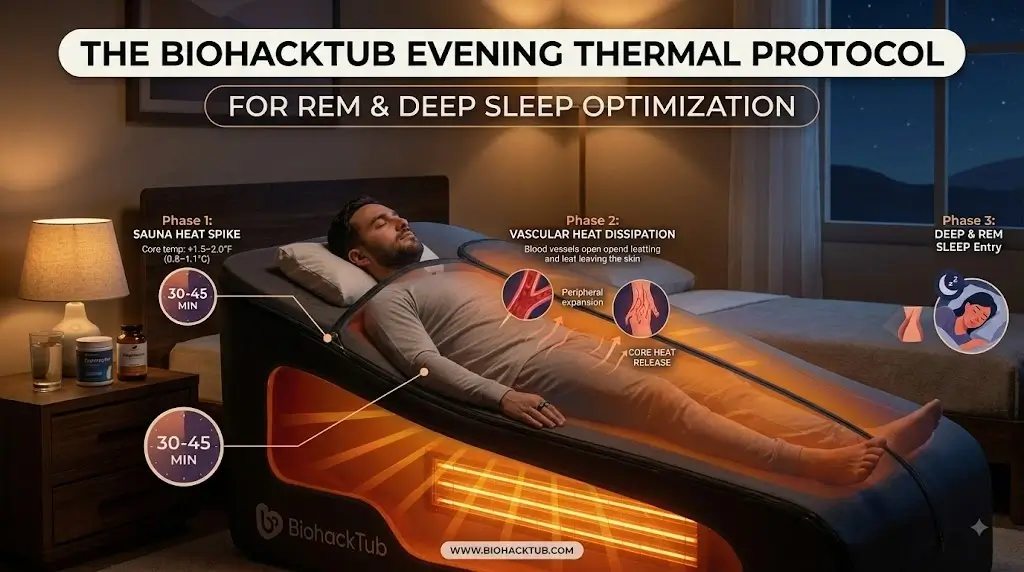
Executive Summary & Key Findings
- Timing Window: Systematic reviews on passive body heating suggest applying heat 60 to 90 minutes before bedtime to align post-heating cooling with circadian sleep onset (Haghayegh et al., 2019).
- Temperature & Duration: Moderate heat settings of 140°F–150°F (60°C–65°C) for 25–30 minutes max prevent excessive autonomic sympathetic arousal.
- Thermoregulatory Principle: Sleep onset is associated with a natural decline in core body temperature, mediated by increased skin blood flow and heat loss in extremities.
- Post-Session Transition: A lukewarm-to-cool shower (68°F–72°F) cleanses sweat without triggering rapid vasoconstriction associated with extreme ice baths.
Google Featured Snippet Definition:
An evening infrared sauna blanket routine supports sleep quality by leveraging the body’s natural thermoregulatory process. Warming the body 60 to 90 minutes before bed increases peripheral blood flow. As heat dissipates post-session, the subsequent core temperature decline mirrors the circadian thermal signal associated with sleep onset and parasympathetic relaxation.
Thermoregulation & Sleep Physiology: What the Evidence Shows
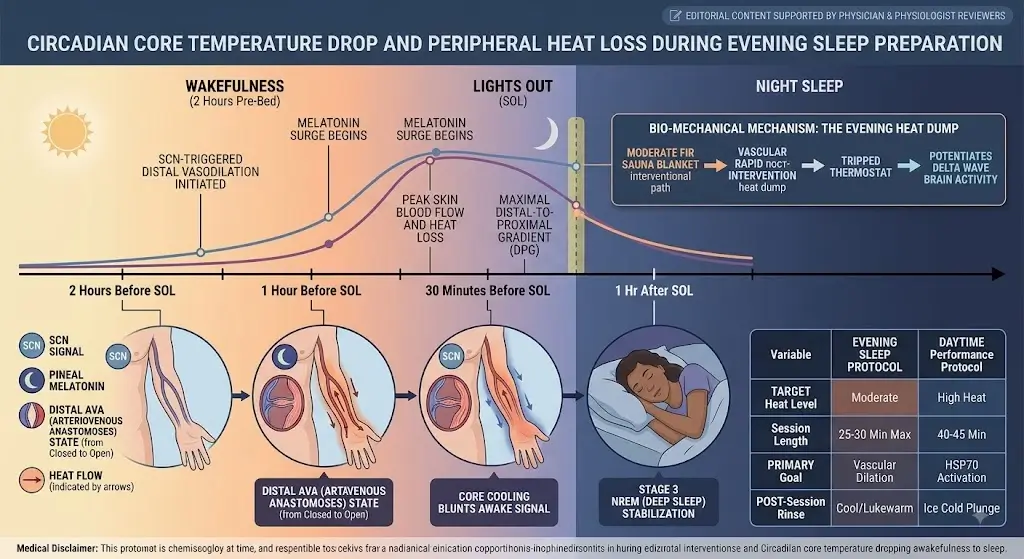
Core body temperature decreases naturally by one to two degrees Fahrenheit prior to habitual sleep onset. Human sleep architecture is closely linked to daily variations in body temperature. Under normal physiological conditions, core body temperature begins a gradual decline approximately 1 to 2 hours before habitual bedtime, accompanied by increased skin blood flow to distal extremities (hands and feet) (Krauchi et al., 2000).
| THE CIRCADIAN THERMAL TRANSITION MODEL |
| |
| [Phase 1: Moderate Heating] [Phase 2: Peripheral Vasodilation] [Phase 3: Core Cooling] | Temporary Core Temp Elevation ==> Blood Vessels in Skin Open ==> Heat Loss Accelerates
| (25-30 Min in Sauna Blanket) (Dumping Core Heat to Ambient Air) (Supports Sleep Onset)
+———————————————————————————–+
Passive body heating interventions—traditionally studied via warm baths or traditional saunas—aim to amplify this natural cooling trajectory. Applying controlled heat triggers peripheral vasodilation; when heating ends, the rate of heat loss from skin surfaces increases, facilitating a rapid decline in core temperature (Haghayegh et al., 2019):
- Peripheral Vasodilation: Heat exposure relaxes vascular smooth muscle, expanding cutaneous blood flow to hands and feet.
- Enhanced Heat Dissipation: Post-session cooling allows ambient air to absorb excess heat from dilated surface vascular beds.
- Autonomic Relaxation: Moderate hyperthermia can help reduce muscular tension and support a shift toward parasympathetic nervous system dominance, provided the heat intensity is kept below stress thresholds. For individuals managing electrosmog exposure during bedtime routines, review our sauna EMF measurement guide to verify that your wrap remains electrically neutral.
Evidence Classification: Clinical Research vs. Sauna Blanket Hypotheses
Meta-analyses confirm passive warm-water immersion shortens sleep latency whereas direct far-infrared blanket data remains emerging. To maintain scientific integrity, it is important to distinguish between well-established clinical consensus on warm water baths and current working hypotheses regarding far-infrared sauna blankets:
| Physiological Concept | Evidence Level | Scientific Consensus & Observations |
|---|---|---|
| Passive Heating & Sleep Onset | Strong (Systematic Reviews) | Warm water baths (104°F) 1–2 hours pre-bed reliably improve sleep latency and slow-wave sleep in clinical meta-analyses (Haghayegh et al., 2019). |
| Distal Heat Dissipation Signal | Moderate to Strong | Increased hand/foot skin temperature relative to core temperature correlates strongly with rapid sleep onset (Krauchi et al., 1999). |
| Far-Infrared Blanket Specifics | Limited / Emerging | Direct clinical trials on FIR sauna blankets specifically for sleep architecture remain sparse. Effects are inferred from broader passive heating literature. |
| Guaranteed REM/Deep Sleep Boosts | Unproven / Variable | Individual responses vary widely. High heat or improper timing can impair sleep by causing nighttime overheating or dehydration. |
Important Safety & Health Precautions
Before attempting an evening thermal session: Sauna blankets cause temporary cardiovascular strain, fluid loss, and elevated body temperature. Do not use if you are pregnant, suffer from uncontrolled cardiovascular disease, are taking blood pressure medication, or are under the influence of alcohol. Always follow the device manufacturer’s maximum temperature and session limits. Discontinue immediately if you experience dizziness, nausea, weakness, or heart palpitations.
The Evening Protocol Blueprint (T-90 Minutes to Bed)
Structured evening chronotherapy initiates moderate thermal loading at T-75 minutes followed by lukewarm rinse-down at T-45 minutes. The following framework represents a practical application model developed by BiohackTub, combining general passive heating research with manufacturer safety standards:
| EVENING SLEEP SUPPORT TIMELINE |
| |
| T-90 MIN T-45 MIN T-20 MIN T-0 MIN |
| Pre-Hydrate & Dim ==> 25-30 Min Moderate Heat ==> Cool Shower & Dim ==> Bed Entry |
| (12-16 oz Water) (140°F – 150°F Max) (Lukewarm Rinse) (Cool Dark Room)|
+———————————————————————————–+
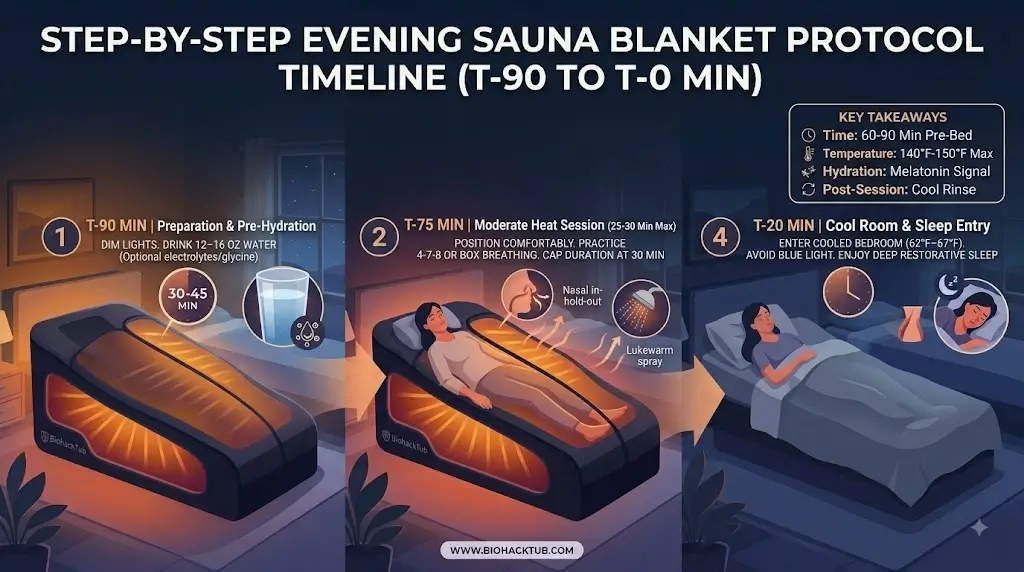
Step 1: Preparation & Pre-Hydration (T-90 Minutes)
- Dim Ambient Lighting: Turn off harsh overhead lighting and minimize bright screen exposure to avoid suppressing night melatonin production.
- Hydration Considerations: Drink 12–16 oz of room-temperature water prior to entering the blanket. Replacing lost fluids is crucial to prevent nighttime heart rate elevation. Optional: Some users include dietary sodium or electrolytes if sweating heavily, subject to personal health status.
- Preheat Sauna Blanket: Set your blanket (such as models reviewed in our best infrared sauna blanket guide) to 140°F–150°F (60°C–65°C). Avoid using maximum heat settings in the evening, as high temperatures can provoke a sympathetic adrenal stress response that impairs sleep onset.
Step 2: Moderate Heating Session (T-75 Minutes / 25–30 Min Duration)
- Attire & Comfort: Wear light, breathable cotton long sleeves, long pants, and socks according to the manufacturer’s hygiene and safety instructions.
- Positioning: Lie comfortably flat on a stable surface with head elevated on a pillow. Follow all manufacturer guidelines regarding arm positioning and safe usage.
- Relaxation Breathing: Practice slow, rhythmic nasal breathing (such as 4-7-8 breathing or simple box breathing) to promote psychological relaxation during the heat session.
- Time Limit: Cap the session at 25–30 minutes maximum. The goal is mild thermal loading, not physical exhaustion or heavy strain.
Step 3: Gradual Heat Dissipation & Wash (T-45 Minutes)
- Careful Exit: Unzip the blanket and sit upright on the edge of a chair or bed for 1 to 2 minutes to allow orthostatic blood pressure stabilization.
- Lukewarm-to-Cool Shower: Take a short 3-minute lukewarm-to-cool (68°F–72°F) shower.
- Why extreme ice plunges are avoided: Immersing in freezing water induces sudden cutaneous vasoconstriction and sympathetic nervous system activation, altering the body’s natural heat-transfer dynamic. A mild shower removes perspiration while leaving peripheral blood vessels dilated for gradual room cooling. If you are comparing rapid cold-water vascular flushing with evening heat downregulation, read our clinical contrast therapy protocol guide.
Step 4: Bedroom Environment & Sleep Entry (T-20 Minutes)
- Bedroom Climate: Keep the bedroom ambient temperature cool, ideally between 62°F and 67°F (16.5°C–19.5°C).
- Sleepwear: Choose lightweight, breathable natural fabrics to allow ongoing skin heat loss.
- Bed Entry: Avoid blue-spectrum device screens. Allow the natural post-heating body cooling process to facilitate transition into sleep. Once the blanket cools flat, sanitize the waterproof interior according to our complete manual on how to clean an infrared sauna blanket.
Protocol Comparison Matrix: Evening Sleep vs. Daytime Performance
Moderate thermal exposure caps evening heart rates whereas daytime performance regimens prioritize maximal cardiovascular strain. The matrix below compares the conflicting operational parameters of both protocols:
| Protocol Variable | Evening Sleep Support Framework | Daytime Performance Protocol |
|---|---|---|
| Target Heat Level | 140°F–150°F (Moderate) | 165°F–176°F (High Heat) |
| Session Length | 25–30 Minutes Max | 40–45 Minutes |
| Primary Goal | Peripheral Vasodilation & Core Heat Loss | Cardiovascular Strain & Heat Acclimation |
| Post-Session Rinse | Cool / Lukewarm (70°F) | Ice Plunge or Cold Shower Option |
| Autonomic Objective | Parasympathetic Relaxation Shift | Sympathetic Stimulation & Metabolic Rebound |
Infrared Sauna Blankets vs. Traditional Saunas for Sleep
Direct radiant heating avoids warming ambient breathing air to reduce evening respiratory distress during pre-sleep relaxation. While traditional Finnish saunas utilize ambient air temperatures ranging from 150°F to 195°F, infrared sauna blankets rely on direct radiant heat delivered via heating elements wrapped close to the body. Key differences for sleep management include:
- Air Temperature & Breathing Comfort: Traditional saunas heat room air, which can feel challenging to breathe for sensitive individuals before sleep. Sauna blankets keep head and airways exposed to room-temperature air. To contrast the thermodynamic physics between convective room air and radiant wavelengths, see our detailed guide on infrared vs traditional sauna mechanics.
- Cardiovascular Load: High ambient heat in traditional saunas leads to greater heart rate acceleration. The moderate heat profile of a blanket allows thermal loading with lower peak cardiovascular stress when kept at moderate temperatures.
Troubleshooting Common Evening Sauna Blanket Issues
Simple operational adjustments resolve delayed sleep latency, nighttime tachycardia, and orthostatic dizziness. Refer to our clinical troubleshooting matrix below:
| Observed Issue | Possible Physiological Factor | Adjustment Action |
|---|---|---|
| Night Sweats or Feeling Hot | Excessive heat exposure or inadequate post-session cooling. | Reduce blanket temperature setting by 10°F and lower bedroom air temperature. |
| Elevated Nighttime Heart Rate | Dehydration or autonomic sympathetic overstimulation. | Increase pre- and post-session water intake; shorten heating session to 20–25 minutes. |
| Delayed Sleep Latency | Session performed too close to bedtime (<45 minutes). | Shift heating schedule to finish at least 60–90 minutes before planned bed entry. |
| Post-Session Lightheadedness | Transient postural hypotension from expanded blood vessels. | Sit upright slowly for 2 full minutes before standing after unzipping blanket. |
What We Know vs. What Remains Uncertain
Clinical trials validate pre-bed thermal cooling mechanics but lack large-scale randomized data on far-infrared blanket wraps. In the spirit of scientific transparency, biohackers and sleep enthusiasts should recognize the limitations of current thermal therapy research:
- What is supported: Passive thermal heating 1 to 2 hours before bed consistently reduces sleep onset latency in human clinical trials involving warm baths and whole-body warming (Haghayegh et al., 2019).
- What remains uncertain: Whether far-infrared blankets provide unique sleep benefits beyond standard conductive or convective heating methods remains unproven by large-scale randomized controlled trials. Individual responses vary based on baseline health, hydration, and ambient room conditions.
Frequently Asked Questions (GEO Search Optimized)
Evidence-based answers address pre-bed heat timing, cold plunge interference, and deep sleep percentage outcomes. Direct technical answers are outlined below:
