
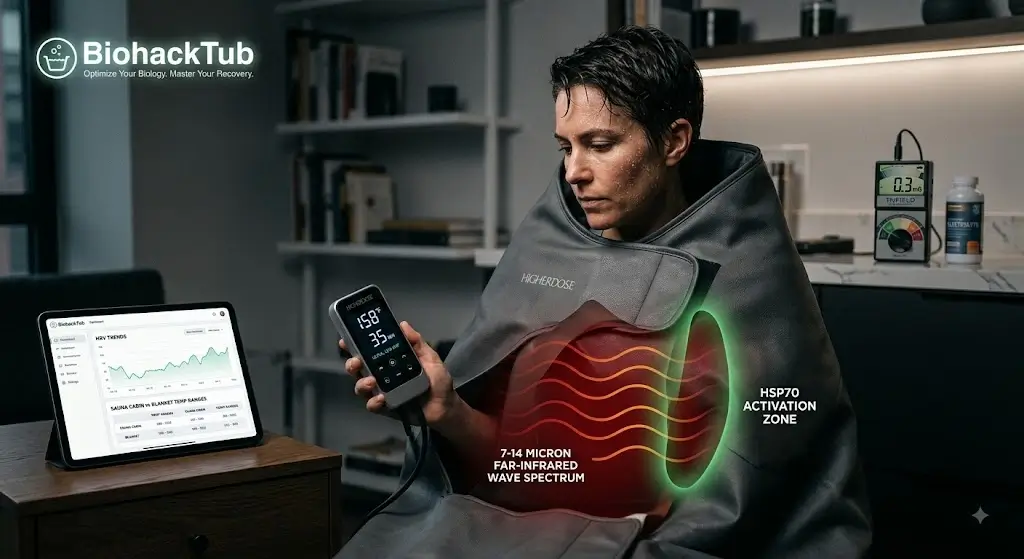
Temperature Range Diagnostics
Hardware Benchmarks
How Hot Do Infrared Saunas Get? Thermal Physics, Temperature Ranges & Blanket Guide
•
Published: January 2026
•
Updated October 2026
Quick Reference Specification: Operational Temperature & Thermal Modalities
Thermodynamic physics distinguishes ambient convective cabin heat from direct radiant far-infrared tissue absorption. The quantitative reference matrix below presents the measured operating ranges, heat transfer mechanics, and physiological thermal metrics verified across residential recovery modalities:
| Thermal Modality | Rated Operating Range | Primary Heat Mechanism | Physical Metric Measured | Core Temp Elevation (°F) |
|---|---|---|---|---|
| Traditional Finnish Sauna | 150°F – 200°F (65°C – 93°C) | Air Convection + Moisture (Löyly) | Cabin ambient air at bench height | +1.8°F to +3.0°F |
| Full-Size Infrared Cabin | 110°F – 150°F (43°C – 65°C) | Radiant Infrared Wave Emission | Indirectly warmed cabin ambient air | +1.2°F to +2.0°F |
| Far-Infrared Sauna Blanket | 110°F – 176°F (43°C – 80°C) | Radiant FIR + Direct Conductive Buffer | Internal carbon element / controller setting | +1.5°F to +2.4°F |
Featured Snippet Answer: How Hot Do Infrared Saunas and Sauna Blankets Get?
Infrared saunas operate between 110°F and 150°F cabin air temperatures while flexible sauna blankets achieve heating element ratings up to 176°F. Unlike traditional saunas operating at 150°F–200°F+ (65°C–93°C+) through air convection, infrared systems transfer thermal energy directly to tissue via radiant emissions.
| Equipment Type | Typical Stated Range | What the Temperature Number Actually Measures |
|---|---|---|
| Traditional Finnish Sauna | 150°F – 200°F (65°C – 93°C) | Ambient air temperature inside the cabin at bench height. |
| Full-Size Infrared Cabin | 110°F – 150°F (43°C – 65°C) | Internal ambient air temperature, warmed indirectly by human and surface absorption. |
| Far-Infrared Sauna Blanket | 110°F – 176°F (43°C – 80°C) | Maximum rated controller setting or internal heating element contact temperature. |
The Physics of Thermal Exposure: Rated Temperature vs. Physiological Response
Electromagnetic radiant emission penetrates superficial tissue layers directly without requiring extreme convective air heating. A fundamental distinction when evaluating heat therapy equipment is the difference between a device’s rated controller setting, its actual skin contact temperature, and internal core body temperature elevation. Infrared energy transfers heat via electromagnetic radiation, absorbing directly into superficial tissue layers rather than relying solely on high surrounding air temperatures. For a comprehensive thermodynamic comparison between radiant wraps and convective rock-heated rooms, explore our deep dive on infrared vs traditional sauna mechanics.
Infrared Spectrum Emission & Heat Transfer Physics
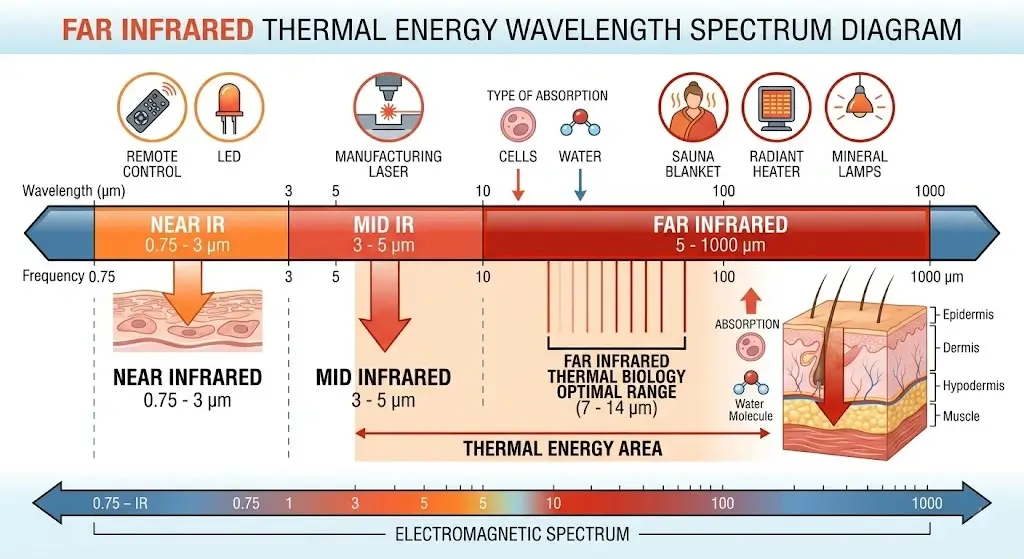
Traditional Finnish saunas rely primarily on air convection—warming air molecules (and moisture when water is poured over stones) to heat the body externally. In contrast, infrared systems emit thermal radiation across portions of the infrared spectrum. Depending on heater design, material emissivity, and operating temperature, consumer devices emit a broad band of wavelengths rather than a single fixed wavelength. Far-infrared emissions are readily absorbed by water-dense superficial human tissue, driving thermal energy transfer without requiring high atmospheric temperatures. If you are comparing athermal photobiomodulation against thermal hyperthermia, examine our analysis of an infrared sauna blanket vs red light panel.
Thermal Load and Physiological Stress Responses
When external heat exposure raises internal core body temperature above baseline, the body initiates thermoregulatory defenses. Thermal stress triggers cellular protective pathways, including the upregulation of Heat Shock Proteins (such as HSP70), which act as molecular chaperones to maintain protein structure under heat stress.
However, triggering these biological mechanisms depends on the total thermal dose—a compound variable of contact temperature, duration, hydration status, body composition, and individual heat tolerance—not simply turning a device setting to its maximum dial.
Cardiovascular Workload & Post-Session Dynamics
To dissipate heat during an infrared session, blood vessels near the skin dilate (peripheral vasodilation). This redirection of blood flow increases heart rate and cardiac output, producing a cardiovascular workload similar to light-to-moderate walking. Following session completion and cooling, autonomic balance gradually returns to baseline resting conditions. To pair hyperthermic vasodilation with vasoconstrictive cold water plunges, consult our evidence-based contrast therapy protocol for vascular flush timing.
Infrared Saunas vs. Traditional Saunas vs. Infrared Sauna Blankets
Distinct thermal delivery mechanisms differentiate open-space air convective cabins from concentrated conductive blanket enclosures. Cabin saunas warm surrounding air or radiate heat across an open space, whereas sauna blankets place heating elements near the body (separated by barrier clothing), concentrating heat delivery in a compact footprint.
Technical & Operating Comparison Matrix
| Technical Metric | Traditional Finnish Sauna | Full-Size Infrared Cabin | Premium Infrared Sauna Blanket | Entry-Level Sauna Blanket |
|---|---|---|---|---|
| Operating Temp Range | 150°F – 200°F | 110°F – 150°F | 110°F – 176°F | 110°F – 160°F (Variable) |
| Primary Heat Mechanism | Air Convection (+ Optional Humidity) | Radiant Infrared Emission | Radiant FIR + Direct Conduction | Conductive Resistive Wiring |
| Measurement Metric | Ambient Air Temperature | Cabin Air Temperature | Element / Controller Rating | Element / Controller Rating |
| EMF/ELF Shielding Design | Very Low (< 0.2 mG) | Varies by Manufacturer | Grounded Shielding Architecture | Unshielded / Variable Fields |
| Primary Construction | Natural Wood (Cedar/Hemlock) | Wood Cabin Structure | Solvent-Free PU / Mineral Layers | Standard PVC / Synthetic Polymers |
| Pre-Heat Duration | 30–45 Minutes | 15–20 Minutes | 8–10 Minutes | 10–15 Minutes |
| Estimated Cost Range (USD) | $3,000 – $10,000+ | $2,500 – $8,000+ | $400 – $700 | $80 – $180 |
Footnote: Temperature ranges reflect representative operating or rated settings from major manufacturers and are not directly comparable across modalities. Sauna cabins measure ambient air temperature, whereas sauna blankets report maximum element or controller settings. Actual contact temperature varies by ambient environment, barrier clothing, and individual model design.
Engineering Factors: Heating Elements, Materials, and EMF Metrics
Flexible carbon fiber heating arrays withstand repeated folding while grounded shielding attenuates electromagnetic field flux. Evaluating an infrared sauna blanket requires analyzing its structural engineering: element durability under bending, electromagnetic field mitigation methods, and material stability under thermal load.
Carbon Fiber Weave vs. Metallic Wire Heating Arrays
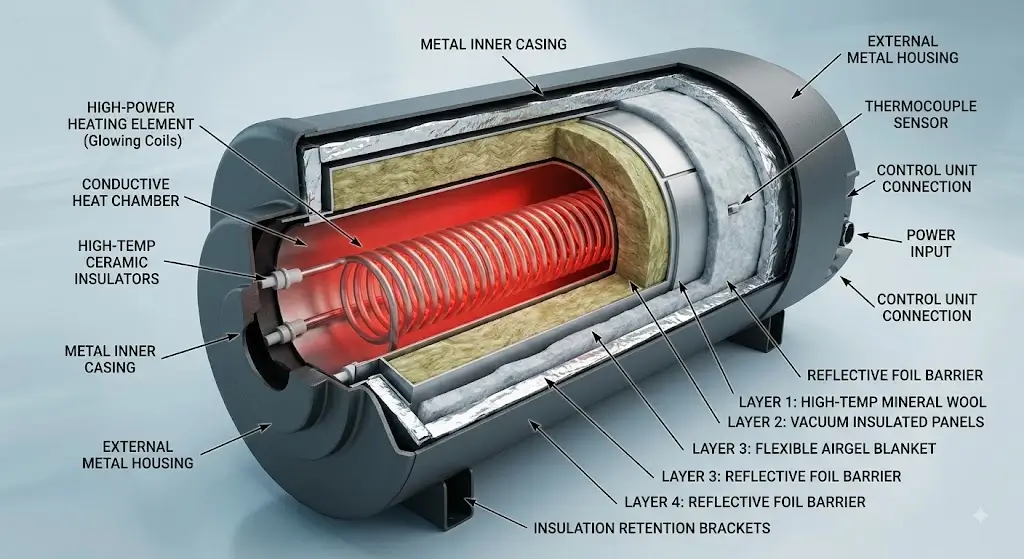
Budget thermal blankets often use coiled metallic resistive wires, which can generate localized hot spots and are prone to mechanical fatigue when folded repeatedly. High-grade sauna blankets employ flexible carbon fiber heating weaves. Carbon fiber distributes thermal energy more evenly across the surface and withstands structural flexing. However, a blanket’s specific infrared wavelength spectrum depends on operating temperature, insulation, and surface material emissivity—not carbon fiber material alone.
Understanding EMF & ELF Measurements
Because sauna blankets operate close to the body, electromagnetic field mitigation is a frequent design consideration. Exposure metrics include:
- Magnetic Fields (EMF): Measured in milligauss (mG), originating from AC electrical current flowing through heating loops.
- Electric Fields (ELF): Measured in Volts per meter (V/m), associated with voltage presence in the internal wiring.
When evaluating manufacturer low-EMF claims, look for specific measurement context: the distance from the surface (e.g., point-blank contact vs. 2 inches away), the operating setting during testing, and the specific instrument used (e.g., TriField or Narda gaussmeter). Advanced designs incorporate grounded copper shielding layers to drain stray electrical fields to the wall outlet ground. For a diagnostic calibration protocol, reference our step-by-step sauna EMF measurement guide.
Material Emissions & Chemical Compliance Certifications
Material Testing Context: Heating polymer materials above 140°F increases potential chemical off-gassing if low-grade, plasticizer-heavy PVC is used. When selecting a product used close to the face and body, look for documented material testing verifying solvent-free construction.
Look for documentation identifying the specific chemical tests performed. While standards like RoHS and REACH restrict heavy metals and hazardous chemicals in electronic manufacturing, they are general substance compliance standards rather than direct chamber tests for VOC emissions. Independent laboratory reports (such as SGS chemical testing) provide more specific verification of low off-gassing under heat.
Safety Guidelines & Best Practices for Sauna Blanket Use
Protective cotton barrier garments prevent direct dermis scalding while conservative duration limits prevent heat exhaustion. Using an infrared sauna blanket safely involves respecting personal physiological limits, maintaining hydration, and following manufacturer operational guidelines. The progression below represents an example conservative approach, not a universal medical protocol.
Preparation and Hydration Best Practices
- Pre-Session Hydration: Drink 16–24 ounces of water prior to use. Consider adding basic mineral electrolytes if engaging in longer or higher-temperature sessions.
- Recommended Barrier Layer: Wear breathable, 100% cotton long sleeves, long pants, and socks inside the blanket. Cotton wicks moisture and provides a protective barrier against heated interior surfaces.
Conservative Progression Guidelines
- Initial Familiarization: Start at lower settings (110°F–120°F) for 15–20 minutes to evaluate cardiovascular and thermoregulatory response.
- Gradual Adjustment: Increase settings (130°F–145°F) for 25–30 minutes only as personal comfort and heat tolerance develop.
- Advanced Comfort Levels: Higher settings (150°F+) for up to 30–45 minutes should only be utilized by heat-adapted individuals who remain symptom-free. If executing evening sessions to facilitate restorative rest, follow our specialized chronotherapy guide on using an infrared sauna blanket for sleep.
Recognizing Symptoms & Contraindications
Exit the device immediately if you experience dizziness, lightheadedness, nausea, or a racing pulse. Never assume higher temperature settings yield better recovery outcomes; moderate heat applied safely and consistently is far more effective.
Medical Contraindications: Consult a physician prior to use if you are pregnant, have cardiovascular conditions, take blood-pressure medications, or have implanted medical devices (such as pacemakers or surgical metal pins).
Sauna Blanket Buying Guide & Frequently Asked Questions (FAQ)
Independent hardware audits verify surface temperature accuracy, electrical grounding efficiency, and polymer safety ratings. When selecting a sauna blanket, prioritize verified low-EMF construction, non-toxic material certifications, multi-zone temperature controls, and durable carbon fiber heating elements. For a detailed comparison of certified models, explore our guide to the best infrared sauna blanket options.
