
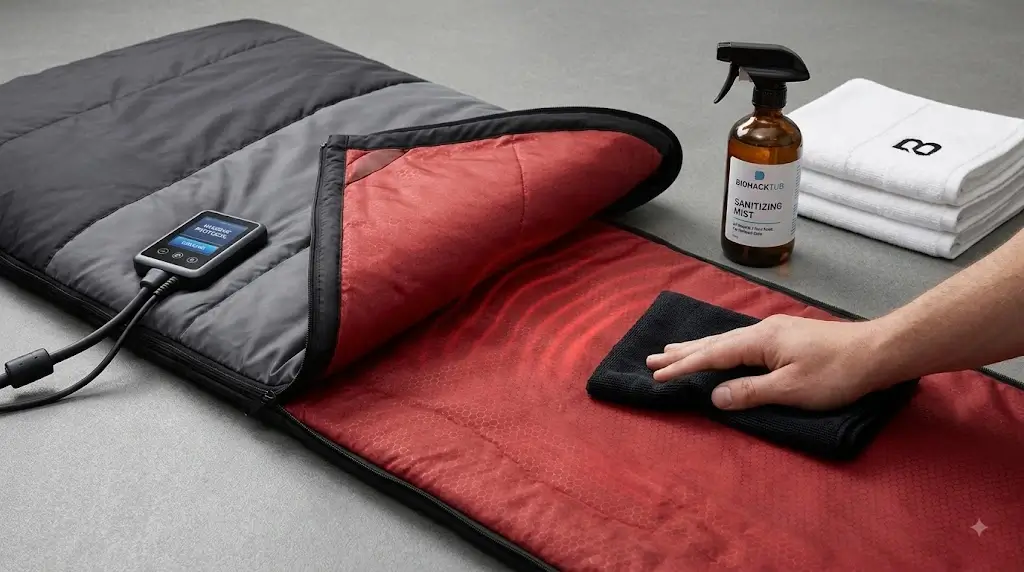
How to Clean an Infrared Sauna Blanket Properly
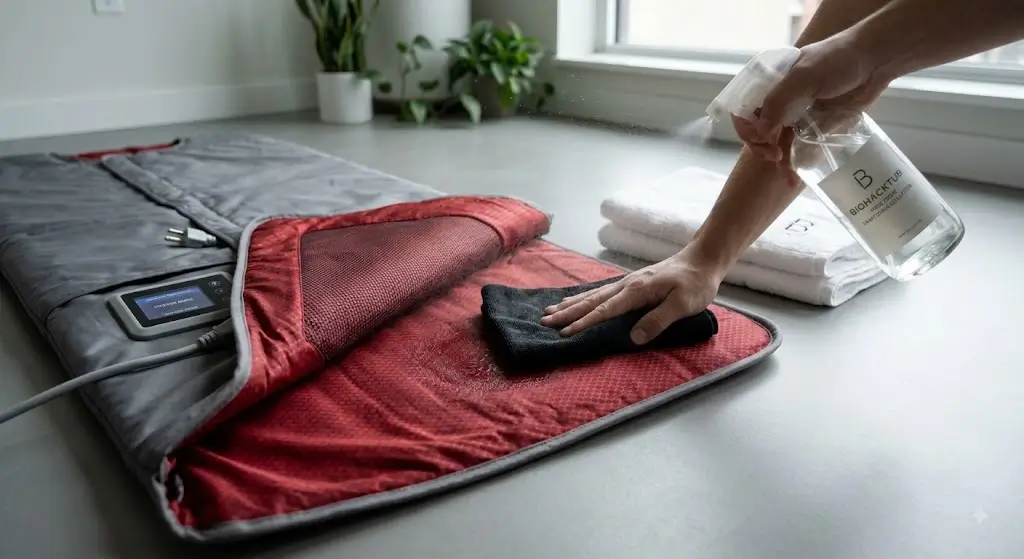
1. How Often Should You Clean an Infrared Sauna Blanket?
Perform a quick wipe-down with a clean microfiber cloth immediately after every session once the unit cools. Conduct a thorough sanitizing clean after every 3 to 5 sessions, or weekly for high-frequency users, to prevent organic residue buildup and bacterial odor growth.
Sweat leaves behind water-soluble salts, skin lipids, urea, and trace organic residues during an infrared session. As moisture evaporates from the inner lining, these compounds remain on the waterproof surface. If neglected, dried sweat salts can become abrasive to surface coatings, while trapped lipids create unpleasant odors over time.
Maintaining a clean sauna blanket is less about aggressive sterilization and more about consistent maintenance. Cleaning frequency should align directly with your usage patterns:
- Post-Session Wipe-Down (Every Session): Mop up all pooled condensation and sweat as soon as the blanket has unplugged and cooled down.
- Surface Sanitization (Every 3–5 Sessions): Apply a mild, manufacturer-approved cleaning solution or hypochlorous acid mist to wipe away skin oils and neutralize odor-causing microbes.
- Deep Inspection (Monthly): Inspect perimeter seams, zipper tracks, and cable connector junctions for moisture ingress or surface wear.
2. What You Need to Clean It
Before beginning the cleaning process, gather non-abrasive, material-safe supplies to ensure effective sanitation without degrading internal wiring or surface coatings:
- High-Density Microfiber Cloths: Non-abrasive, highly absorbent cloths for moping moisture and wiping down flexible PU or PVC linings without scratching.
- Distilled Water: Prevents mineral spots and hard-water deposits on waterproof interior linings.
- Hypochlorous Acid (HOCl) Spray or Mild pH-Neutral Soap: A non-solvent disinfectant spray or gentle liquid soap for effective surface cleaning without stripping plasticizers.
- Spray Bottle: Allows controlled, fine-mist application to prevent liquid pooling near electrical seams.
- Soft Bristle Brush (Optional): Useful exclusively for removing lint or debris trapped in external zipper tracks or Velcro enclosures.
3. Check the Manufacturer’s Cleaning Instructions First
Always prioritize the owner’s manual provided by your sauna blanket manufacturer above generic advice. Material formulations, internal wiring placement, and waterproof sealants vary between brands, making manufacturer guidelines the primary authority for safe cleaning.
While most infrared sauna blankets utilize waterproof interior linings, material formulations and manufacturing methods vary across brands. Always adhere to the following conservative care hierarchy:
- Manufacturer Guidelines (Primary Authority): Follow specific chemical warnings and recommended cleaning procedures found in your product manual.
- Material-Specific Compatibility: Ensure any third-party cleaner is explicitly safe for the blanket’s specific material (e.g., Polyurethane leather, PVC, or Oxford Nylon).
- Conservative Practice: When in doubt, test any new cleaning solution on a small, inconspicuous corner of the blanket before applying it to the entire interior surface.
4. How to Clean an Infrared Sauna Blanket Step by Step
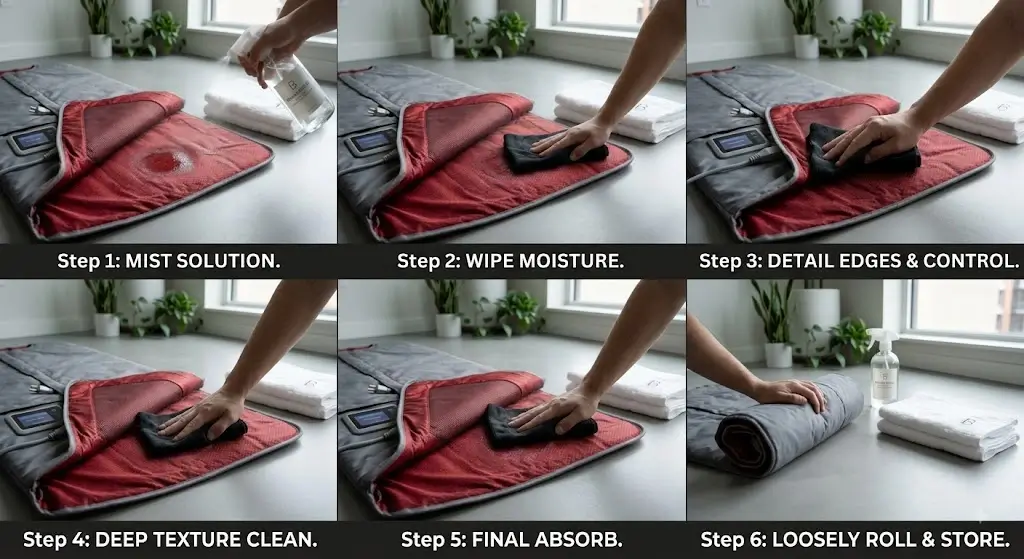
Follow a 4-step protocol: 1) Unplug the controller and let the blanket cool flat for 15–20 minutes. 2) Wipe away pooled sweat with a microfiber towel. 3) Lightly mist a mild, non-solvent cleaner and wipe all surfaces clean. 4) Allow the blanket to air-dry completely flat before storing.
Phase 1: Unplug and Cool the Blanket
Disconnect the power controller from the wall outlet and the blanket terminal junction immediately after completing your thermal session. Unzip or lay the blanket completely flat on a dry surface. Allow internal heating elements to cool down for 15 to 20 minutes before cleaning or folding.
Phase 2: Remove Sweat and Surface Residue
Using a clean, dry microfiber cloth, thoroughly absorb all pooled sweat from the interior lining. Pay extra attention to the lower leg and shoulder zones where moisture collects most heavily.
Phase 3: Clean the Interior Surface
Lightly spray your chosen manufacturer-approved solution or HOCl mist directly onto a fresh microfiber cloth—rather than drenching the blanket. Wipe down all interior surfaces thoroughly. Avoid getting liquid near the electrical cord input socket, zipper seams, or control box.
Phase 4: Dry Completely Before Storage
Leave the blanket unzipped and wide open in a well-ventilated room for 20 to 30 minutes until all surface moisture has evaporated completely. Ensure the interior is 100% dry to the touch before folding or rolling.
5. How to Clean Different Blanket Materials
Different interior materials present unique resistance to chemicals and mechanical wear. Match your cleaning strategy to the material specification of your blanket:
| Material Type | Conservative Cleaning Approach | Contact Time | Main Material Risks |
|---|---|---|---|
| Polyurethane (PU) Leather | Distilled water with a few drops of pH-neutral soap or HOCl mist via soft cloth. | Follow product label (typically 1–3 mins) | Harsh solvents or alcohol strip protective topcoats, causing premature cracking. |
| Medical-Grade PVC Lining | Diluted mild soap solution or approved non-alcohol sanitizing wipe. | Follow product label | High-concentration ethanol or petroleum products can leach plasticizers and embrittle PVC. |
| Waterproof Oxford Nylon | Enzyme-based cleaner or diluted vinegar solution (1:4 ratio with water). | 3 to 5 minutes | Nylon weaves can retain micro-moisture in seams if packed away before full air-drying. |
| Unknown / Unspecified Material | Distilled water with a damp microfiber cloth only; consult owner’s manual. | Immediate wipe-dry | Risk of chemical incompatibility, staining, or surface coating degradation. |
6. How to Dry and Store a Sauna Blanket
Proper drying and storage are critical for maintaining the longevity of internal wiring grids and protective layers:
- Air-Drying Protocols: Always allow the blanket to dry flat in a cool, ventilated space away from direct sunlight. Never use external heat guns, hair dryers, or tumble dryers to accelerate drying.
- Rolling vs. Folding: Roll the blanket loosely from top to bottom rather than pressing sharp creases into it. Sharp folds put unnecessary mechanical stress on internal carbon fiber heating elements and conductive shielding.
- Storage Environment: Store the blanket in a cool, dry place off the floor. Avoid placing heavy boxes or heavy objects on top of the stored blanket.
7. What Not to Use on an Infrared Sauna Blanket
Do not use isopropyl alcohol, bleach, acetone, synthetic citrus degreasers, or abrasive scouring pads on a sauna blanket. Avoid submerging any part of the blanket in water or spraying liquids directly onto electrical terminals.
- Isopropyl Alcohol & Bleach: Strong solvents degrade flexible plasticizers in PU and PVC linings over time, causing the material to harden, crack, and lose its waterproof seal.
- Abrasive Scouring Pads or Stiff Brushes: Coarse scrubbing tools scratch smooth synthetic surfaces, creating micro-grooves that trap future sweat and bacteria.
- Direct Electrical Saturation: Spraying cleaning solutions directly into power cord connections or control boxes poses electrical safety risks and corrosion hazards.
8. How to Prevent Sweat and Odor Buildup
Implementing simple physical barriers reduces direct skin contact and streamlines routine maintenance:
- Use an Absorbent Towel Liner: Laying a large, washable cotton or bamboo towel inside the blanket absorbs a significant portion of sweat exudate during your session.
- Wear Breathable Clothing: Wearing lightweight, long-sleeve organic cotton clothing or a dedicated sauna suit helps absorb skin lipids and prevents dander from accumulating in seams.
- Promote Ventilation: Never close or roll up a blanket immediately after use; allowing air circulation prevents stale odors from becoming trapped in the fabric.
Evidence Calibration & Editorial Standards
BiohackTub maintains a strict evidence-calibration framework for all equipment maintenance guides. The table below outlines our technical editorial treatment for sauna blanket claims:
| Claim / Concept | Evidence Status | Editorial Treatment in This Guide |
|---|---|---|
| Sweat leaves salt & organic residue | Well Established | Stated directly as the primary reason for routine cleaning. |
| Waterproof surfaces require non-solvent care | Well Established | Advised based on general polymer and material science principles. |
| Cleaning agent compatibility | Varies by Manufacturer | Positioned under the primary authority of the owner’s manual. |
| Fixed FIR penetration depth (e.g. 1.5 in) | Not Universal / Variable | Omitted; energy absorption depends on wavelength, tissue, and water content. |
| Universal 3–5+ year lifespan claims | Unsupported as a Rule | Replaced with maintenance instructions and regular inspection advice. |
10. Infrared Sauna Blanket Cleaning FAQ
- FAQ 1: Can I use standard household Lysol or Clorox wipes on my sauna blanket?
- Standard household disinfectant wipes often contain high concentrations of alcohol or quaternary ammonium compounds that can degrade synthetic PU or PVC linings over time. Use a manufacturer-approved non-solvent wipe, an HOCl mist, or mild pH-neutral soap with distilled water instead.
- FAQ 2: How do I eliminate persistent sweat odors safely?
- Lightly mist the interior with a diluted solution of distilled white vinegar and water (1:4 ratio) or a 100 PPM hypochlorous acid spray. Allow it to sit for 3 to 5 minutes, wipe clean with a microfiber cloth, and let it air-dry completely. The vinegar scent dissipates as it dries, removing trapped odors.
- FAQ 3: What should I do if liquid gets into the electrical connector socket?
- Do not plug the blanket into a power source. Immediately pat the area dry with a microfiber towel and leave the connector exposed in a dry, ventilated room for at least 24 to 48 hours to air-dry completely before attempting to power the unit on.
READY TO OPTIMIZE YOUR RECOVERY PROTOCOL?
Invest in high-performance, lab-verified, low-EMF thermal therapy. Check out our deep-dive reviews and exclusive affiliate deals on top-tier infrared sauna blankets today.