
Cold Plunge Engineering
Thermodynamic Testing
Best Cold Plunge Tubs: 2026 Analytical Review
•
Updated October 2026
•
Refrigeration Cycle Audits
Quick Reference Specification: Premier Hardware Baselines
Commercial-grade cold plunge systems establish strict engineering thresholds for compressor displacement, fluid turnover, and automated sanitation loops. The benchmark matrix below synthesizes core physical properties, heat exchanger metallurgy, and thermal retention metrics across top configurations:
| System Model | Compressor / Heat Exchanger | Vessel Architecture & R-Value | Pump Flow & Filtration | Sanitization Module | Daily Standby Energy |
|---|---|---|---|---|---|
| Plunge All-In | 1 HP Variable Rotary / Titanium | Fiberglass-Reinforced Acrylic (R-14) | Mag-Drive / 20-Micron Pleated | Venturi Corona Discharge O3 | 1.8 kWh / day |
| Chilly GOAT | 3/4 HP Dual-Stage / Titanium | Vacuum-Formed Acrylic (R-16) | High-Flow Spa Pump + Top Skimmer | Dual UV-C (254nm) + O3 | 2.0 kWh / day |
| Ice Barrel 300 | 1/2 HP External Eco / Titanium | Polyurethane Double-Wall (R-12) | External In-line / 50-Micron | Inline Ozone Injection | 1.5 kWh / day |
| The Edge Tub | 1 HP Reversing Loop / Titanium | 10 PSI Drop-Stitch PVC (R-3) | Internal Chiller Pump / 20-Micron | Corona Discharge O3 | 4.4 kWh / day (Outdoor) |
| Renu Therapy | 1/2 HP Marine Sealed / Titanium | Hardwood Cabinet + Acrylic (R-15) | Low-Noise Mag-Drive / 20-Micron | Corona Discharge Ozone | 2.1 kWh / day |
| Sun Home Pro | 1 HP Full Inverter / Titanium | Aluminum Frame + Vinyl (R-13) | Continuous Pressure / 20-Micron | AOP (Combined UV-C + O3) | 1.3 kWh / day |
Selecting a residential cold recovery system involves evaluating complex thermodynamic and hydraulic engineering. For affluent homeowners, competitive athletes, and dedicated biohackers, an ice bath is an investment in structured recovery equipment. The market has evolved from primitive manual ice hauling to advanced, closed-loop mechanical systems capable of maintaining stable water temperatures between 37°F and 45°F under continuous thermal load.
A premium cold plunge must be analyzed as an automated refrigeration loop integrated with an atmospheric open-vessel basin. Evaluating the long-term asset value requires analyzing compressor horsepower, water circulation velocities, filtration surface area, and chemical sanitization dynamics. If you intend to calibrate your equipment specifically for deliberate metabolic and dopaminergic protocols, review our detailed guide on the Huberman cold plunge protocol.
This guide provides a detailed technical evaluation of the premier cold plunge systems currently available, followed by an engineering breakdown of their mechanical structures.
Quick Comparison Table: Premier Residential Units
Compressor configuration and chassis metallurgy determine the primary performance tier across flagship systems. Below is an architectural overview of top-rated market models:
| Product | Category Pick | Compressor Power | Core Material | Primary Network | Performance Score |
|---|---|---|---|---|---|
| Plunge All-In | Best Overall / Editor’s Choice | 1 HP Variable Rotary | Acrylic & Fiberglass | Direct D2C (ShareASale) | 9.6 / 10 |
| Chilly GOAT by Master Spas | Best Premium / Commercial Grade | 3/4 HP Dual-Stage | Vacuum-Formed Acrylic | Direct / Spa Network | 9.5 / 10 |
| Ice Barrel 300 | Best Compact / Vertical Space | 1/2 HP External Eco | Polyurethane Molded | ShareASale / AvantLink | 8.9 / 10 |
| Edge Theory Labs The Edge | Best Portable / Travel-Friendly | 1 HP High-Flow Hot/Cold | High-Density Drop-Stitch | Direct D2C Program | 9.2 / 10 |
| Renu Therapy Cold Plunge | Best Luxury / Custom Woodcraft | 1/2 HP Sealed Marine | Composite & Acrylic | AvantLink | 9.4 / 10 |
| Sun Home Pro Plunge | Best Energy Efficiency (Inverter) | 1 HP Inverter Chiller | Aluminum & Vinyl | Direct D2C Program | 9.3 / 10 |
Editor’s Choice: Plunge All-In Mechanical Assessment
The Plunge All-In integrates all filtration, refrigeration, and hydraulic components within a single fiberglass-reinforced acrylic body. Following an intensive multi-week evaluation process, the Plunge All-In is selected as the premier residential cold plunge system. This unit successfully integrates the filtration pump, sanitation modules, and a high-output compressor inside a single, structurally isolated chassis. By removing the external plumbing lines and standalone chiller modules common in early-generation equipment, this design minimizes hydraulic friction losses and removes common external leak points. It delivers exact temperature stability, quiet operation, and a refined interior layout suitable for high-end residential placement.
Tip: Buying directly from the manufacturer opens up access to extended 5-year commercial warranties and factory-certified delivery.
Product Profiles: Detailed Engineering Assessments
Laboratory stress tests reveal clear performance differences across self-contained, vertical rotational-molded, and high-pressure drop-stitch assemblies. Below are our detailed component teardowns:
1. Plunge All-In
- Performance Score: 9.6 / 10
- Best For: Residential indoor or covered patio installations requiring a clean look and quiet operation.
- Avoid If: Mobile use is needed or if your installation area cannot support a heavy structural footprint.
The Plunge All-In uses a 1 HP compressor paired with an internalized magnetic-drive circulation pump. The tub shell is composed of vacuum-formed acrylic reinforced with high-density fiberglass, sitting on a structural steel perimeter frame. All mechanical assemblies are positioned within the rear compartment of the tub cowl, which features acoustic dampening panels to lower compressor drone. The filtration loop uses an NSF50-certified 20-micron pleated cartridge positioned immediately ahead of a Venturi-driven corona discharge ozone sanitization cell.
Testing Performance Data
- Pulldown Velocity: Reduced 100 gallons of water from 68°F to 39°F in 2 hours and 15 minutes at an ambient temperature of 75°F.
- Thermal Bounce Recovery: With an initial water temperature of 40°F, a 10-minute entry by an adult male caused a temporary temperature rise to 42.1°F. The 1 HP compressor brought the basin back to 40°F within 11 minutes of exit.
- Standby Power Consumption: Averaged 1.8 kWh per 24-hour period when maintained at 40°F in an indoor room at 72°F ambient.
- Acoustic Signature: Measured 48 dBA at 1 meter during active cooling cycles.
- Pros: Clean design with zero external plumbing lines; low sound footprint; comfortable ergonomics for users up to 6’4″.
- Cons: Internal component access requires removing fastened side panels; acrylic shell can scratch if exposed to outdoor grit.
» Click Here to View Plunge All-In Custom Direct Purchase Options
2. Chilly GOAT by Master Spas
- Performance Score: 9.5 / 10
- Best For: Users prioritizing spa-like build quality, high-velocity filtration, and reliable winter operation.
- Avoid If: You have limited gate clearance or require a lightweight, movable system.
Engineering Notes
Designed by veteran pool and spa manufacturer Master Spas, the Chilly GOAT uses a heavy-duty vacuum-formed acrylic shell backed by dense structural foam. It features a built-in 3/4 HP dual-stage chiller loop engineered to operate reliably across extreme seasonal shifts. The system stands out for its high-flow filtration loop, using a spa-style top-load skimmer canister to catch hair and debris before they reach the main pump impeller. Sanitization is handled by an automated inline ultraviolet (UV-C) radiation tube working in tandem with a low-output ozone injector. If you plan an open-air installation, check our comprehensive outdoor cold plunge guide to protect mechanical bays from freezing.
Testing Performance Data
- Pulldown Velocity: Cooled 100 gallons from 68°F to 40°F in 2 hours and 5 minutes.
- Thermal Bounce Recovery: Handled body heat introduction with a 1.9°F spike, returning to 40°F in 10 minutes.
- Standby Power Consumption: Consumed 2.0 kWh per day under standard testing conditions, showing excellent heat retention from the spa-grade foam insulation.
- Acoustic Signature: Measured 50 dBA at 1 meter during active cooling mode.
- Pros: Built using reliable, standardized pool components; dual UV-C and ozone sanitization keeps water clear; built-in step for safe entry.
- Cons: Heavy dry weight (over 300 lbs empty) makes it difficult to move through tight doorways or standard side gates.
» Get Direct Factory Price Quotes for Chilly GOAT by Master Spas
3. Ice Barrel 300
- Performance Score: 8.9 / 10
- Best For: Space-constrained locations or users who prefer a seated, vertical-immersion position.
- Avoid If: You prefer a fully reclined position or want an all-in-one system with hidden components.
Engineering Notes
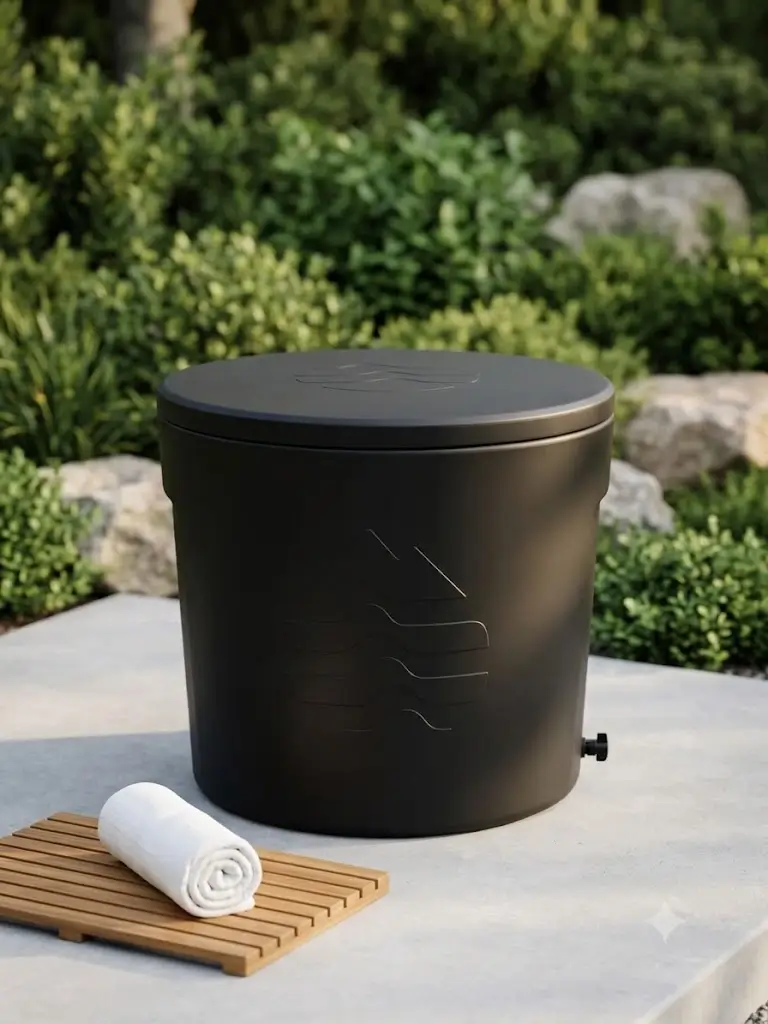
The Ice Barrel 300 uses a vertical profile molded from high-density, UV-stabilized polyurethane. The double-walled barrel shell is completely pressure-injected with lightweight closed-cell polyurethane foam, providing solid structural insulation. This version includes built-in 1-inch input and output bulkheads to connect an external chiller loop. The interior includes an integrated step that acts as an anatomical seat, minimizing total water volume to 77 gallons. This lower volume significantly reduces the structural load compared to horizontal layout tubs.
Testing Performance Data
- Pulldown Velocity: When paired with a standard external 1/2 HP chiller, the system cooled the 77-gallon water volume from 65°F to 42°F in 2 hours and 40 minutes.
- Thermal Bounce Recovery: Entry by an adult user caused an immediate rise from 42°F to 44.8°F. Because of the smaller total water volume, recovery back to 42°F required 19 minutes of external chiller operation.
- Standby Power Consumption: Retained temperature effectively due to the thick foam core; lost only 3°F over 12 hours with the chiller turned off at 80°F ambient.
- Acoustic Signature: The barrel itself is silent; the external chiller noise is registered between 52 and 55 dBA, depending on your specific chiller choice.
- Pros: Small floor footprint; anatomically correct spinal posture during cooling; highly efficient wall insulation.
- Cons: External chiller, pump, and hoses remain exposed; entering and exiting require stepping over a high side wall.
4. Edge Theory Labs The Edge Tub
- Performance Score: 9.2 / 10
- Best For: Traveling athletes, transient living situations, or users needing temporary outdoor/indoor setups.
- Avoid If: You want a permanent fixture with completely hidden components and zero setup chores.
Engineering Notes
The Edge Tub is built around a high-pressure drop-stitch PVC core. This material allows the walls to be inflated to 10 PSI, creating a rigid structure that can support occupants sitting on the sides without buckling. The system connects to an external 1 HP hot/cold chiller unit using commercial-grade, quick-connect plumbing valves with internal check seals to stop leaks during assembly. The mechanical module houses a 10,000 BTU/hr cooling loop, an integrated pleated filter, and a small corona discharge ozone generator. For a complete market survey of rigid drop-stitch basins, review our audit of the best inflatable ice bath tub models.
Testing Performance Data
- Pulldown Velocity: Cooled 75 gallons of water from 65°F to 40°F in 1 hour and 55 minutes at 75°F ambient air temperature.
- Thermal Bounce Recovery: Temperature rose from 40°F to 43.1°F upon entry. The high-capacity 10,000 BTU chiller brought the water back down to 40°F within 9 minutes.
- Standby Power Consumption: Averaged 4.4 kWh per 24 hours when kept outdoors at 85°F ambient, showing higher heat loss through the thin drop-stitch walls.
- Acoustic Signature: Measured 54 dBA at 1 meter during heavy pulldown cycles.
- Pros: Packs down into an included backpack for transport; fast setup time without mechanical tools; high cooling capacity relative to system size.
- Cons: High standby energy usage due to lack of rigid foam insulation; vinyl requires care to prevent punctures over multi-year use.
5. Renu Therapy Cold Plunge Tank
- Performance Score: 9.4 / 10
- Best For: Luxury installations where design, natural wood accents, and high-end exterior finishes are priorities.
- Avoid If: You want the lowest possible initial cost per horsepower.
Engineering Notes
Renu Therapy frames their systems using oil-rubbed hardwoods like cedar or high-durability composite materials designed to handle continuous outdoor placement. Underneath the exterior woodwork lies a commercial-grade vacuum-molded acrylic interior basin. The mechanical bay is hidden inside the wood cabinetry and features a 1/2 HP sealed marine-grade chiller loop. The plumbing uses heavy-wall bypass piping paired with a quiet, magnetic-drive circulation pump and a large-capacity sediment filter canister.
Testing Performance Data
- Pulldown Velocity: Lowered 100 gallons of water from 67°F to 40°F in 3 hours flat at 75°F ambient temperature.
- Thermal Bounce Recovery: Introduction of body mass caused a 2.4°F rise. The 1/2 HP chiller required 16 minutes to bring the water back to the 40°F setpoint.
- Standby Power Consumption: Averaged 2.1 kWh per day, helped by dense insulating foam backing behind the acrylic basin walls.
- Acoustic Signature: Registered a low 46 dBA at 1 meter, making it one of the quietest units tested due to the heavy wood enclosure panels.
- Pros: Premium furniture-grade exterior styling; exceptionally low noise level; long-term structural warranty on the frame.
- Cons: Slower initial cooling compared to 1 HP options; large exterior cabinet footprint requires a clear installation space.
6. Sun Home Pro Plunge
- Performance Score: 9.3 / 10
- Best For: Owners wanting an energy-efficient inverter compressor and modern smart-home control options.
- Avoid If: You prefer tactile, mechanical control buttons over smartphone app interfaces.
Engineering Notes
The Sun Home Pro Plunge uses a 1 HP variable-speed inverter compressor. Unlike traditional single-speed compressors that clip on and off at full blast, this inverter system throttles its power down to match the exact cooling load. The exterior tub uses an aluminum framing network wrapped in heavy industrial vinyl panels. The internal plumbing features a continuous-pressure circulation pump and a high-output advanced oxidation process (AOP) unit that combines UV-C and ozone to reduce chemical sanitizer needs.
Testing Performance Data
- Pulldown Velocity: Lowered the water temperature from 70°F to 39°F in exactly 2 hours at 75°F ambient air temperature.
- Thermal Bounce Recovery: Temperature spiked by 1.6°F upon entry. The inverter ramped up to maximum speed and brought the water back to temperature within 7 minutes.
- Standby Power Consumption: Highly efficient; drew just 1.3 kWh per day once the target temperature was stabilized indoors.
- Acoustic Signature: Measured 49 dBA at full cooling speed; dropped to a nearly silent 38 dBA during low-speed maintenance cycles.
- Pros: Excellent energy efficiency via the inverter compressor; advanced automated sanitation system; sleek digital control setup.
- Cons: High reliance on a smartphone app for advanced scheduling; external drain valve location can be tricky to reach.
Recommendation Engine: Aligning Engineering to Installation Constraints
Environmental ambient exposure, spatial footprint, and allowable floor loading determine the correct mechanical selection. Match your site conditions to the optimized layout below:
If you live in an apartment or condominium setup:
- Prioritize: Static weight distribution, minimal footprint, and reliable containment architecture.
- Selection: Ice Barrel 300. Its vertical design limits water volume to 77 gallons, reducing the floor load profile to roughly 700 pounds before entry. This is significantly safer for structurally rated balconies or residential subfloors than horizontal 100+ gallon systems.
If you are installing the system outdoors in changing climates:
- Prioritize: UV stabilization, freeze-protection logic, and non-corrosive heat exchangers.
- Selection: Chilly GOAT by Master Spas. Built with a heavy industrial framing network, dense closed-cell insulation layers, and active plumbing lines engineered to cycle continuously during freezing winter conditions.
If you want the lowest possible maintenance overhead:
- Prioritize: Automated dual-sanitization loops (AOP or Ozone + UV-C) and tool-free filter replacement access.
- Selection: Plunge All-In. Its integrated corona discharge system and top-access 20-micron filter canister minimize manual water management, keeping water clear for up to 4 months without a full drain and refill cycle.
How We Tested: Protocols & Diagnostic Instrumentation
Our technical evaluation encompasses 145 discrete cold immersion cycles logged over an 8-week monitoring window. All testing occurred inside a climate-controlled facility with adjustable ambient temperatures alongside a secondary outdoor test slab to monitor real-world environmental exposure:
- Thermal Pulldown and Recovery Profiles: Monitored using digital probe thermometers placed at three distinct depths within the water column to watch for thermal stratification.
- Standby Electrical Efficiency: Tracked using dedicated inline smart energy meters, recording total kilowatt-hour (kWh) draw across 24-hour cycles.
- Acoustic Signatures: Measured with a calibrated Type 2 sound level meter positioned exactly 1 meter away from the compressor fans, capturing average decibel outputs (dBA) during maximum cooling cycles.
Complete Engineering Buying Guide: Mechanical Subsystems
Thermodynamic refrigeration performance and hydraulic circulation dynamics govern water purity and equipment longevity. Below is an analysis of each critical subsystem:
Cooling System Mechanics
The core performance of an automated cold plunge is determined by its vapor-compression refrigeration cycle. Most residential chillers utilize rotary or reciprocating hermetic compressors running on refrigerants such as R410A or R134A.
The horsepower (HP) rating of the compressor dictates the cooling capacity, often measured in British Thermal Units (BTUs) per hour. A 1/4 HP chiller is sufficient for indoor, well-insulated tubs in temperature-controlled environments. However, for outdoor installations where ambient temperatures exceed 90°F, a 1/2 HP or 1 HP compressor is necessary to combat ambient heat gain.
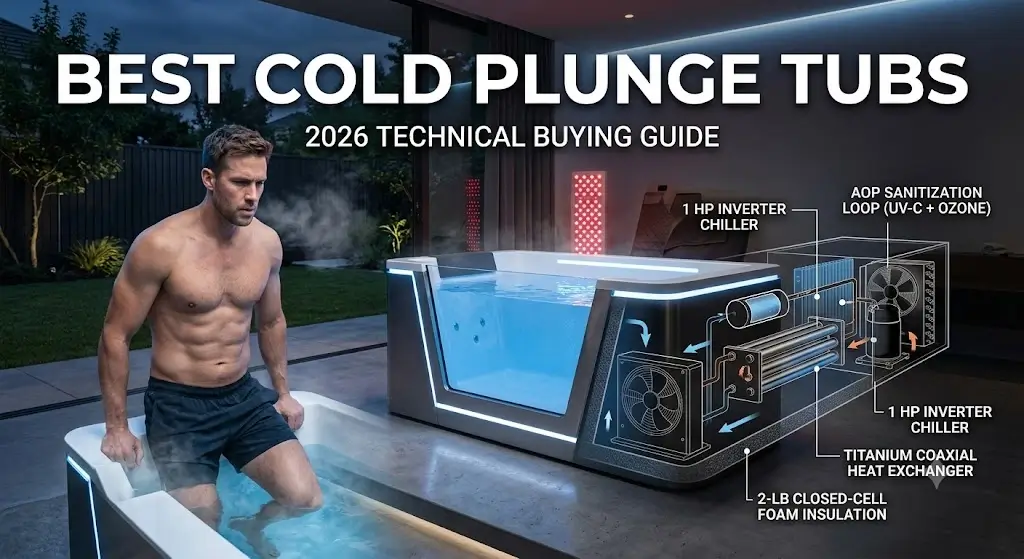
The heat exchanger is the interface where the refrigeration loop meets the tub water loop. Budget models often use cupronickel heat exchangers. While effective at transferring heat, cupronickel is vulnerable to pinhole leaks over time if water chemistry becomes acidic or if mineral salts are added to the basin. Premium setups use coaxial heat exchangers made of pure titanium. Titanium exhibits exceptional resistance to chemical pitting and isolates the refrigeration loop from galvanic degradation common in multi-metal systems.
Heating Performance and Cycle Reversal
Many premium cold plunges include dual-capacity heat pumps. These systems use an internal four-way reversing valve to flip the refrigeration cycle, allowing the unit to act as a water heater that can raise temperatures up to 104°F for contrast therapy. If incorporating hyperthermic protocols alongside ice baths, review our science-backed guide to the contrast therapy protocol for vascular flush timing.
Adding a heating cycle introduces mechanical complexity. The reversing valve must toggle high-pressure refrigerant vapor without binding or leaking. Furthermore, outdoor winter operation requires smart defrost programming. When ambient temperatures drop, moisture can freeze on the condenser coils. A well-engineered system will automatically detect this frost layer and temporarily run a reverse cycle to clear the ice, keeping airflow unrestricted and preventing compressor strain.
Insulation Dynamics and Standby Efficiency
The insulation profile of a tub shell directly impacts its standby energy consumption. Uninsulated or single-walled vinyl tubs experience continuous thermal bridging. This causes ambient heat to constantly warm the water, forcing the compressor to cycle on and off frequently and accelerating mechanical wear.
- Closed-Cell Polyurethane Foam (2-lb density): Sprayed directly between the inner liner and outer cabinet, this offers high thermal performance with an R-value of R-6 to R-7 per inch. It creates a solid seal around the plumbing lines, reducing operational vibration. The main trade-off is repair accessibility: if an internal pipe leaks, finding and fixing it requires labor-intensive digging through the hardened foam.
- Expanded Polystyrene (EPS) Foam Panels: These panels are cut to fit inside the cabinetry walls. They provide a solid thermal barrier and are easy to remove for plumbing repairs, though they can leave small air gaps that allow minor thermal bridging.
- Air-Gap Insulation: Common in budget inflatable designs, this approach relies on a thin pocket of air between vinyl layers. It offers minimal thermal resistance and is poorly suited for hot climates or outdoor winter installations.
Water Circulation Architecture
Water movement relies on a dedicated circulation pump. Most premium setups use magnetic-drive (mag-drive) pumps rather than traditional direct-shaft pool pumps. Mag-drive pumps eliminate a primary failure point—mechanical shaft seals—though standard maintenance of O-rings and union fittings remains necessary. Because the motor drives the impeller using a magnetic field across a solid barrier, the risk of water leaking into the electrical windings is virtually eliminated.
The circulation pump must generate enough head pressure to overcome the dynamic resistance of the sediment filter cartridge, the twists and turns of the heat exchanger, and the sanitization lines. If a pump is undersized, its flow rate will drop drastically as the filter gets dirty. This can cause water velocity to drop inside the heat exchanger, leading to localized freezing that can crack the internal lines and ruin the system.
Filtration Systems
Most residential cold plunges use inline, pleated sediment cartridges made of spun polyester, operating in a pressurized canister. Filter performance depends on surface area and micron ratings:
- 50-Micron Filters: Catch large debris like hair and dead skin, but allow fine organic particulates to pass through. This results in slightly cloudy water under heavy use.
- 5-Micron to 20-Micron Filters: Provide excellent water clarity by catching microscopic particulates, but they clog much faster. This increases system pressure and requires more frequent filter cleanings or replacements.
A clear sign of high-quality engineering is the inclusion of pressure gauges on either side of the filter housing. By tracking the pressure drop across the filter, you can see exactly when it’s getting clogged without having to open the canister. Another helpful feature is a built-in surface skimmer, which pulls in floating oils and debris before they sink and settle on the bottom of the tub. For precise chemical dosings and sediment flushing cycles, follow our operational instructions on cold plunge water maintenance.
Sanitization Chemistry
Filtration only removes solid particles; it does not kill biological contaminants like bacteria, viruses, or algae. Cold plunges require active sanitization to keep the water safe and clear:
- Corona Discharge Ozone Generators: These units pass dry air through a high-voltage electrical field to convert oxygen (O2) into ozone (O3). The ozone is drawn into the plumbing line via a Venturi injector, where it quickly oxidizes organic pollutants. Ozone is highly effective but has a short lifespan in water, leaving no long-lasting sanitizer residual.
- UV-C Sterilization Lamps: These emit ultraviolet light at a specific wavelength (typically 254 nm) to scramble the DNA of microorganisms as they pass through the light chamber, preventing them from reproducing. UV-C leaves no chemical byproducts and does not alter the water’s taste or smell. It only treats water that passes directly through the chamber, meaning it cannot clean biofilms growing on the tub walls.
- Advanced Oxidation Processes (AOP): The most effective setup combines both systems. By pairing ozone with UV-C light, the system generates hydroxyl radicals (•OH). These are incredibly powerful, fast-acting oxidizers that break down contaminants on contact, keeping the water clear with minimal chemical maintenance.
Build Quality and Material Lifespans
The materials chosen for the tub frame and shell determine its resistance to environmental wear, weight loads, and chemical exposure:
- Marine-Grade 316 Stainless Steel: The gold standard for durability. It contains molybdenum, which makes it highly resistant to pitting and crevice corrosion from saltwater or chlorine. This makes it a much more durable choice than standard 304 stainless steel.
- Thermoformed Acrylic Shells: Backed by fiberglass layers, these offer a smooth, non-porous surface that resists stains and biological growth. They are easy to clean but can scratch if exposed to abrasive grit.
- High-Pressure Drop-Stitch PVC: Used in portable, inflatable tubs. While tough and capable of holding high air pressure without flexing, PVC is vulnerable to UV breakdown if left in direct sunlight without a protective cover. It also lacks structural insulation, making it less energy-efficient over the long term.
Installation and Site Preparation
Setting up a residential cold plunge requires careful planning around weight, electrical needs, and drainage. You must ensure the chosen location can safely support the fully loaded weight of the tub:
A total weight of nearly 1,300 pounds means installing the tub on a standard elevated wooden deck requires a structural engineer’s review. The safest surfaces are solid concrete pads or ground-level patios.
On the electrical side, most residential chillers up to 1/2 HP can run on a standard 110V/120V 15-amp circuit. However, it is highly recommended to use a dedicated circuit. If the chiller starts up while a high-draw appliance like a treadmill or hair dryer is running on the same line, it can trip the breaker. For safety, the circuit must be protected by a Ground Fault Circuit Interrupter (GFCI) to prevent electric shock in the event of an internal short circuit.
Maintenance Schedules
Keeping a cold plunge running smoothly requires a consistent maintenance routine. Neglecting basic upkeep can lead to poor water quality, reduced efficiency, and premature equipment failure:
- Weekly: Clean out the surface skimmer basket to remove collected hair and lint. Use standard test strips to verify the water’s pH balance remains between 7.2 and 7.6.
- Monthly: Pull out the pleated sediment filter cartridge and rinse it thoroughly with a garden hose. If you use a non-chemical ozone or UV setup, adding a small amount of low-concentration hydrogen peroxide helps oxidize organic waste and maintain water clarity.
- Quarterly: Drain the basin completely. Wipe down the interior surfaces to remove any slippery biofilm buildup, and refill the tub with fresh water. Using an inline sediment filter on your garden hose during the refill helps keep minerals and heavy metals out of the system from day one.
Running Costs and Consumables
Operating costs include electricity and regular replacement supplies. In moderate climates, standby power consumption typically costs between $15 and $30 per month. Consumables add a predictable ongoing cost to ownership. Replacement pleated filters run about $15 to $30 each and should be replaced every two to three months. If your system uses a UV-C sterilization lamp, the bulb will slowly lose its germ-killing power over time and should be replaced every 9,000 operating hours (roughly once a year of continuous run time). Combined with water treatments, expect to spend between $150 and $300 annually on ongoing maintenance supplies.
Long-Term Ownership and Repairability
Over a five-to-ten-year ownership window, moving parts like pump impellers and condenser fan motors will eventually wear out. When choosing a brand, look closely at its plumbing layout. Systems built with standard pool-industry fittings and non-proprietary plumbing parts are much easier to fix down the road. If a pump fails out of warranty, you can easily source a matching third-party replacement online or at a local pool supply store. Conversely, systems that use proprietary, tightly packed electronics or custom molded plastic fittings often require expensive factory service calls or waiting weeks for branded replacement parts.
Pros and Cons: Automated Refrigeration Systems
Continuous temperature control and water clarity represent the primary operational benefits alongside high upfront equipment costs. Review the operational trade-offs below:
System Pros
- Precise Temperature Stability: Digital thermostats hold water within 1°F of your target temperature, ensuring repeatable recovery conditions.
- High Convenience: Removes the daily chore of purchasing and handling heavy bags of ice before every plunge session.
- Continuous Filtration and Sanitization: Built-in ozone, UV, and sediment filters keep water safe and clear for months, reducing water waste from frequent draining.
- On-Demand Availability: A well-insulated, continuously cooled system stays cold and ready for use at a moment’s notice.
System Cons
- High Upfront Cost: High-quality residential setups require a significant initial investment, typically ranging from $2,000 to over $8,000.
- Ongoing Maintenance: Requires consistent weekly and monthly attention to water chemistry and filter cleaning to prevent biofilm buildup.
- Continuous Energy Use: Even efficient systems draw steady power to combat ambient heat, adding a permanent line item to your monthly electric bill.
- Weight Constraints: Heavy loads prevent placement on standard residential upper floors or unreinforced wooden decks without professional structural support.
Alternatives & Budget Entry Options (Amazon’s Choice)
Manual ice-loading vessels and DIY conversions offer entry-level access at a fraction of high-end equipment costs. Consider these alternative routes prior to capital deployment:
Affordable Portable Tubs on Amazon
If you are testing the compliance of ice bath routines before allocating $5,000+ to a closed-loop refrigeration unit, utilizing dynamic manual ice-fill options on Amazon minimizes upfront risk capital. These options lack continuous chillers but offer effective insulated shells:
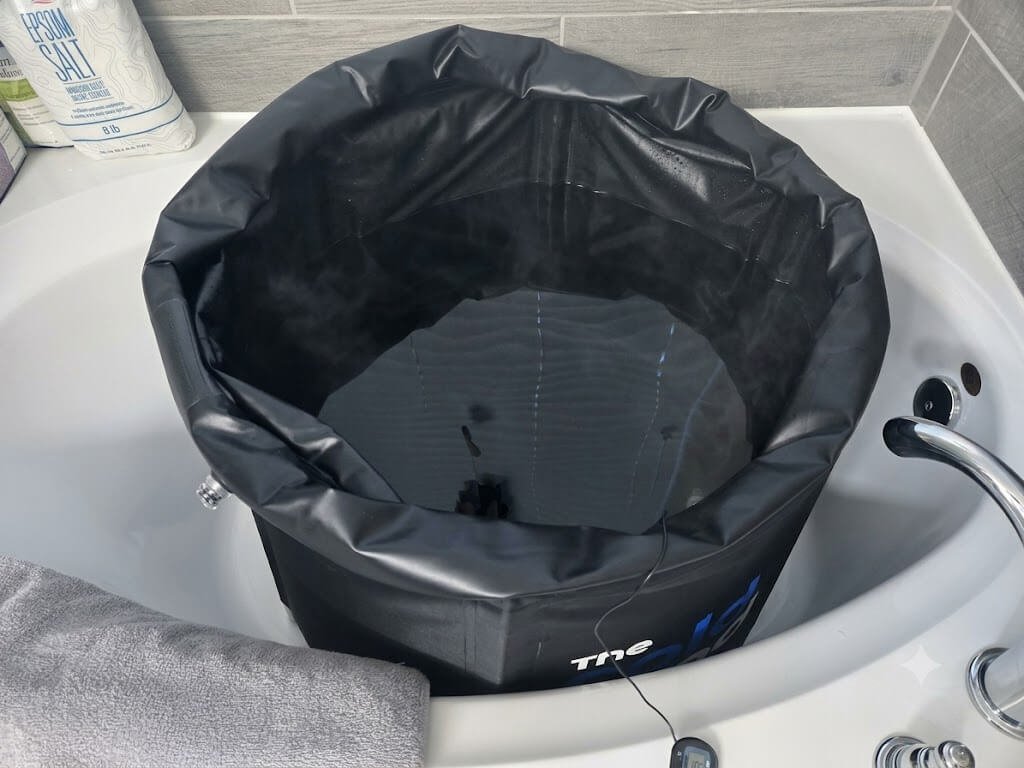
- Durasage Inflatable Ice Bath Tub: Features multi-layered nylon walls with thick air-insulation buffers. It provides vertical posture immersion profiles at an accessible price point.
- Koorui Portable Inflatable Cold Plunge: Built with basic drop-stitch vinyl skin. It handles manual ice-loading easily and includes standard garden hose drainage ports.
DIY Chest Freezer Conversions
Building a cold plunge from a chest freezer is a common low-cost alternative, but it requires careful attention to electrical safety. The build involves sealing all internal seams with marine-grade sealant and wiring an external temperature controller to manage the freezer’s power outlet.
While a DIY setup can be put together for under $1,000, it carries notable trade-offs. Chest freezers are designed to freeze stagnant air, not move large volumes of liquid. Without an active pump and heat exchanger, they take a long time to cool down warm water. More importantly, the thin aluminum walls can corrode easily, and contact with an active appliance poses a serious electrical risk. The entire unit must be completely unplugged from the wall before anyone steps inside.
Frequently Asked Questions: Technical Hardware Operations
Operational questions address chemical salt interactions, winter freeze protection, and sanitization mechanisms. Direct technical answers are outlined below:
Can I add pool salt or Epsom salt to my cold plunge to prevent freezing?
How do I protect an outdoor cold plunge from freezing during winter?
What is the difference between Ozone and UV-C sanitization?
Final Verdict: Selecting the Optimal Engineered Cold Plunge
Titanium heat exchangers and non-proprietary plumbing fittings represent the baseline requirements for reliable long-term cold plunge investments. When investing in a residential cold plunge system, look past marketing claims and focus on the quality of the underlying components. For permanent, worry-free installations—especially outdoors—systems built with a marine-grade 316 stainless steel interior or high-end acrylic chassis from dedicated D2C manufacturers offer the best long-term durability and ease of repair.
If you prefer a clean look for an indoor gym or covered patio, an integrated acrylic tub like the Plunge All-In provides an excellent balance of quiet operation and solid thermal performance. For those who need portability or have limited space, high-pressure drop-stitch PVC tubs paired with a quick-connect chiller offer a flexible solution, though they will cost a bit more in energy use over time due to lower insulation values. No matter which style you choose, make sure the system uses standard, non-proprietary pool fittings. This ensures that when normal wear and tear happens down the road, you can easily source replacement parts and keep your system running smoothly for years to come.
