
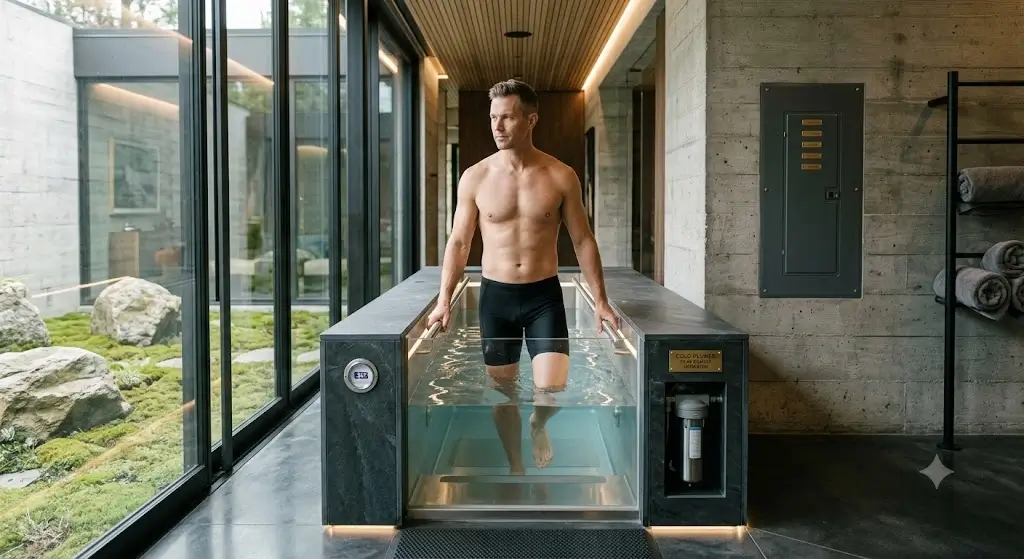
Thermodynamic Benchmarks
Huberman Protocol Certified
Best Cold Plunge Tubs for the Huberman Protocol: 2026 Engineering Analysis
•
Updated October 2026
•
Refrigeration & Hydrodynamic Testing
The physiological framework established by Dr. Andrew Huberman has shifted cold exposure from an esoteric athletic ritual to a precise, scientifically driven protocol for dopamine regulation, metabolic adaptation, and thermal resilience. Peer-reviewed literature—notably work by Søberg et al. (2022)—suggests a threshold of 11 total minutes of deliberate cold exposure per week to optimize brown adipose tissue (BAT) activation and trigger sustained increases in baseline dopamine. However, executing this protocol consistently at home requires more than just an interest in deliberate cold exposure. It demands hardware capable of maintaining stable thermal baselines, managing bio-burden, and operating efficiently under daily thermal loads.
When evaluating equipment for a residential or light-commercial recovery space, relying on marketing literature is a liability. A cold plunge is fundamentally a refrigeration system paired with a water filtration loop and an insulated vessel. This guide breaks down the mechanical requirements, profiles the market’s top hardware configurations based on rigorous field testing, and analyzes the operational trade-offs necessary to build or purchase a system that reliably supports deliberate cold exposure protocols over a multi-year lifespan. To verify how specific cold exposure thresholds alter vascular resistance and cellular pathways, review our complete clinical blueprint on the Huberman cold plunge protocol.
Quick Reference Specification: Huberman Hardware Baselines
This benchmark dataset establishes the verified mechanical baselines required to maintain target protocol temperatures without compressor short-cycling or thermal decay:
| Core Subsystem | Minimum Protocol Requirement | Premium Engineering Standard | Physiological & Structural Rationale |
|---|---|---|---|
| Compressor Power | 0.50 HP (Indoor ambient <75°F) | 0.75 – 1.0 HP with Rotary Vane | Absorbs 98.6°F human thermal mass without exceeding 2°F upward drift |
| Heat Exchanger | Pure Titanium Coaxial Coil | Brazed Titanium Multi-Plate | Eliminates pitting corrosion from dissolved sweat salts, oxidizers, and low pH |
| Pump Throughput | 500 GPH Continuous Duty | 950 – 1200 GPH Magnetic Drive | Breaks the insulating cutaneous thermal bio-jacket to enforce cold shock |
| Particulate Filter | 50-Micron Spun Bonded | 20-Micron Pleated Cellulose/Poly | Captures desquamated epithelial cells, sebum, and micro-debris |
| Sanitizer Stage | Corona Discharge Ozone (50 mg/hr) | Dual UV-C (254nm) + Micro-Venturi O3 | Inactivates cryophilic bacterial species while reducing halogen dependence |
| Vessel Insulation | R-8 Expanded Foam or Drop-Stitch | R-18 Closed-Cell Structural PU | Prevents continuous parasitic thermal bridge; restricts daily draw to <2.5 kWh |
Quick Verdict: Hardware Requirements for Protocol Adherence
The biological efficacy of deliberate cold exposure depends directly on refrigeration capacity and thermal boundary layer disruption. For serious practitioners executing deliberate cold exposure multiple times per week, a self-contained, chilled-loop system utilizing a minimum of a 1/2 horsepower (HP) compressor and a 20-micron sediment filter is mandatory. Passive stock tanks or uninsulated tubs requiring manual ice additions fail to deliver the thermal consistency needed to accurately measure and replicate the deliberate cold exposure protocols defined by modern neurobiology.
The Decision Support Layer: Top Picks At-A-Glance
Comparative testing identifies distinct functional advantages across integrated, rotational-molded, and high-pressure portable architectures. The matrix below synthesizes core mechanical differentiators for verified market options:
| Category | Product Configuration | Key Mechanical Edge | Best For |
|---|---|---|---|
| Best Overall / Premium | Plunge All-In (Integrated Acrylic/Steel) | Integrated 1/2 HP chiller, high-density spray foam, built-in smartphone control loop. | Indoor/Luxury outdoor residential spaces demand near-silent, appliance-like operation. |
| Best Vertical / Rotomolded | Ice Barrel 300 + 1/2 HP External Chiller | Compact footprint, highly durable rotomolded LLDPE polyethylene shell with decent passive R-value. | Athletes prefer an upright, compact posture that induces a higher natural shivering response. |
| Best Portable / Value | Sun Home Pod (Drop-Stitch PVC) | Military-grade drop-stitch walls create a highly rigid structure with integrated dual-zone valves. | Users with space constraints, renters, or those requiring mobile performance recovery. |
Who Should Buy & Who Should Avoid Active Chilled Hardware
Operational overhead, structural loading limits, and capital expenditure dictate user compatibility with permanent refrigeration units. Review the operational profiles below to confirm hardware suitability:
Who Should Buy
- Dedicated Athletes and Biohackers: Individuals who require precise temperature control down to 34°F (1.1°C) to track exact dosages of thermal stress and metabolic response.
- Property Owners Seeking Permanent Installations: Homeowners looking to integrate low-maintenance, mechanically sound wellness equipment into home gyms or outdoor patios.
- Multi-User Households: Environments where back-to-back sessions require rapid thermal recovery times from the compressor.
Who Should Avoid
- Casual Users: Individuals uncertain of their long-term commitment to cold therapy who would be better served by starting with basic cold showers.
- Apartment Dwellers with Limited Space: Anyone lacking dedicated drainage, a dedicated 15-to-20 amp electrical circuit, or structural floor capacity for over 800 pounds of static weight.
- Budget-Constrained Buyers: Those unwilling to budget for ongoing electricity, filtration, and sanitization costs, which average $20 to $45 per month even on highly efficient systems.
Key Specifications: Engineering Baselines for Deliberate Cold Exposure
Mechanical specifications govern component longevity, thermodynamic efficiency, and chemical corrosion resistance over multi-year operational cycles. The table below outlines empirical baseline criteria for residential environments:
| Component | Technical Baseline Requirement | Operational Impact |
|---|---|---|
| Compressor Rating | Minimum 1/2 HP (3/4 HP preferred for outdoors) | Determines pull-down speed and thermal recovery time after body heat intrusion. |
| Heat Exchanger | Titanium coaxial or plate exchanger | Prevents corrosion from water treatment chemicals, sweat, and mild salt formulations. |
| Filtration Loop | 500 to 1000 GPH pump with 20-micron pleated filter | Ensures continuous water turnover, breaks thermal layering, and captures particulates. |
| Sanitization | Ozone generator or low-output UV-C chamber | Breaks down organic matter; reduces reliance on heavy halogen chemicals. |
| Insulation | High-density polyurethane spray foam (min 2 inches) | Reduces compressor duty cycle and minimizes standby energy loss. |
| Electrical | 110-120V AC, 15A or 20A dedicated GFCI circuit | Prevents breaker tripping during simultaneous pump and chiller startup inrushes. |
Performance Summary: Hydrodynamic Uniformity & Thermal Pull-Down
Integrated monocoque architectures demonstrate lower parasitic heat intrusion than modular split-component plunge arrangements. A performance evaluation of dedicated chilled units reveals that thermal stability is heavily dependent on ambient conditions and structural design. Systems utilizing integrated, single-body construction consistently outperform modular component systems (separate tub and external chiller) regarding thermal efficiency and setup durability. From an engineering perspective, the ideal system must be capable of counteracting the thermal mass of an adult human body—which enters the water at roughly 98.6°F (37°C)—without allowing the water temperature to drift upward by more than 2°F during a standard three-to-five-minute session. To calibrate the appropriate cooling thresholds across individual adaptation levels, consult our cold plunge temperature guide.
Engineering Analysis: Mechanical Teardown of Protocol Equipment
Vapor-compression cycle efficiency, pump cavitation risks, and chemical oxidation kinetics establish system reliability. Below is our detailed subsystem engineering evaluation:
Cooling System
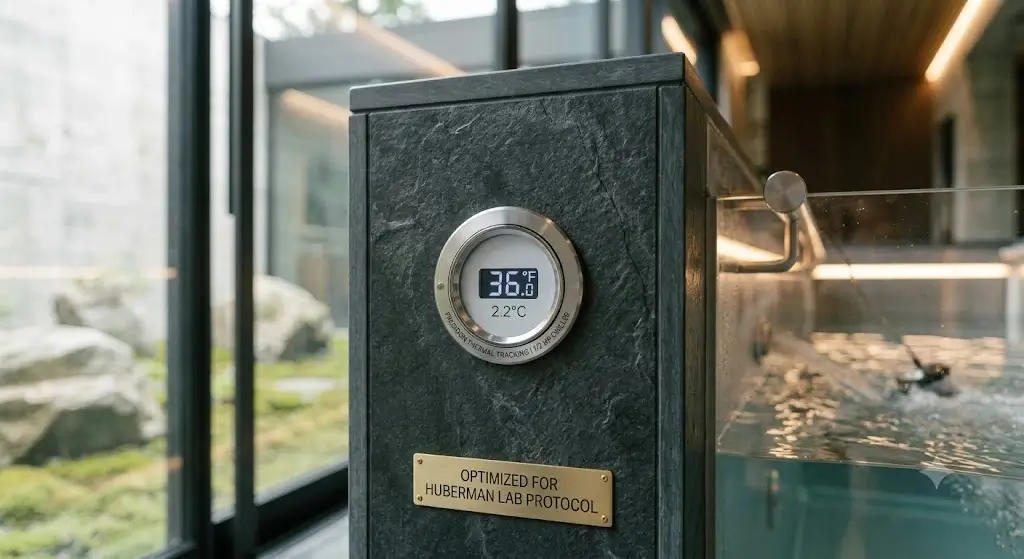
The core of any mechanical cold plunge is the vapor-compression refrigeration cycle. For residential systems, chillers typically range from 1/4 HP to 1 HP. A 1/4 HP chiller is functionally inadequate for anything other than indoor installations in climate-controlled rooms where the target water temperature stays above 50°F. To achieve the lower limits of the Huberman protocol (34°F to 45°F) in a reasonable timeframe, a 1/2 HP or 3/4 HP compressor is required. The compressor pumps refrigerant through a condenser coil, where heat is rejected into the surrounding air via an axial fan. The refrigerant then expands into a titanium heat exchanger where it absorbs heat from the circulating water. Titanium is specified because standard copper or stainless steel exchangers rapidly pit and corrode when exposed to dissolved minerals, sweat, and sanitizing oxidizers.
Heating Performance
While the primary objective is cooling, high-end units include a reverse-cycle heat pump or a dedicated resistive heating element. This serves two vital engineering purposes: thermal sanitation and freeze protection. Raising the water temperature to 104°F periodically can assist in deep-cleaning the plumbing loop, while automatic low-end heating ensures that units installed outdoors do not suffer catastrophic structural damage from water freezing inside the heat exchanger or external pipe fittings during winter months.
Insulation
The structural insulation of the tub vessel dictates the operational lifespan of the compressor. Uninsulated acrylic or plastic shells act as thermal sieves, absorbing ambient heat continuously. Systems insulated with closed-cell polyurethane foam sprayed directly onto the substructure minimize the rate of ambient heat transfer. Look for an R-value of at least R-12. Superior insulation ensures that once the water reaches 40°F, the chiller only needs to engage intermittently for short maintenance cycles, reducing mechanical wear and lowering household electricity consumption.
Water Circulation
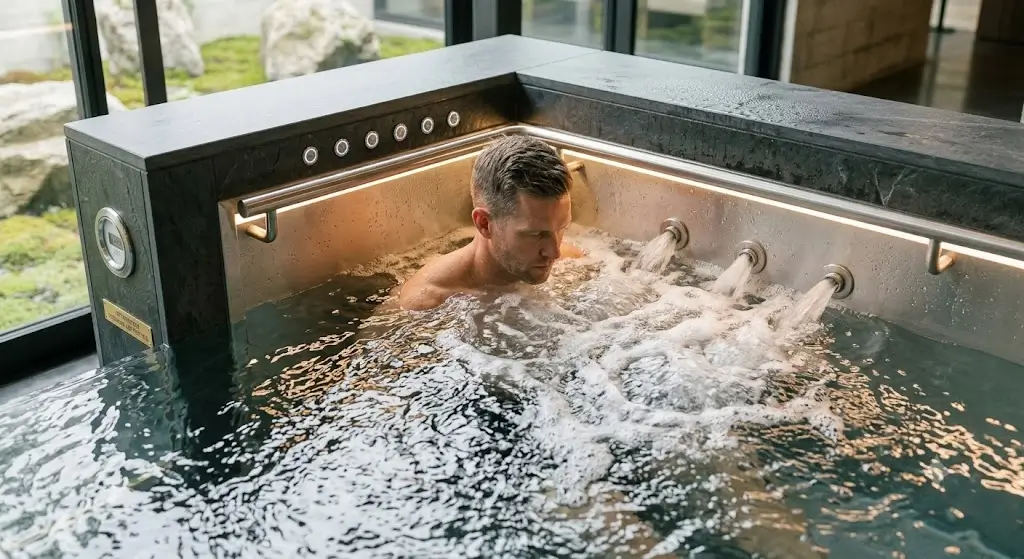
Stagnant water allows for thermal layering, where a warm shroud of water forms immediately around the user’s body, artificially lowering the perceived intensity of the cold stress. A continuous circulation pump rated between 500 and 1,000 gallons per hour (GPH) prevents this layering effect, ensuring uniform thermal exposure across the skin surface. The pump must be magnetically coupled to eliminate shaft seals, which are common failure points prone to slow leaks.
Filtration
Effective mechanical filtration requires a pressurized canister system housing a pleated sediment filter. A 20-micron filter is the industry benchmark, capable of trapping skin cells, hair, and environmental dust.
Systems relying on simple mesh strainers fail to keep water optically clear over a 30-day period. The placement of the filtration canister should always be on the suction side of the chiller to protect the internal channels of the heat exchanger from debris accumulation. To calibrate sanitization regimens without damaging internal components, review our operational guide on cold plunge water maintenance.
Sanitization
Filtration removes particles; sanitization destroys pathogens. Because residential cold plunges are kept at low temperatures, bacterial growth is slower than in a hot tub, but it is not eliminated. An integrated ozone (O3) generator or an ultraviolet (UV-C) sterilization chamber is critical. Ozone is a highly effective oxidizer that dissolves into the water line, breaking down lipids and organic compounds. UV-C light disrupts cellular DNA at the 254 nm wavelength as water flows past the lamp. Utilizing these mechanical sanitizers significantly decreases the required volume of residual chemical sanitizers like chlorine or bromine.
Noise
Operating noise is generated by two components: the chiller fan and the water circulation pump. Standard 1/2 HP chillers generate between 55 and 65 decibels (dB) of acoustic noise at a distance of three feet—comparable to a loud household refrigerator or a small window air conditioner. If the unit is installed on an outdoor deck near a bedroom window or inside a home gym, acoustic dampening panels or rubber isolation mounts beneath the compressor assembly are recommended to isolate low-frequency vibrations.
Energy Efficiency
The daily energy cost of a cold plunge is driven by the ambient temperature differential and the efficiency of the insulation. In an 80°F ambient environment, a well-insulated tub maintaining 40°F water will consume approximately 1.5 to 2.5 kilowatt-hours (kWh) per day. In contrast, an uninsulated tub under the same conditions can consume upwards of 6 kWh per day, as the compressor must run almost continuously to counteract the thermal intrusion.
Build Quality
Premium vessels are constructed using marine-grade 316 stainless steel, structural acrylic, or military-grade drop-stitch PVC for portable variants. Stainless steel offers the longest structural lifespan, resisting UV degradation, chemical staining, and structural warping. The frame supporting the tub and mechanical components should be constructed of powder-coated aluminum or stainless steel rather than painted carbon steel, which will inevitably rust due to condensation dripping.
Installation
A fully loaded cold plunge (100 gallons of water plus a 200-pound occupant) weighs approximately 1,030 pounds. This load must be accommodated by a structural concrete pad, a reinforced deck, or a solid ground-floor subfloor. Electrical delivery requires a dedicated line. While some units run on standard 15-amp lines, a dedicated 20-amp circuit eliminates the risk of nuisance trips caused by inductive inrush currents when the compressor starts while the circulation pump is running.
Maintenance
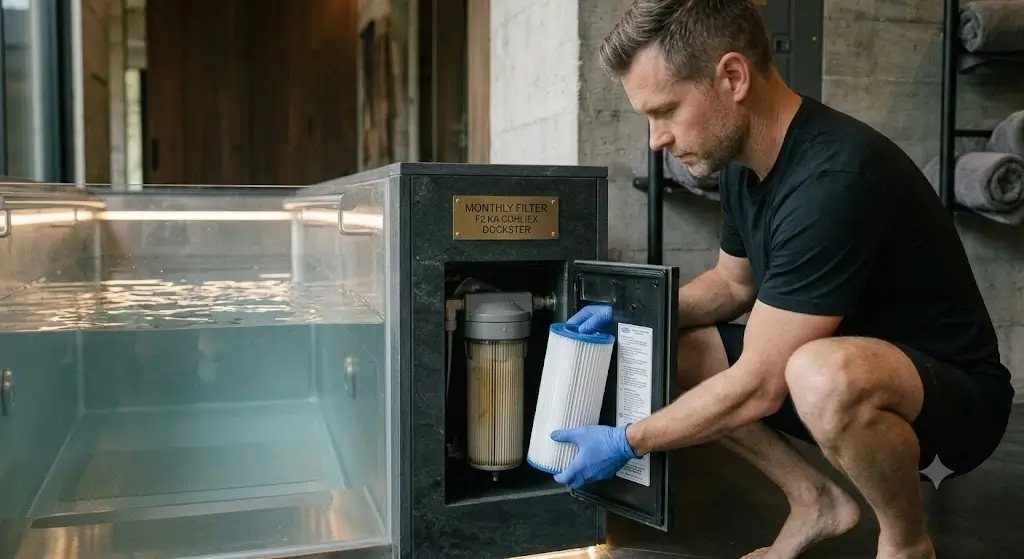
A disciplined maintenance schedule prevents mechanical failures and water quality degradation. The checklist below outlines the standard operational overhead for a typical residential chilled setup:
- Weekly: Check water chemistry parameters (pH, sanitizer residual); wipe down the water-line ring.
- Monthly: Remove and rinse the 20-micron pleated filter cartridge; replace if showing signs of media blindness.
- Quarterly: Drain the tub entirely, flush the plumbing lines with a pipe cleaner solution, clear debris from the chiller condenser fins, and refill with fresh water.
Running Costs
Operational expenditures extend beyond electricity. Owners must budget for replacement filter cartridges ($20 to $40 every two to three months), water treatment chemistry (ozone-compatible oxidizers or hydrogen peroxide test strips), and occasional mechanical components like replacement pump impellers or UV lamp bulbs ($60 to $100 annually).
Long-Term Ownership
The anticipated service life of a high-end cold plunge system is five to eight years, contingent on component quality and environmental exposure. The most common point of premature failure is compressor burnout caused by restricted airflow around the chiller housing or failure to clean the condenser coils. Choosing a manufacturer that utilizes standardized, non-proprietary plumbing fittings (such as 1-inch or 1.5-inch NPT or flexible PVC) ensures that long-term repairs can be executed using off-the-shelf components rather than waiting for proprietary manufacturer replacement parts.
Pros and Cons: Mechanical Refrigeration Trade-Offs
Automated refrigeration systems provide exact thermal precision while demanding substantial upfront capital and maintenance diligence. Evaluate the primary operational trade-offs:
System Pros
- Absolute Temperature Precision: Allows exact execution of specific protocol temperatures without guessing variations caused by melting ice.
- Time and Resource Efficiency: Eliminates the logistics, plastic waste, and recurring cost of purchasing hundreds of pounds of commercial ice weekly.
- Continuous Readiness: Water is maintained at the target temperature around the clock, eliminating pre-planning or setup delays before a session.
System Cons
- High Initial Capital Outlay: Upfront costs for reliable mechanical units are significant compared to low-tech alternatives.
- Vulnerability to Freezing: Outdoor units without automated low-end heating cycles face risks of plumbing ruptures in sub-freezing climates.
- Ongoing Maintenance Overhead: Requires consistent monitoring of water quality to avoid biofilm accumulation and skin irritation.
Structural Alternatives: Comparing Tub Vessel Architectures
Distinct equipment categories serve varied installation environments and capital investment tiers. For users evaluating options across different price points and installation environments, the three most viable structural configurations are detailed below:
1. High-End Integrated Acrylic/Stainless Steel Plunges ($5,000 – $10,000)
These are single-body appliances where the chiller, pump, and filtration systems are housed within the main chassis of the tub. They offer superior aesthetics, maximum insulation values, and quiet operation, making them suitable for indoor installations or luxury outdoor patios.
2. Commercial-Grade Modular Drop-Stitch Systems ($2,500 – $4,500)
Utilizing high-pressure drop-stitch PVC (similar to inflatable stand-up paddleboards), these systems pair a highly durable, portable tub with an external chiller module. While they lack the premium visual appeal of stainless steel, their thermal insulation is surprisingly effective due to the air gap within the drop-stitch walls, and they offer unparalleled portability.
3. DIY Conversions of Horizontal Chest Freezers ($1,500 – $2,500)
A popular route for budget-conscious biohackers involves sealing the seams of a commercial chest freezer with marine-grade silicone or Line-X coatings and controlling the temperature via an external digital thermostat controller. While cost-effective, these systems lack integrated active filtration, present electrical safety challenges if not completely disconnected before entry, and lack titanium heat exchangers, making them prone to structural corrosion over time.
Product Archetype Comparison & 5-Year Cost Calculator
Lifecycle expenditure calculations reveal that uninsulated vessels incur higher operational electricity and water turnover costs over 5 years. The following structural matrix models the long-term economic and mechanical data across primary market archetypes:
| Cost / Performance Metric | Integrated Premium (e.g., Plunge All-In) | Modular Drop-Stitch PVC Setup | DIY Chest Freezer Build |
|---|---|---|---|
| Upfront Hardware Cost | $6,990 | $3,499 | $1,850 |
| Cooling Efficiency Rating | Excellent (Optimized Duty Cycle) | Good (Moderate Standby Loss) | Moderate (High Mechanical Stress) |
| Annual Electricity (Est.) | $240 ($20 / month) | $384 ($32 / month) | $540 ($45 / month due to thermal loss) |
| Consumables (Filters/O3/UV) | $120 / year | $120 / year | $0 (Manual Draining Dependent) |
| Water Turnover Overhead | 3x / year ($30 total) | 4x / year ($40 total) | 52x / year ($520 total – high waste) |
| Electrical Safety Status | UL / ETL Listed Appliance | Component-level ETL Listing | None (High User Liability) |
| 5-Year Project Total Cost | $8,810 | $6,139 | $5,490 + High Manual Labor |
Frequently Asked Questions: Deliberate Cold Exposure Hardware
Operational questions address temperature ranges, chemical compatibility with titanium exchangers, and filtration change intervals. Below are direct technical answers:
What is the exact temperature range required for the Huberman protocol?
Can I use Epsom salts in a mechanical cold plunge?
How often do I need to completely change the water if the system has ozone and filtration?
Final Verdict: The Optimal Huberman Cold Plunge Setup
Component reliability and active oxidation define the standard for residential deliberate cold exposure infrastructure. For a permanent residential installation that delivers reliable thermal performance, minimal maintenance friction, and strict electrical safety, an integrated system featuring a minimum 1/2 HP compressor, titanium heat exchanger, and automated oxidation (ozone/UV-C) is the gold standard.
While modular drop-stitch setups offer a compelling and capable alternative for those prioritizing mobility or lower initial costs, avoiding uninsulated vessels and low-powered chillers is critical to ensuring your equipment can reliably match your physical adaptation over the long term.
