
Neurovascular Recovery
Evidence-Based Biohacking
Evidence-Based Contrast Therapy Protocol: Far-Infrared Sauna Blanket x Cold Plunge
•
Published: January 2026
•
Updated October 2026
Quick Reference Specification: Contrast Therapy Master Benchmarks
Contrast therapy protocols establish quantifiable thermodynamic parameters across far-infrared heat exposure and cold water immersion. The benchmark dataset below outlines target thermal thresholds, vascular oscillation rates, and biological markers verified for home biohacking environments:
| Protocol Parameter | Target Operating Range | Biological Mechanism & Lab Notes |
|---|---|---|
| Infrared Heat Temperature | 150°F – 165°F (65°C – 74°C) | Triggers peripheral vasodilation via eNOS, increasing cutaneous blood flow |
| Cold Water Immersion Temp | 50°F – 55°F (10°C – 12.8°C) | Drives rapid vasoconstriction, shunting blood toward core visceral organs |
| Cycle Ratio (Heat : Cold) | 15–20 Mins Heat : 1–2 Mins Cold | Optimizes vascular pumping action without triggering severe shivering fatigue |
| Cardiovascular Load | 100 – 125 BPM (Transient Heart Rate) | Simulates steady-state Zone 2 aerobic strain during active heat phase |
| Neurochemical Biomarkers | HSP70, Plasma Norepinephrine, eNOS | Cellular chaperone refolding paired with acute sympathovagal alertness surges |
| Recommended Frequency | 2 to 4 Sessions Weekly | Prevents central nervous system overtraining while maintaining tissue recovery |
Quick Definition & Mechanism:
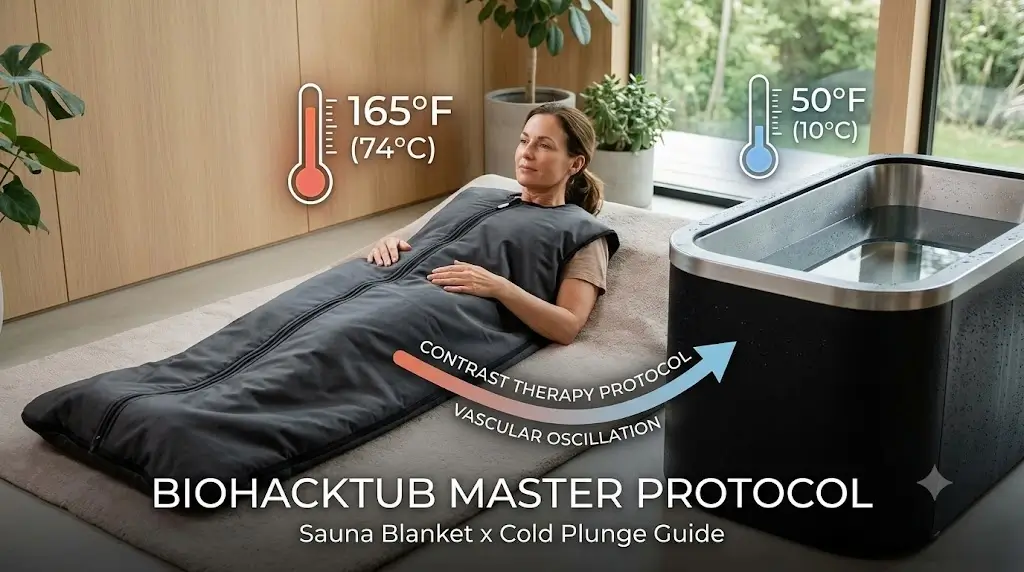
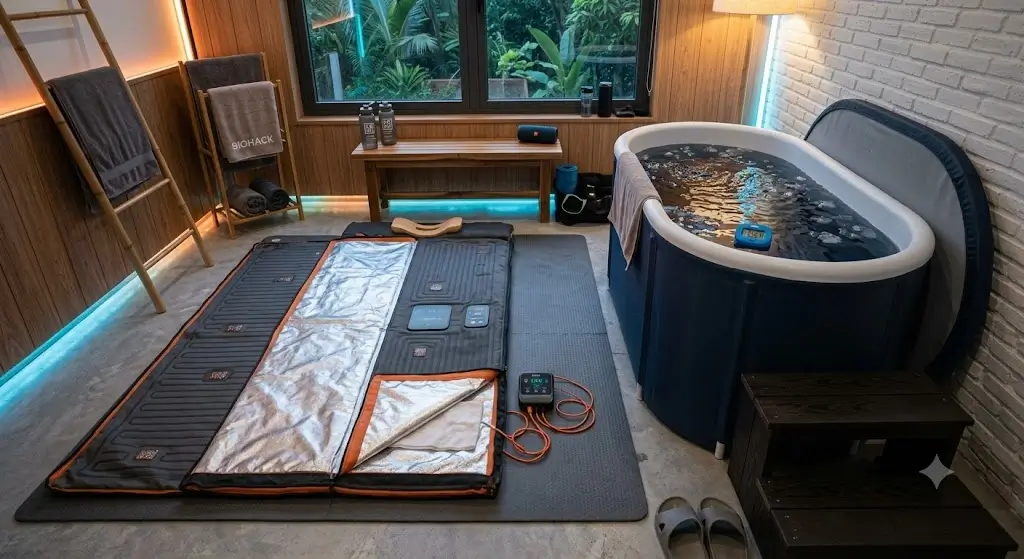
Contrast therapy combining a far-infrared sauna blanket (150°F–165°F) with cold water immersion (50°F–55°F) induces rapid alternating peripheral vasodilation and vasoconstriction—a biological process known as vascular oscillation. This mechanism supports lymphatic circulation, promotes autonomic nervous system balance, temporary neurochemical alertness, and reduced muscular soreness (DOMS) when applied systematically.
1. The Biomechanics of Contrast Therapy
Alternating thermal exposure triggers rapid transitions between peripheral vasodilation and visceral vasoconstriction to stimulate systemic circulation. During far-infrared exposure, smooth muscles in peripheral blood vessels relax, increasing cutaneous blood flow. Subsequent immersion in cold water causes immediate vasoconstriction, shunting blood toward core organs.
| VASCULAR OSCILLATION DYNAMICS |
| |
| [PHASE 1: FAR-INFRARED HEAT] [PHASE 2: COLD IMMERSION] |
| • Peripheral Vasodilation • Rapid Peripheral Vasoconstriction |
| • Nitric Oxide Mediated Flow • Core Blood Shunting |
| • Transient HR Elevation (100–120 BPM) • Transient Norepinephrine Release |
| • Elevated Cutaneous Transpiration • Venous Return Enhancement |
+———————————————————————————–+
Cellular Stress Responses: Evidence vs. Theory
While thermal and cold stressors induce physiological cellular adaptations, it is essential to distinguish established human physiological data from ongoing preliminary research:
- Heat Shock Proteins (e.g., HSP70): Human clinical literature confirms that heat exposure raises Heat Shock Protein levels. However, HSP activation depends primarily on core body temperature elevation rather than the blanket’s surface setting. A 15–20 minute session in a sauna blanket elevates core temperature moderately (typically +1.0°C to +1.5°C).
- Cold Shock Proteins (e.g., RBM3): Animal models suggest RNA-Binding Motif 3 (RBM3) plays a protective role in synaptic neuroplasticity during hypothermia. Human data regarding mild cold plunges (50°F–55°F) and RBM3 expression remains an emerging area of research. If you are examining cold-shock protocols calibrated specifically for deliberate neuroplastic adaptation, read our breakdown of the Huberman cold plunge protocol.
- Autonomic & Neurochemical Signaling: Cold water immersion acutely stimulates the sympathetic nervous system, causing documented spikes in plasma norepinephrine and dopamine. These responses contribute to post-session alertness and mood elevation.
Scientific Evidence Matrix
| Physiological Claim | Evidence Strength | Primary Biological Mechanism |
|---|---|---|
| DOMS Reduction | High (Human RCTs) | Reduced localized inflammation & tissue edema via vascular pump |
| Norepinephrine / Dopamine Surge | Moderate–High (Human Studies) | Sympathetic nervous system stimulation via cold shock response |
| HSP70 Activation | Moderate (Inferred from Sauna Data) | Mild hyperthermic cellular stress and protein refolding |
| RBM3 Synaptic Protection | Emerging (In Vivo / Animal Models) | Cold-induced RNA binding protein synthesis |
2. Step-by-Step BiohackTub Protocol
Our clinical recovery protocol combines preheated infrared thermal wraps with controlled two-minute cold water immersions. Alternating systematically between both modalities maximizes fluid mobilization while preventing core overcooling:
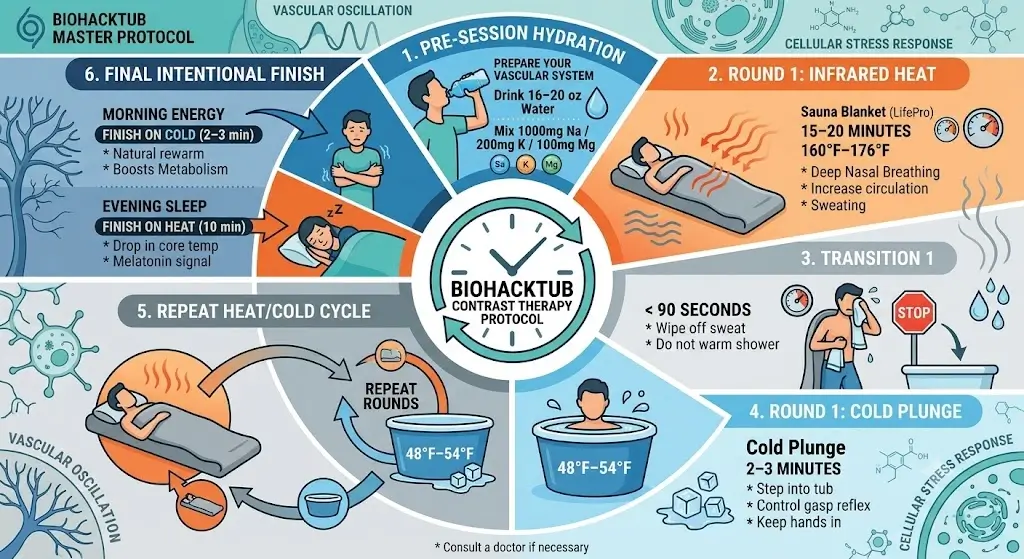
Step 1: Hydration & Preparation
- Drink 16–20 oz of ambient water mixed with electrolytes (approx. 500–1,000 mg Sodium, 200 mg Potassium, 100 mg Magnesium).
- Preheat your sauna blanket for 10–15 minutes (Target internal setting: 150°F–165°F). If you are looking for verified gear recommendations, check out our roundup of the best infrared sauna blanket picks tested for heating accuracy and safety.
- Verify cold plunge temperature is stabilized between 50°F and 55°F (beginners should avoid sub-50°F temperatures).
- Wear breathable cotton attire inside the blanket to absorb sweat runoff and maintain hygienic barrier comfort.
Step 2: Round 1 – Infrared Heat Phase (15–20 Minutes)
- Lie comfortably on a padded surface inside the blanket.
- Practice slow, rhythmic nasal breathing (e.g., 4-second inhale, 6-second exhale) to manage heart rate acceleration.
- Remain inside until mild-to-moderate transpiration occurs. Discontinue if feeling lightheaded or uncomfortably overheated.
Step 3: Transition & Wipe-Down (<90 Seconds)
- Unzip blanket and exit carefully.
- Towel off sweat completely. Never enter a cold plunge dripping heavy sweat, as organic compounds compromise water filtration hygiene and reduce direct thermal conductivity. To maintain sterile water without frequent draining, follow our guide on cold plunge water maintenance.
Step 4: Round 1 – Cold Immersion (1–2 Minutes)
- Submerge slowly up to the chest or neck level. If setting up a home recovery lab, explore our hands-on review of the best portable cold plunge on Amazon for reliable temperature control.
- Focus on controlling the involuntary initial gasp reflex through prolonged exhales.
- Exit after 1 to 2 minutes. Focus on psychological calm rather than enduring extreme duration.
Step 5: Round 2 Cycle & Finishing Protocol
- Dry off, don dry barrier clothes, and re-enter the preheated blanket for 12–15 minutes.
- Follow with a final 1–2 minute cold immersion.
- Morning/Alertness Goal: End on COLD. Allow natural thermogenesis (rewarming) to occur gradually.
- Evening/Sleep Goal: End on HEAT (10 minutes at a lower setting like 130°F–140°F). The subsequent natural drop in core temperature after exiting assists in sleep onset signaling.
3. Protocol Parameters by Goal
Specific recovery objectives dictate precise thermal exposure temperatures, plunge water ranges, and terminal cycle states. Match your session to the clinical targets below:
| Objective | Sauna Blanket Temp | Plunge Temp | Rounds | Finishing State |
|---|---|---|---|---|
| General Recovery | 155°F–165°F | 50°F–55°F | 2 Cycles | Cold (Natural Rewarm) |
| Mental Alertness | 150°F–160°F | 45°F–50°F | 2 Cycles | Cold (Natural Rewarm) |
| Evening Relaxation | 140°F–150°F | 55°F–60°F | 1–2 Cycles | Heat (Gentle Rewarm) |
4. Safety, Risk Management & Contraindications
Rapid hemodynamic shifts place acute demands on vascular smooth muscle and cardiac output. Contrast therapy places acute stress on the cardiovascular and nervous systems.
Medical Warnings & Conditions to Avoid
Do NOT perform contrast therapy if you have:
- Uncontrolled hypertension or cardiovascular disease
- Pregnancy
- Raynaud’s phenomenon or severe cold urticaria
- Open wounds, recent surgeries, or active severe infection/fever
- Peripheral neuropathy or impaired thermal sensation
Red-Flag Symptoms: Immediately terminate the session if you experience chest pain, severe dizziness, tunnel vision, disorientation, or heart palpitations.
Hypertrophy Timing Note for Strength Athletes:
If maximum muscle hypertrophy is your primary objective, avoid cold water immersion immediately following resistance workouts. Cold exposure suppresses local inflammatory cascades and mTOR activation required for muscle protein synthesis. Delay cold plunging by at least 4 to 6 hours post-lifting, or utilize gentle infrared heat alone. If you want to compare convective wood cabins against direct infrared wraps, read our technical breakdown on infrared vs traditional sauna heating dynamics.
Frequently Asked Questions
Evidence-based answers address weekly protocol frequencies, core temperature elevation comparisons, and strength training timing. Direct technical answers are outlined below:
