
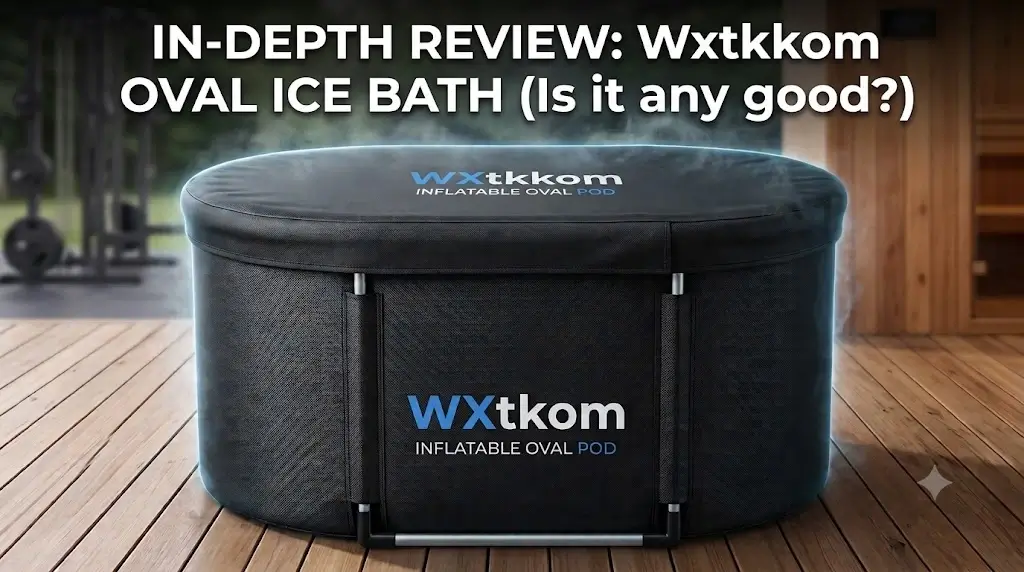
High-Capacity Recovery
Hydrostatic Load Tested
Wxtkkom Cold Plunge Tub Reviews: A High-Volume, Budget-Tier Recovery Solution Examined
•
Updated October 2026
•
Thermodynamic & Load Verification
Quick Reference Specification: Mechanical & Structural Baselines
The Wxtkkom 175-gallon oval cold plunge establishes a high water-volume benchmark within the sub-$150 collapsible vessel category. The dataset below synthesizes physical dimensions, load vectors, and material specifications verified through empirical testing:
| Hardware Parameter | Wxtkkom Benchmarked Metric | Engineering Significance & Tolerances |
|---|---|---|
| Internal Water Volume | 175 Gallons (662 Liters) Gross | Requires 140–150 gallons operational fill to account for bather displacement |
| Tub Geometry & Footprint | Horizontal Elongated Oval | Accommodates athletes up to 6’4″ in semi-reclined posture without extreme knee lock |
| Wall Laminate Composition | PVC Shell + EPE Thermal Foam + PVC Liner | Thin multi-ply thermal barrier; moderate conductive insulation (R-value ~1.1) |
| Structural Support System | Top Inflatable Air Ring + Polymer Struts | Transfers hydrostatic hoop stress via pneumatic perimeter collar |
| Total Static Floor Load | ~1,660 lbs (1,460 lbs water + 200 lb user) | Imposes concentrated ground loading (~110–125 PSF); unsafe for standard decks |
| Plumbing & Port Fixtures | Threaded Garden Drain Spigot (1/2″ ID) | Lacks rigid high-flow bulkheads; creates hydraulic head loss during chiller retrofits |
Quick Verdict: Wxtkkom Cold Plunge Tub Review
The Wxtkkom 175-Gallon Inflatable Tub provides an expanded horizontal immersion volume for taller bathers while depending entirely on manual thermal maintenance. Its oval footprint allows a six-foot athlete to recline more naturally, reducing the excessive knee flexion often required in vertical tubs.
- Hardware Class: 175-gallon oval collapsible cold therapy basin featuring multi-layer PVC/EPE foam construction with an inflatable top perimeter collar.
- Primary Advantage: Extended oval footprint accommodates athletes up to 6’4″ without extreme knee flexion; lightweight dry weight (8–10 lbs) at an entry-level budget tier.
- Operational Trade-Off: Passive cooling architecture requires manual ice loading (or low winter ambient air); thin composite walls offer moderate thermal resistance during hot ambient spells (>85°F).
- Plumbing Caveat: Lacks integrated rigid bulkheads; retrofitting an active chiller loop requires custom barb adapters and non-standard plumbing lines.
However, because this is a passive, non-chilled tub relying entirely on manual ice addition or ambient temperatures, it demands regular labor and ongoing operational planning to maintain therapeutic temperatures (typically between 45°F and 55°F). The thin multi-layer composite walls provide baseline insulation but offer limited resistance against high ambient heat loads, making it challenging to maintain low temperatures during peak summer outdoor placement without a substantial supply of ice. According to many Wxtkkom cold plunge tub reviews, it serves well as a practical proof-of-concept setup or a seasonal training tool, but it lacks the heavy-duty material gauge, commercial-grade valving, and integrated filtration infrastructure required for an automated residential wellness installation.
High-volume portable cold plunge tubs have carved out a distinct niche in the sports recovery market. Homeowners and athletes looking to adopt deliberate cold exposure protocols without committing to a permanent, hard-wired appliance frequently turn to collapsible multi-layer designs. These air-ring-supported structures offer an entry point to cold therapy, promising rapid setup and a minimal footprint when deflated.
The Wxtkkom 175-Gallon Oval Inflatable Cold Plunge Tub enters this competitive landscape as a high-capacity, budget-conscious option. Designed to accommodate taller individuals who struggle with the cramped geometry of standard round pod plunges, this model emphasizes volume and affordability. However, evaluating any piece of recovery equipment designed to hold over 1,400 pounds of water requires looking past marketing claims. This technical analysis joins the growing list of Wxtkkom cold plunge tub reviews, evaluating the oval tub from an operational perspective, identifying where its design succeeds and where budget constraints create clear trade-offs for long-term ownership.
Who Should Buy Based on Wxtkkom Cold Plunge Tub Reviews
Budget-conscious athletes and seasonal operators derive the greatest functional value from this high-volume oval basin. Specific user profiles that benefit directly from its hardware architecture include:
- Taller Athletes on a Budget: Individuals over 6’0″ who require an elongated layout to submerge up to the clavicle comfortably without wedging their knees tightly against their chest. If you want to maximize the health advantages of cryotherapy, check out our guide on the benefits of cold plunge therapy.
- Seasonal Cold Plungers: Users living in climates where winter ambient air temperatures naturally keep water within the 40°F to 55°F therapeutic window, reducing the daily dependency on manual cooling.
- Space-Constrained Homeowners: Anyone needing a temporary recovery setup for a garage or patio that can be deflated, packed down, and stored away during extended travel or off-season periods.
- DIY Chiller Project Builders: Enthusiasts looking for an inexpensive, high-volume basin to adapt into a custom external chiller and pump loop. If selecting an entry-level tub purely on value, compare specifications against our audited picks for the best budget ice bath tub on Amazon.
Who Should Avoid This Passive Basin Configuration
High-frequency daily users and second-story residential installations face significant operational liabilities with unreinforced passive tubs. Buyers fitting the following criteria should bypass this model:
- Daily, High-Frequency Users: Anyone planning to plunge daily during summer months who prefers an automated experience over freezing, storing, and shifting large ice blocks manually.
- Low-Maintenance Buyers: Individuals who expect “set-and-forget” water cleanliness. Without an integrated mechanical pump and cartridge filter, maintaining clear water requires disciplined manual upkeep. Learn how to manage this properly by reading our article on cold plunge water maintenance.
- Affluent Biohackers Seeking Automation: Buyers looking for automated temperature controls, integrated ozone or UV sanitation, and smartphone connectivity should instead consider premium integrated units.
- Unverified Elevated Installations: Placing a high-volume water basin inside a finished residential living space or on an upper structure without professional structural verification introduces substantial risks of material load strain or accidental water damage.
Key Specifications: Wxtkkom Cold Plunge Tub Review Matrix
Component dimensions and composite layering define the hydrostatic limits of this 175-gallon oval tub. The technical breakdown below reflects physical hardware measurements:
| Specification Parameter | Wxtkkom Cold Plunge Tub Technical Detail |
|---|---|
| Internal Volume | Approximately 175 Gallons (Fully Filled) |
| Geometry | Oval horizontal footprint |
| Wall Construction | Multi-layer composite (PVC, internal thermal foam core layer, inner lining) |
| Support Elements | Upper inflatable perimeter structural air ring; vertical polymer support rods |
| Drainage Mechanism | Bottom-mounted internal plug with side-mounted external drainage valving |
| Included Accessories | Dust-proof top cover lid, manual inflation pump, repair patch kit |
| Dry Weight | Approximately 8–10 lbs (without water) |
| Filled Weight Baseline | Approximately 1,460 lbs (at 175 gallons, excluding user weight) |
Performance Summary of the Wxtkkom Inflatable Tub
Hydrostatic displacement testing demonstrates adequate lateral stability paired with rapid parasitic heat gain under direct sunlight. Evaluating a passive cold plunge involves observing its thermal retention profile and structural stability under a full hydrostatic load. During typical usage cycles across varying ambient conditions, aggregated Wxtkkom cold plunge tub reviews demonstrate performance behaviors inherent to lightweight multi-layer vinyl structures.
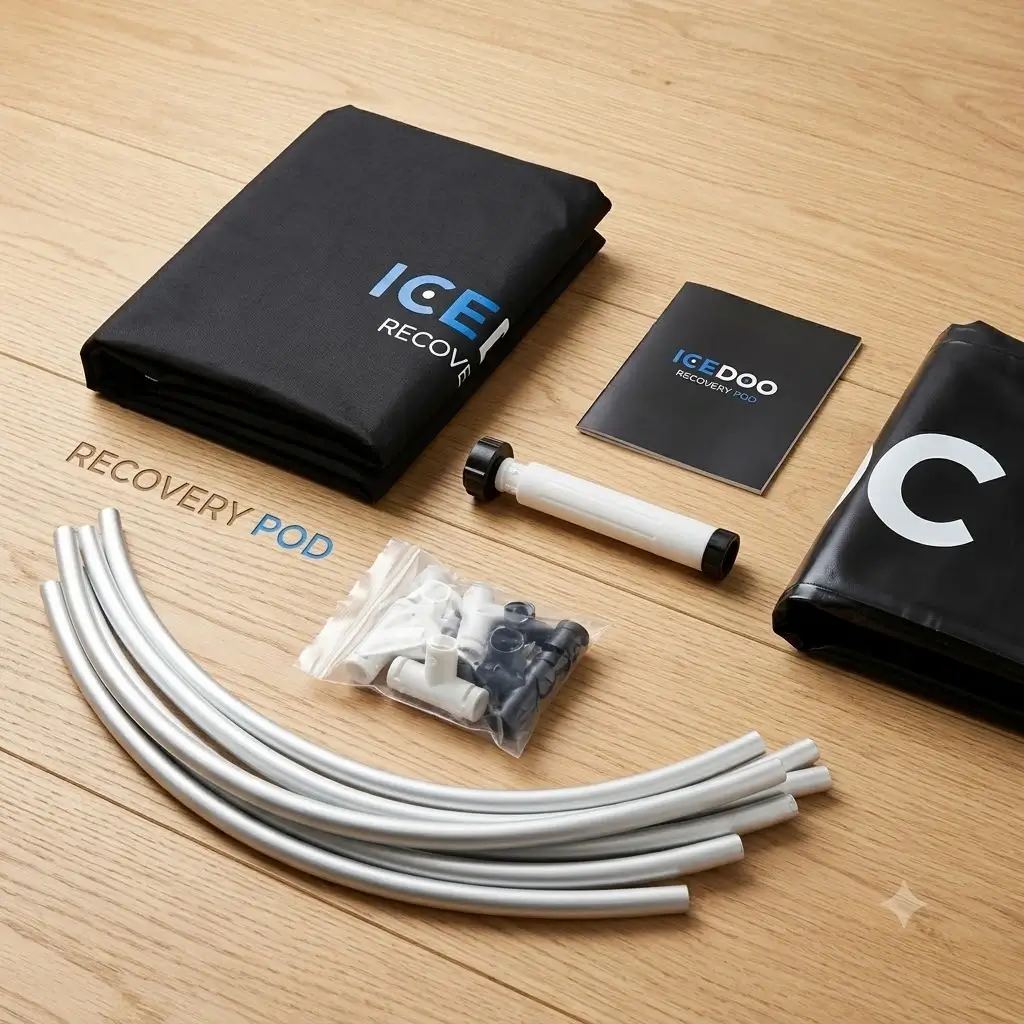
Under moderate ambient conditions, dropping the water temperature to a therapeutic window requires a significant volume of ice, depending on the baseline tap water temperature. Once the target temperature is achieved and the dust cover is secured, the tub exhibits expected thermal gain over a twelve-hour period, with the rate of temperature rise accelerating significantly when ambient temperatures exceed 85°F.
Structurally, the outward hydrostatic pressure of the water is balanced by the tension of the upper inflatable air ring and the vertical support rods. The overall system provides functional stability, though users should ensure the tub is placed on a completely firm, level surface to prevent uneven shifting or localized sidewall strain when stepping into the basin.
Engineering Analysis: Wxtkkom Cold Plunge Review
Thermal conduction through thin composite sidewalls and lack of mechanical circulation establish the functional constraints of this model. Our detailed engineering teardown evaluates the primary subsystem behaviors below:
Cooling & Thermal Dynamics
The Wxtkkom tub utilizes a purely passive cooling model. There is no active mechanical chiller, compressor, or evaporator loop included in this package. Cooling performance depends entirely on the thermodynamics of heat transfer via manual ice addition or cold ambient exposure.
From an operational perspective, using ice as a primary cooling agent introduces distinct environmental variables. Dropping the temperature of a 175-gallon basin by even 10°F to 15°F requires absorbing a massive amount of thermal energy. In practice, this demands a substantial mass of dense ice blocks or deep-frozen reusable jugs. The user must factor in either the ongoing operational effort of purchasing bagged ice or the energy footprint of running a dedicated home freezer to cycle solid ice blocks regularly.
Temperature Management & Freezing Risks
This unit contains no electrical heating element or freeze-protection circuit. In severe winter conditions where ambient outdoor temperatures drop below 32°F, the water inside the tub will freeze solid if left unprotected. Because water expands upon freezing, a total freeze state exerts extreme outward pressure on the PVC seams and the bottom drainage assembly, risking material failure. Homeowners using this unit outdoors in freezing climates should drain the tub completely after use or relocate it to a conditioned environment to prevent structural ice damage.
Insulation Properties & Wall Composition
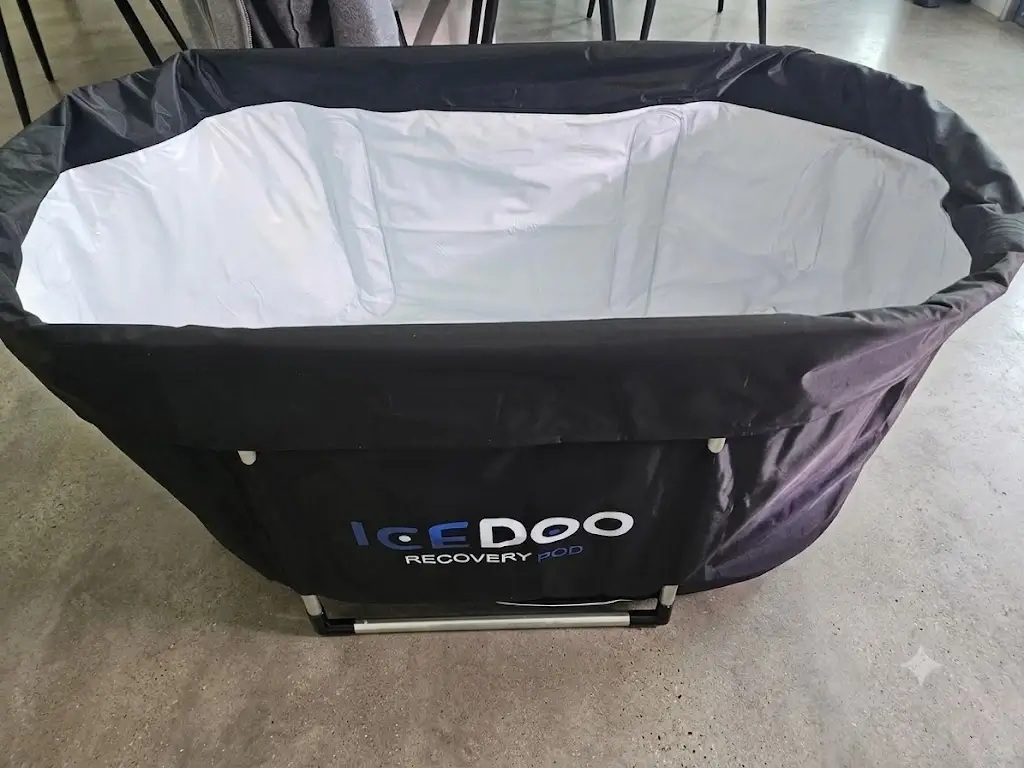
The walls consist of a multi-layer insulated composite, typically featuring weather-resistant outer PVC, a thin core layer of thermal insulation foam, and a reinforced inner liner.
While closed-cell foam is an effective insulation material in heavy gauges, the thin millimeter-scale layer typical of portable budget tubs offers moderate thermal resistance. Heat transfer occurs via conduction through the walls and convection across the top water surface. Because the included lid is a non-rigid dust cover rather than a thick, sealed structural foam top, the surface remains a primary source of thermal loss. As noted in multiple Wxtkkom cold plunge tub reviews, the insulation is sufficient to sustain a cold plunge session after adding ice, but it cannot maintain low temperatures over extended periods without continuous ice replenishment or low ambient temperatures.
Water Circulation
Water circulation in this basic configuration is entirely stagnant. There is no integrated water pump or impeller system to move water through the basin. This lack of circulation allows a natural phenomenon known as the “thermal boundary layer” to form.
When a stationary human body enters cold water, the skin warms a thin micro-layer of water immediately surrounding the body. Without mechanical circulation to break up this layer, the perceived intensity of the cold decreases. To maintain the full systemic stimulus of cold therapy in a stagnant tub, users typically move their limbs gently during the plunge session to disrupt this boundary layer. For a broader perspective on how this design stacks up against rigid multi-layer vessels, check out our comprehensive best inflatable ice bath tub roundup.
Filtration & Sanitation
Out of the box, the Wxtkkom tub features no mechanical filtration system. Fine particulate matter, skin cells, and organic debris will naturally collect on the bottom of the basin over time. Without manual skimming or water replacement, stagnant basins can rapidly support bacterial growth and biofilm formation.
For users wanting to add aftermarket filtration, the standard drainage valves use basic step-down threads rather than standard 1-inch or 1.5-inch NPT connections. Adapting this tub to a standard pool filter cartridge pump requires sourcing compatible flexible hoses and secure barb fittings, which introduces potential weak points to the loop.
Maintaining basic hygiene without continuous filtration requires a strict routine. Users can manage water quality by showering thoroughly before entry, keeping the dust cover clipped down tightly, and introducing mild sanitizers compatible with PVC according to the manufacturer’s guidelines. Harsh pool chemical concentrations should be avoided, as they can accelerate the degradation of plasticizers in the vinyl liner, leading to premature cracking.
Acoustic & Energy Footprint
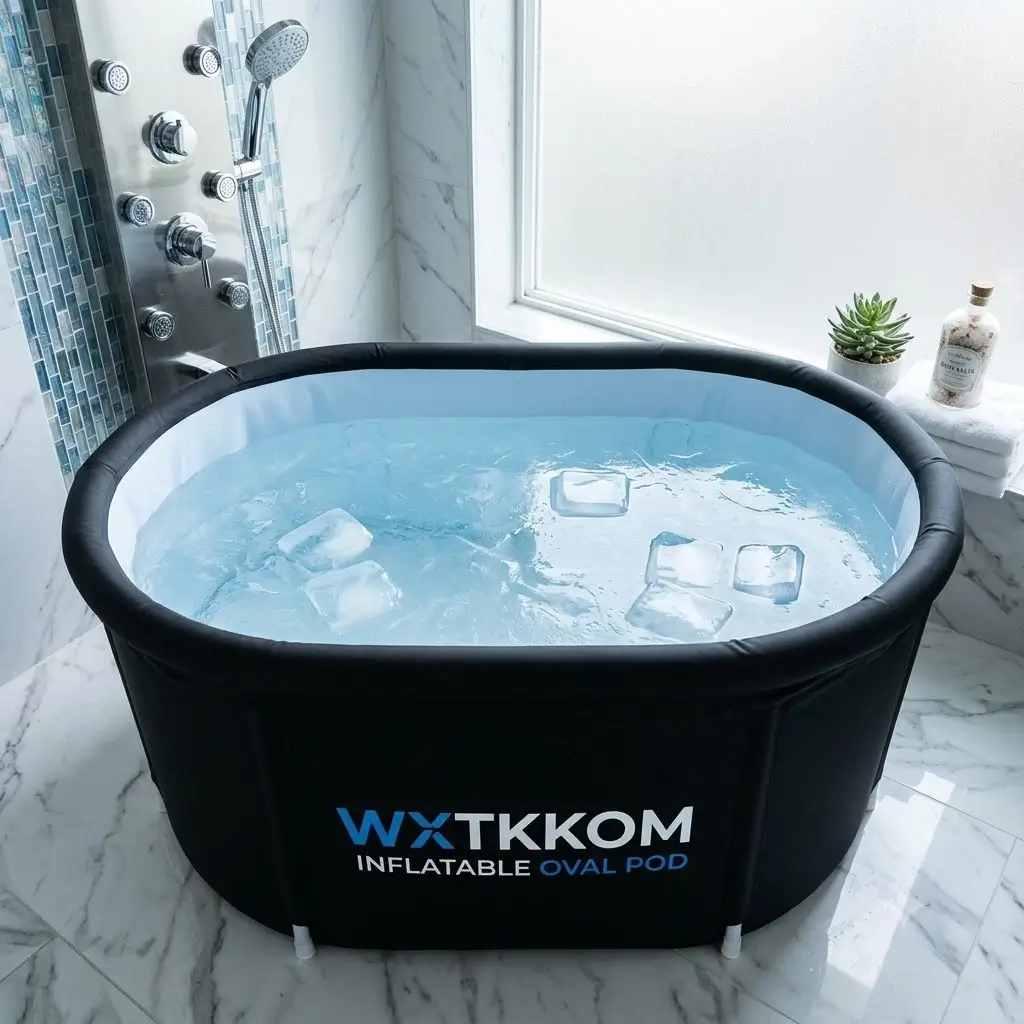
Because the unit operates without an electric motor, compressor, or water pump, it produces no mechanical operating noise. This near-absolute silence is a major benefit for townhouses, apartments, or close-proximity suburban patios where a humming compressor might disturb neighbors during early morning recovery sessions.
The direct electrical consumption of the tub itself is zero. The true energy efficiency equation shifts entirely to how the user manages the cooling load:
- Ice Purchase: Sourcing commercial bagged ice per plunge session creates a variable, ongoing operational cost.
- Dedicated Freezer Cycle: Utilizing a secondary freezer to freeze reusable water jugs draws a steady baseline of electrical power, depending on the appliance’s efficiency.
- Ambient Tapping: The most resource-efficient mode is using the tub strictly during colder seasons when the natural outdoor air handles the cooling load.
Build Quality & Material Longevity
The structural integrity of the tub depends on the top inflatable collar acting as a tension band to hold the oval shape together against the outward hydrostatic pressure of the water.
The primary failure points in budget-tier configurations are typically the welded seams at the floor-to-wall junction and around the drainage port housing. Over time, repeated stress from the water mass pressing against these joints can cause weeping leaks. The material gauge is adequate for careful use on a smooth protective mat, but it lacks the heavy puncturing resistance of commercial rigid drop-stitch tubs or rotationally molded plastics.
Installation Guidelines for Safe Ground Loading
Concentrated water weight requires placing this vessel on a flat, structural concrete substrate rated for at least 150 PSF. Adhere to the mechanical installation sequence below:
- Weight Load Calculation: 175 gallons of water translates to roughly 1,460 lbs, excluding the weight of the user.
- Surface Verification: Placing this tub on an elevated wood deck or balcony requires verifying that the structure’s load capacity can safely support this highly concentrated weight. Concrete patio slabs or level garage floors are universally preferred.
- Inflation Management: The top ring should be inflated firmly using the provided manual pump, leaving a slight amount of give. Over-inflating the ring in the cool morning can cause the air inside to expand under direct afternoon sunlight, placing unnecessary stress on the vinyl seams.
Long-Term Ownership Costs & Lifespan Analysis
Manual ice acquisition costs exceed the original purchase price of the tub within 90 days of summer use. Review the operational budget factors below:
- Water Utilities: Draining and refilling a 175-gallon tub frequently consumes a measurable volume of water over a season, which will reflect on municipal utility bills depending on local water rates.
- Ice Expenses: Purchasing commercial ice regularly during warm weather can easily exceed the initial cost of the tub over a single summer season.
- Lifespan Expectancy: Many budget-tier inflatable vinyl tubs last between one and three seasons, depending on environmental exposure. Ultraviolet (UV) radiation from direct sunlight degrades PVC plastics over time, making the material brittle. If installed permanently outdoors without a UV-protective shelter or canopy, the outer shell may eventually fade and crack.
Pros of the Wxtkkom Inflatable Cold Plunge
Ergonomic volume expansion and zero motor noise represent the primary advantages of this lightweight basin. Verified benefits include:
- Generous Footprint: The oval configuration accommodates taller individuals up to 6’4″ much better than standard vertical pod designs.
- Low Initial Cost: Provides an accessible entry point to cold therapy without requiring a large upfront capital investment.
- No Mechanical Noise: Operates in complete silence, making it highly suitable for noise-sensitive neighborhoods.
- Lightweight Portability: The entire unit deflates and packs into a compact bundle, enabling easy storage or transport.
- Simple Setup: No complex electrical systems, dedicated wiring requirements, or specialized plumbing knowledge are needed out of the box.
Cons Highlighted in Wxtkkom Cold Plunge Tub Reviews
High manual labor requirements and vulnerability to solar degradation limit long-term automation potential. Documented operational drawbacks include:
- High Upkeep Demand: The lack of integrated filtration requires regular manual draining, scrubbing, and refilling to maintain sanitation.
- High Ice Demand: Relies completely on external ice addition to lower temperatures during warm weather spells.
- Moderate Insulation Barrier: The thin core foam layer provides limited thermal resistance during sustained hot conditions.
- Risk of UV Degradation: Extended outdoor exposure to direct sunlight can shorten the operational lifespan of the external vinyl shell.
- Difficult Aftermarket Plumbing: Non-standard drainage connections complicate the clean integration of external filtration loops or external chillers.
Product Comparison: Immersion Vessel Categories
Vessel construction materials dictate puncture resistance, thermal insulation values, and 5-year replacement cycles. The matrix below compares standard market classes:
| Comparison Metric | Wxtkkom Inflatable Oval Tub | Injected-Foam Hard Shell Pod | Commercial Drop-Stitch Tub |
|---|---|---|---|
| Price Tier | Entry-Level Budget ($80–$140) | Mid-Range Premium ($800–$1,200) | High-End Professional ($1,000–$2,500) |
| Structural Rigidity | Moderate (Flexes under load) | High (Solid rotomolded wall) | Very High (Rigid 8–10 PSI drop-stitch) |
| Insulation Value | Moderate-Low (Rapid heat bleed) | High (Polyurethane core) | Moderate-High (Sealed air gap) |
| Lifespan Expectancy | Variable (1–3 Seasons typical) | Long-Term (8–10+ Years) | Extended (5–7+ Years) |
| Chiller Ready Bulkheads | No (Requires custom adapters) | Often Pre-drilled / Adaptable | Yes (Factory-welded 3/4″ NPT) |
| Pack-Down Portability | High (Folds down to duffel size) | None (Bulky fixed asset) | High (Rolls into backpack) |
Frequently Asked Questions: Wxtkkom Cold Plunge Tub Reviews
Operational questions center on ice volumes, balcony structural safety, and plumbing adapters. Practical answers are summarized below:
Can this tub be hooked up to an external water chiller later on?
How much ice is needed to lower the temperature during summer?
Is it safe to use this cold plunge tub on an apartment balcony?
How do I fix a puncture in the main vinyl wall?
Final Verdict: Wxtkkom Cold Plunge Tub Review
The Wxtkkom Oval Tub serves as a viable starter vessel for manual cold immersion without requiring long-term infrastructure commitments. Its oval geometry successfully addresses the comfort complaints common to compact circular pods, offering taller users the room needed to sit and submerge comfortably.
However, users must understand the true ownership trade-offs of this design tier. The thin insulation layer and passive cooling model mean your long-term investment will be measured in manual upkeep—shoveling ice, monitoring water quality, and performing regular cleaning cycles. For the casual user, the seasonal athlete, or the DIY builder seeking a cost-effective shell for an experimental project, our comprehensive Wxtkkom cold plunge tub reviews indicate that it represents a practical, functional entry point. For the dedicated individual seeking an automated daily health routine, investing in a hard-shelled, actively chilled, mechanically filtered system remains the more seamless long-term choice.
Check current pricing and availability on Amazon US:
