
Exercise Physiology
Training Chronobiology • 2026
Cold Plunge Before or After Workout? Recovery, Strength & Timing Explained
Key Clinical Takeaways: Cold Plunge Timing Protocols
- Post-Endurance & Competition: Immediate immersion (50°F–59°F for 10–15 min) effectively reduces perceived delayed-onset muscle soreness (DOMS) and accelerates acute recovery between tightly spaced events.
- Hypertrophy Resistance Training Window: Immediate cold immersion blunts post-exercise muscular inflammation signaling (p70S6K/mTOR pathways) and attenuates satellite cell proliferation. Delay immersion by at least 4 to 6 hours post-lifting to protect muscle hypertrophy.
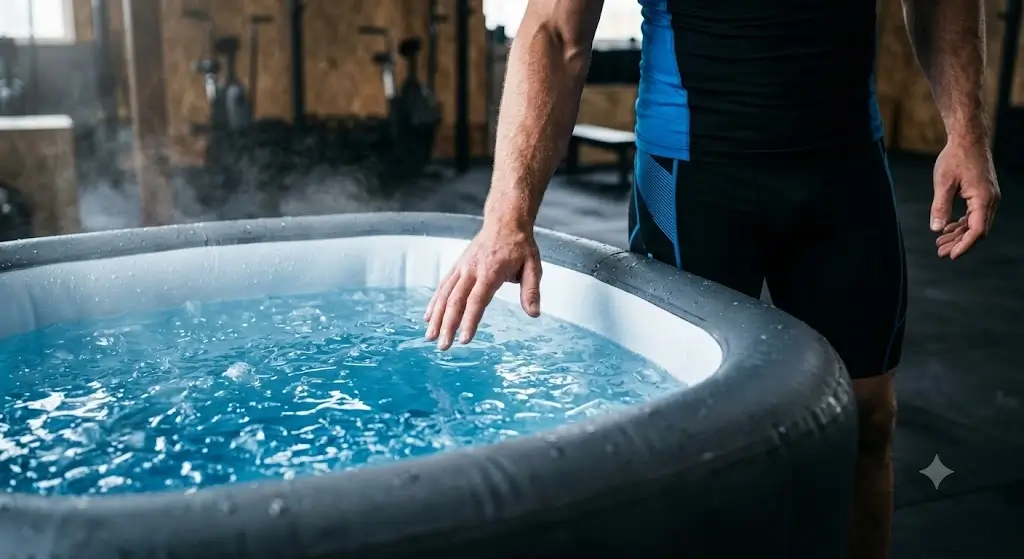
- Pre-Workout Immersion Impact: Cold exposure reduces tissue temperature and muscle contractile velocity, impairing maximal force and power output; it should never replace an active dynamic warm-up.
- Primary Decision Filter: Prioritize post-workout cold plunges when rapid functional recovery matters most, and delay cold exposure when progressive muscular adaptation is the primary goal.
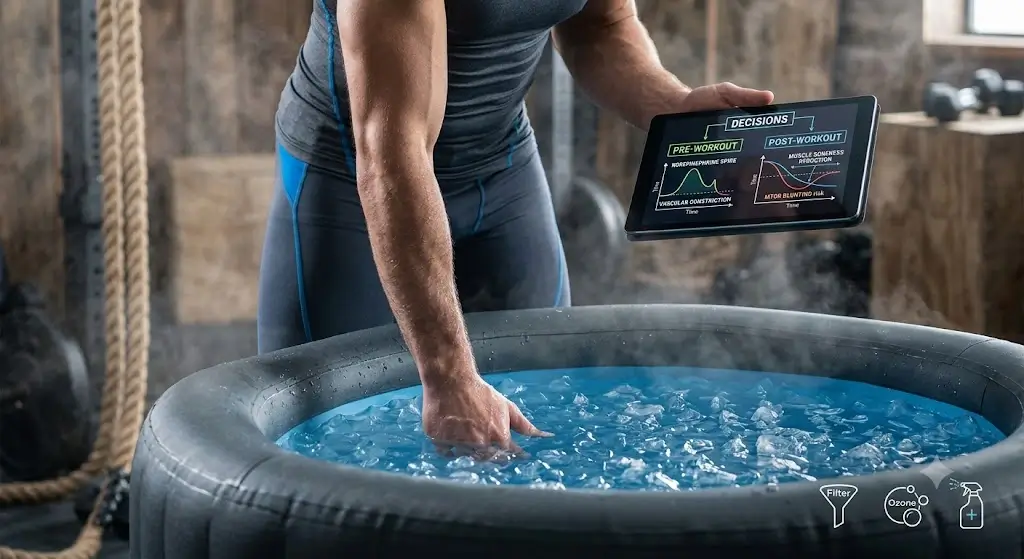
There is no universal answer to whether a cold plunge is better before or after a workout. The right question is what outcome you are trying to optimize. Cold-water immersion can influence perceived soreness and recovery, but immediate cold exposure around resistance training may not align with maximizing long-term muscle adaptation.
Cold plunging has moved from elite-sport recovery rooms into home wellness setups. That creates a common question for anyone combining an ice bath with regular training: Should you cold plunge before or after your workout?
The answer is more nuanced than simply choosing one side.
Cold exposure is a physiological stressor. Exercise is also a physiological stressor. Putting the two together can produce different results depending on whether the priority is immediate recovery, perceived soreness, endurance performance, strength development or muscle hypertrophy.
That distinction is the key to understanding cold plunge timing.
Quick Reference Specification: Cold Plunge Timing vs. Training Adaptations
Exercise physiology research distinguishes acute soreness attenuation from chronic muscular adaptations across different immersion windows. The reference matrix below compares pre-workout, immediate post-workout, and delayed cold-water immersion protocols across verified performance indicators:
| Timing Window | Primary Physiological Mechanism | Impact on Acute Performance | Impact on Long-Term Adaptation | Optimal Athletic Use Case |
|---|---|---|---|---|
| Pre-Workout (0–30 min prior) | Peripheral vasoconstriction, lowered muscle temp, sympathetic surge | Decreased contractile speed & peak power; elevated alertness | Neutral to negative for power-based training | Pre-cooling before endurance events in high-heat environments |
| Immediate Post-Workout (0–20 min) | Blunted inflammatory cascade, reduced microvascular permeability | Significant reduction in perceived muscle soreness (DOMS) | Attenuates mTOR signaling, muscle protein synthesis & hypertrophy | Multi-day tournament competitions; high-mileage endurance recovery |
| Delayed Post-Workout (4–6+ hrs) | Secondary inflammatory modulation after initial signaling window | Mild soreness relief, nervous system down-regulation | Preserves hypertrophic adaptations while aiding recovery | Bodybuilders, powerlifters, and off-season strength athletes |
| Rest-Day Immersion | Norepinephrine release, brown adipose tissue activation, vagal tone | Not applicable (no active session) | No interference with resistance training pathways | General wellness, stress resilience, autonomic recovery |
Cold Plunge Before or After Workout: The Short Answer
Training adaptations determine whether cold-water immersion belongs immediately following endurance bouts or several hours after heavy lifting. If your main goal is feeling less sore after strenuous exercise, research provides some support for cold-water immersion as a recovery strategy.
If your main goal is maximizing strength or muscle growth, however, the situation is more complicated. Repeated immediate post-exercise cold exposure may interfere with some of the biological signaling associated with resistance-training adaptation.
And if your goal is maximum workout performance, deliberately exposing yourself to cold immediately before exercise should not automatically be considered a performance enhancer.
Cold plunging is not simply a matter of “before versus after.” The better framework is to match the use of cold exposure to the training outcome you care about.
What Happens If You Cold Plunge Before Exercise?
Pre-exercise cold-water exposure reduces muscle contractile velocity and impairs maximal voluntary force generation. Cold exposure before exercise is fundamentally different from using cold water as a recovery intervention afterward.
When the body is exposed to cold, blood vessels constrict and the cardiovascular system responds to the sudden thermal stimulus. Breathing can also change rapidly during cold-water immersion.
These effects matter because exercise requires coordinated cardiovascular, muscular and nervous-system function.
Cold exposure can also alter muscle temperature.
That creates an important distinction between feeling energized and actually improving physical performance.
A cold stimulus may make someone feel alert because of acute sympathetic activation, but subjective alertness is not the same thing as improved strength, power, coordination or endurance.
For this reason, cold exposure immediately before demanding exercise should not be treated as a universal warm-up replacement.
A warm-up serves a different physiological purpose: preparing the cardiovascular system, increasing tissue temperature and rehearsing the movement patterns required by the upcoming activity.
What Happens If You Cold Plunge After Exercise?
Post-exercise cold immersion attenuates microvascular blood flow and dampens acute inflammatory cellular signaling. After strenuous exercise, cold-water immersion may influence several aspects of the body’s recovery response.
Potential effects studied in the literature include:
- Perceived muscle soreness.
- Perceived recovery.
- Changes in muscle temperature.
- Cardiovascular responses.
- Inflammatory and metabolic signaling.
- Subsequent exercise performance.
The important point is that these outcomes do not always move in the same direction.
Someone may report feeling less sore while the intervention has little effect on another performance measurement.
That is why a good cold-plunge review should never treat “recovery” as one single biological endpoint.
Cold Plunge and Muscle Recovery
Scientific recovery assessments differentiate subjective pain reduction from objective physiological restoration of muscular force capacity. There is some scientific basis for using cold-water immersion after training, particularly regarding subjective muscle soreness. For athletes building a dedicated routine at home without spending thousands on permanent setups, setting up one of the best inflatable ice bath tubs has become a practical entry point for consistent post-workout protocols.
However, recovery has multiple dimensions.
| Recovery outcome | What it means |
|---|---|
| Perceived soreness | How painful or uncomfortable the muscles feel after exercise. |
| Strength recovery | How quickly force production returns toward baseline. |
| Power recovery | How quickly explosive performance returns. |
| Muscle adaptation | Longer-term response to repeated resistance training. |
| Subjective recovery | How recovered the individual feels. |
A cold plunge can influence one of these outcomes without necessarily improving all of them.
This distinction is particularly important for people who use cold exposure after every workout. To understand the full spectrum of supported physiological mechanisms, read our comprehensive analysis on cold plunge benefits.
Does a Cold Plunge Reduce Muscle Soreness?
Cold-water immersion consistently diminishes perceived delayed-onset muscle soreness across randomized exercise trials. Systematic reviews have reported reductions in delayed-onset muscle soreness following cold-water immersion in some circumstances.
The effect is not necessarily universal, and research protocols vary substantially in water temperature, duration, exercise type and participant characteristics.
This is an important distinction because soreness is a subjective symptom, while muscle adaptation and performance are separate outcomes.
Cold Plunge and Strength Training
Post-workout cooling alters the hormonal and intracellular signaling cascades required for skeletal muscle strength gains. Resistance training creates mechanical and metabolic signals that contribute to adaptation.
The body does not simply respond to the workout itself. It also responds to what happens during the recovery period.
Cold exposure may alter some of the signaling pathways involved in this process.
That is why researchers have investigated whether regular cold-water immersion immediately following resistance exercise could affect training adaptations.
The evidence does not justify saying that cold plunging “kills gains.” That phrase is too simplistic.
The more accurate interpretation is that recovery from soreness and long-term adaptation are different objectives.
Cold Plunge and Muscle Growth: The Important Trade-Off
Immediate post-lift immersion suppresses ribosomal biogenesis and attenuates satellite cell activity within hypertrophying muscle fibers. Repeated cold-water immersion immediately after resistance exercise has been investigated for its effects on muscle protein synthesis and related adaptive signaling.
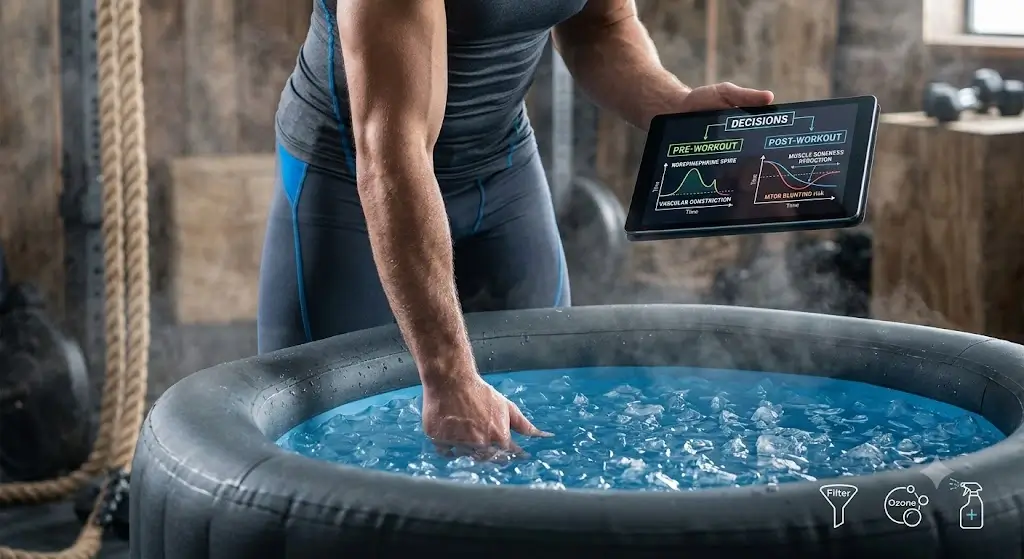
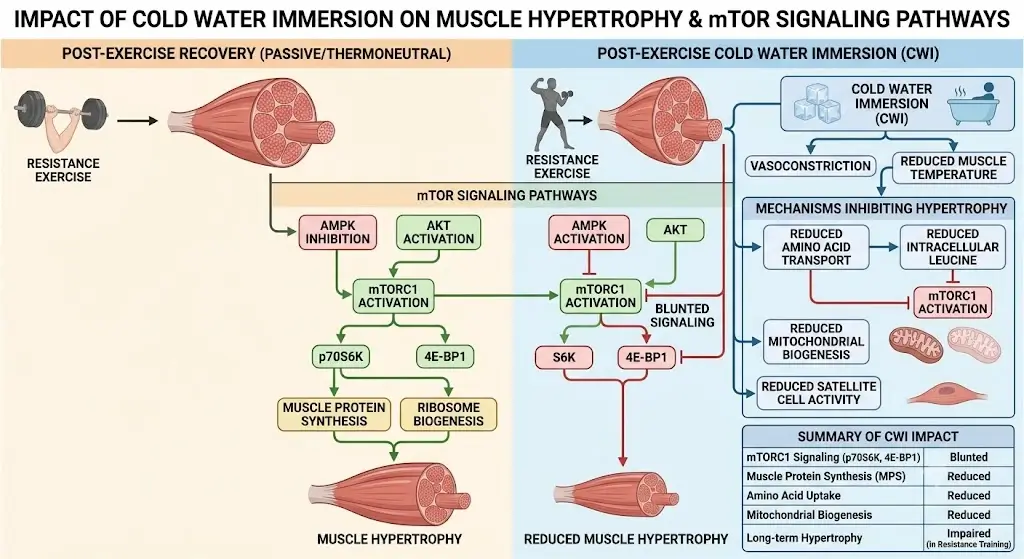
Some research suggests that repeated post-exercise cold exposure can attenuate aspects of the muscle-building response.
That does not mean one cold exposure will erase the benefits of a workout.
It means that using cold exposure after every resistance-training session may not be the same strategy as maximizing hypertrophy.
If the primary objective is muscle growth, do not assume that the intervention producing the fastest feeling of recovery is automatically the intervention producing the greatest long-term adaptation.
This is a recurring problem in recovery marketing: “Feel better tomorrow” and “adapt better over months” are not necessarily identical goals.
Cold Plunge and Endurance Training
Aerobic endurance adaptations remain largely uncompromised by post-workout cold water immersion protocols. Endurance training creates substantial thermal and cardiovascular stress, especially in hot environments.
Cold-water immersion may therefore have a different practical role when the athlete needs to manage heat or recover between closely spaced efforts.
However, endurance performance is also highly dependent on cardiovascular function, thermoregulation, hydration, glycogen availability and training status.
Cold exposure should therefore be evaluated according to the actual training objective rather than assuming that one protocol applies equally to runners, cyclists, swimmers and strength athletes.
Why Cold Plunge Timing Matters
Biological signal interference dictates specific timing windows between strenuous workouts and cold immersion. Exercise itself produces signals. Cold exposure produces signals. The interaction between those signals can depend on the type of exercise and the desired adaptation.
| Training objective | Why timing deserves consideration |
|---|---|
| Muscle hypertrophy | Immediate post-resistance-training cold exposure may influence adaptive signaling. |
| Strength development | Recovery strategies should be evaluated against long-term training adaptation rather than soreness alone. |
| Repeated competition | Short-term recovery may become more important when performance is required again soon. |
| Endurance | Heat management and recovery demands can change the role of cold exposure. |
| General wellness | There is no requirement to make cold exposure as intense as possible. |
Cold Plunge Timing by Goal
Individual athletic targets dictate whether athletes submerge immediately for acute relief or postpone immersion for muscle gains. Review how specific objectives alter recommended protocol timing:
Goal: Reduce Post-Workout Soreness
Cold-water immersion may be useful as a recovery strategy for perceived soreness following strenuous exercise. The evidence is stronger for this specific outcome than for broad claims that cold exposure accelerates every aspect of recovery.
Goal: Maximize Muscle Growth
This is where caution is most appropriate. Repeated immediate cold exposure after resistance exercise may influence signaling involved in muscle adaptation. If hypertrophy is the dominant objective, the cold plunge should not automatically become a mandatory part of every lifting session.
Goal: Feel Recovered for Another Event
Competitive athletes sometimes prioritize short-term readiness over maximizing long-term adaptation from a single training session. That changes the decision framework: whether reducing perceived soreness or improving readiness for another performance opportunity is more important than optimizing adaptation from that individual workout.
Goal: General Wellness
There is no established requirement to use extreme cold exposure to obtain general wellness benefits. Cold-water immersion is a stressor, not a magic recovery switch. For an exact breakdown of exposure minutes per session, review our guide on how long to cold plunge.
Cold Plunge Before or After Workout: Comparison
Direct comparative evaluations contrast tissue cooling mechanisms against systemic post-exercise recovery demands. Review the operational parameters below:
| Factor | Before Workout | After Workout |
|---|---|---|
| Primary concept | Pre-exercise cold exposure | Post-exercise recovery intervention |
| Muscle temperature | Cold exposure can lower tissue temperature | May help reduce post-exercise thermal load |
| Soreness | Not the primary reason for pre-workout use | One of the better-studied outcomes |
| Hypertrophy considerations | Less directly relevant | Repeated immediate exposure deserves consideration |
| Performance considerations | Cold may affect neuromuscular and cardiovascular responses | Performance of the completed workout is no longer the immediate concern |
| Best research question | Does cold exposure help or hinder performance? | Does cold exposure improve recovery without compromising adaptation? |
Common Cold Plunge Timing Mistakes
Athletes frequently undermine training adaptations by plunging immediately after resistance exercise and neglecting proper dynamic warm-ups. Avoid these six common timing pitfalls:
1. Assuming “after every workout” is automatically optimal
A recovery intervention should match the training objective. The best strategy for tournament recovery may not be the best strategy for maximizing hypertrophy.
2. Measuring recovery only by soreness
Less soreness can be useful, but soreness is not the same as restored strength, power or long-term adaptation.
3. Using cold exposure as a warm-up
Cold exposure and warming the body for exercise are physiologically different processes. Cold should not automatically replace a proper exercise-specific warm-up.
4. Copying professional athletes
Elite athletes often operate under different training loads, competition schedules and supervision conditions.
5. Chasing the strongest possible cold stimulus
A more intense stressor is not automatically a better recovery intervention.
6. Turning cold exposure into an endurance challenge
Cold exposure should not become a test of how much discomfort someone can tolerate.
Cold-Water Safety Matters More Than Workout Timing
Sudden whole-body cold immersion triggers rapid respiratory gasping and severe blood pressure elevations. The American Heart Association warns that sudden cold-water immersion can produce a cold-shock response and place significant stress on the cardiovascular system.
Cold-water immersion is not appropriate for everyone. Anyone with a medical condition, cardiovascular concern, history of fainting or other relevant health issue should discuss cold exposure with a qualified healthcare professional rather than relying on an online protocol.
Never combine cold-water immersion with breath-holding challenges, hyperventilation or underwater endurance competitions.
If someone becomes dizzy, confused, unusually weak or unable to safely exit the water, the exposure should end and appropriate assistance should be obtained.
What Does the Research Say?
Peer-reviewed sports science literature confirms that cold immersion aids perceived soreness without improving maximal isometric force. The scientific literature supports a more nuanced conclusion than the typical social-media claim that cold plunging simply “speeds recovery.”
Cold-water immersion has been associated with reductions in perceived muscle soreness following some forms of strenuous exercise.
However, effects on strength, power, muscle adaptation and long-term performance are not identical.
This is why systematic reviews often report different outcomes depending on the specific measurement being analyzed.
The most useful takeaway for consumers is therefore to define the desired outcome before deciding whether cold exposure belongs around a workout. For foundational equipment guidelines, review our primer on what is a cold plunge.
Before vs After: The Decision Framework
Systematic assessment protocols evaluate workout modality, adaptation priorities, and individual cardiovascular tolerance before scheduling cold plunges. Instead of asking “before or after?” start with four questions:
- What type of workout did I perform?
- What matters most: immediate recovery or long-term adaptation?
- Am I trying to reduce soreness or improve actual performance?
- Is cold exposure appropriate for me from a safety perspective?
That framework is more useful than copying a fixed routine from a professional athlete or social-media creator.
Frequently Asked Questions
Authoritative sports medicine answers clarify common athlete inquiries regarding pre-workout immersion, muscle growth interference, and daily routines. Key answers are detailed below:
Should you cold plunge before or after a workout?
There is no universally correct timing. Cold-water immersion can affect the body differently depending on whether the goal is perceived recovery, soreness reduction, exercise performance or long-term training adaptation.
Is a cold plunge good after a workout?
It may reduce perceived muscle soreness following strenuous exercise. However, the effect on strength, performance and long-term adaptation is more complicated.
Should you cold plunge before lifting weights?
Cold exposure immediately before exercise should not automatically be treated as a performance enhancer or replacement for an appropriate warm-up. Cold can alter muscle temperature and acute physiological responses.
Can cold plunging affect muscle growth?
Research suggests repeated cold-water immersion immediately following resistance exercise may influence some pathways associated with muscle adaptation. Therefore, minimizing soreness and maximizing hypertrophy are not necessarily the same objective.
Does a cold plunge help muscle soreness?
Evidence suggests cold-water immersion can reduce perceived soreness after some forms of strenuous exercise, although results vary depending on the research protocol and outcome measured.
Does cold plunging improve workout performance?
There is no universal evidence that cold exposure improves every type of exercise performance. Its effects depend on the type of exercise, timing and physiological conditions.
Is cold plunging after every workout necessary?
No. Cold-water immersion is an optional recovery strategy, not a requirement for effective training.
The Bottom Line: Before or After?
Athletes achieve optimal results by matching cold-water timing directly to specific recovery or muscle-building goals. The answer depends on what you are trying to accomplish.
For perceived soreness and certain short-term recovery situations, post-exercise cold-water immersion has the strongest rationale.
For muscle hypertrophy, repeatedly applying cold immediately after resistance training deserves more careful consideration because it may affect some adaptive processes.
For pre-workout use, cold exposure should not be confused with a warm-up or assumed to improve performance simply because it makes you feel alert.
There is no single “best” cold-plunge timing. The scientifically stronger approach is to match the intervention to the training goal and evaluate recovery using more than soreness alone.
Continue Your Cold Plunge Research
The next question is how water temperature changes the physiological stress of cold-water immersion. Read our Cold Plunge Fundamentals & Temperature Guide for a deeper explanation of temperature, recovery goals and the variables that influence cold exposure.
Editorial Standards
BioHackTub enforces strict empirical evaluation criteria across all exercise recovery and thermal physiology guides. We separate subjective recovery from measurable performance outcomes. Claims involving muscle recovery, hypertrophy, inflammation, metabolism and general wellness are evaluated separately rather than treated as interchangeable benefits.
Cold-water immersion research also varies considerably in temperature, duration, immersion depth, exercise type and participant characteristics. Findings from one protocol should therefore not automatically be presented as a universal consumer prescription.
This article is educational information and is not individualized medical advice.
